REVIEW · CAIRNS AND THE TROPICAL NORTH
Cairns: Tandem Skydive Experience over Reef & Rainforest
Book on Viator →Operated by Skydive Australia · Bookable on Viator
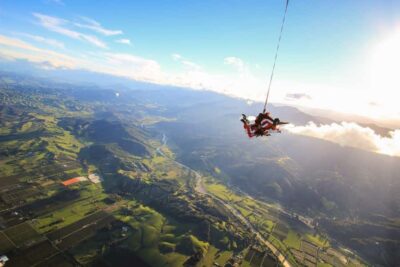
Cairns tandem skydiving feels unreal. You jump from up to 15,000 feet with big views of the Great Barrier Reef region and UNESCO-listed rainforest below. I like that it’s built for first-timers: you’re strapped to a pro, so you don’t need skills—just nerves you’re willing to manage.
The crew is a major part of the value. Instructors like Sam, Brant, Victor, and Phil kept people calm and focused, and you get a commemorative certificate after the jump. One thing to watch: the experience is only part of the cost, because the video and photo package is a big add-on at the drop zone.
In This Review
- Key Points That Matter Before You Go
- Why Cairns Makes This Tandem Jump Worth the Trip
- The 3-Hour Flow: Check-In, Briefing, and Back to Cairns
- The 15-Minute Safety Lesson That Sets the Tone
- From the Plane Window: Daintree, Atherton Tablelands, Fitzroy and Green Island
- The Jump Itself: Freefall, Then Quiet Under Parachute
- Reef and Rainforest Views: What to Expect Without Overhyping It
- Instructors Like Sam, Brant, Victor, and Phil Make the Difference
- Price and Photos: The Real Cost of the Souvenir
- Who This Cairns Tandem Skydive Fits Best
- Weather, Delays, and Staying Flexible in Cairns
- Should You Book This Cairns Tandem Skydive?
- FAQ
- How high is the tandem jump?
- Do I need any previous experience?
- What’s included in the price?
- Are photos and videos included?
- What should I know about weight limits?
- What’s the minimum age to participate?
- Where does the experience start and end?
- What happens if weather cancels the experience?
Key Points That Matter Before You Go
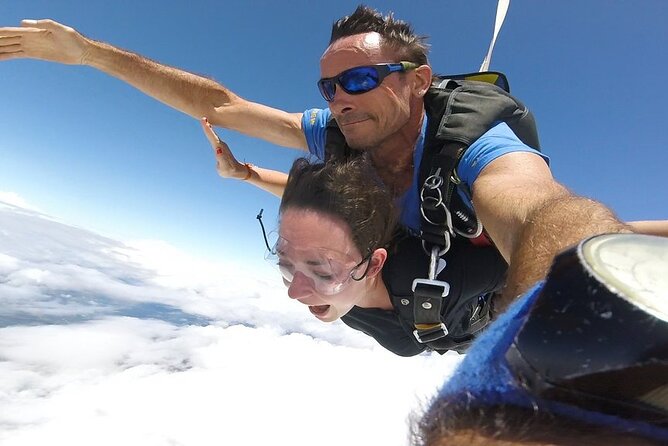
- 15,000 feet altitude gives you the big-air freefall most people come for
- Tandem setup for beginners means you follow your instructor’s lead, not your own plan
- Reef and rainforest views vary day to day, and sometimes the reef looks more distant than expected
- Photos and video cost extra (and they’re often near the price of the jump)
- Max group size of 20 helps keep the whole operation from feeling chaotic
Why Cairns Makes This Tandem Jump Worth the Trip
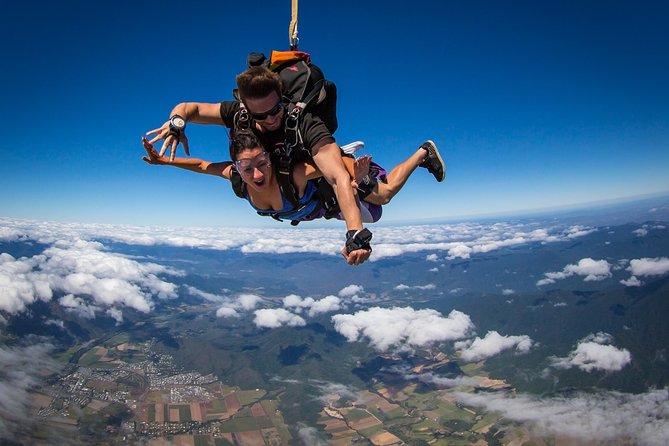
If you’re coming to Tropical North Queensland, this is one of the most direct ways to get above the region’s “bucket list” look. From the air, the geography makes sense fast: rainforest patterns, coastal shapes, and island outlines all snap into place when you’re high enough to see how it connects.
The tour sells a reef-and-rainforest story, and that part is real, but with one honest nuance. The drop zone is positioned between World Heritage rainforest areas and the reef, so you do get that mix of green-to-blue contrast. Still, on some days the reef can read more like a faraway shimmer than a close, cinematic postcard—especially if you’re expecting to be right on top of the water. The best takeaway? Think about this as an aerial “overview” of Cairns’ bigger nature map, not a guaranteed close-up reef swim shot.
What you’ll love most is the combination of scenery and the way tandem skydiving works. You don’t have to do anything clever. You look where your instructor tells you, and you let the whole planet-size view happen to you.
You can also read our reviews of more tours and experiences in Cairns and the Tropical North.
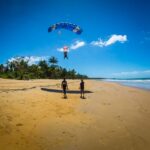
The 3-Hour Flow: Check-In, Briefing, and Back to Cairns
Plan on about 3 hours total, from meeting point to returning to where you started. The meeting location is 11 Spence St, Cairns City QLD 4870, and the activity ends back at that same spot. It’s near public transportation, so you’re not locked into a specific pickup if you’re staying in the city.
Inside the operation, the pacing is straightforward. You’ll do a short check-in, then get geared up and sent into the lesson. After that, it’s plane time, the jump, and then landing with time to grab your photos/videos if you bought them.
Group size stays reasonable: it’s capped at 20 travelers. That matters because skydiving schedules can stretch when weather changes. A smaller group usually means fewer moving parts at once.
Also keep an eye on timing. On some bookings, the actual jump time can shift based on conditions and other operational factors. If you’re planning the rest of your day around a fixed itinerary, build in wiggle room.
The 15-Minute Safety Lesson That Sets the Tone
Before you go up, you get a 15-minute lesson and safety briefing. It’s not just legal paperwork. It’s where you learn how to hold your body, what to expect during harness adjustments, and how to avoid panicking when the plane door is suddenly a lot closer than it was five minutes ago.
You’ll be strapped securely to your instructor, and you’ll get practical positioning instructions. A useful detail: at the start you’ll want to bend your neck back and keep your body and knees flexible so the ride feels controlled once you’re moving fast.
You’ll also learn the small “don’t bring surprises” rules:
- empty your pockets
- remove necklaces
- don’t bring your own camera, since it can fly off
They’ll also handle the gear. Some people use protective items that are offered, and you can wear a face visor for the first part before you can take it off once you’re under the parachute.
If you’re nervous, this lesson is part confidence-building and part fear management. Once you know what will happen next, your brain stops trying to guess.
From the Plane Window: Daintree, Atherton Tablelands, Fitzroy and Green Island
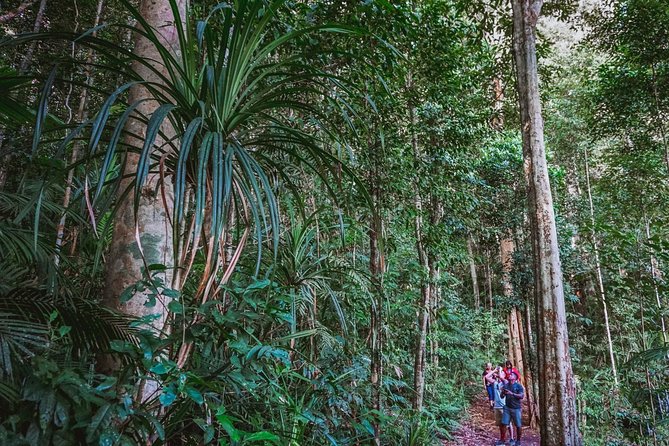
The flight is half the experience. Even before you jump, you get that “wait, I can see everything” feeling.
The route takes you over the region’s signature areas, including:
- Daintree Rainforest / Cooper Creek Wilderness
- Atherton Tablelands
- Fitzroy Island National Park
- Green Island National Park
What that means in real life: rainforest looks like carved brushstrokes from above, not “a place with trees.” The tablelands and coastal bends show up as broad shapes, and the island outlines become clear geometric patterns.
One important reality check: while this is labeled reef-and-rainforest, the reef view can be easiest to spot from higher in the plane rather than close to the ground. You may not feel like you’re directly above the reef for long. Instead, you’re seeing the relationship between reef, rainforest, and coastline from a height where the entire region reads as one connected system.
And yes, it’s worth paying attention during the climb. That’s often when people get the most “I can actually see it” reef moments.
The Jump Itself: Freefall, Then Quiet Under Parachute
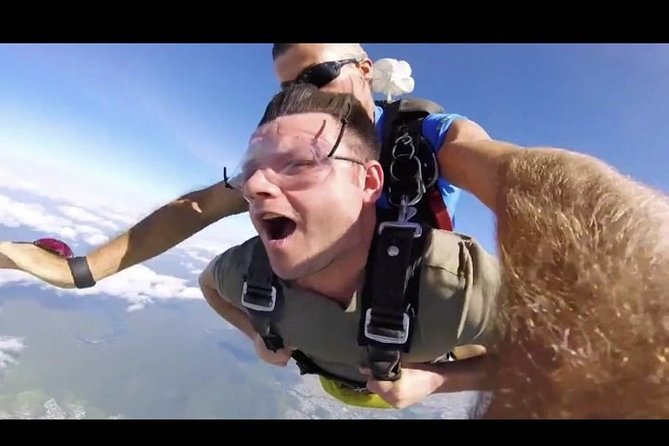
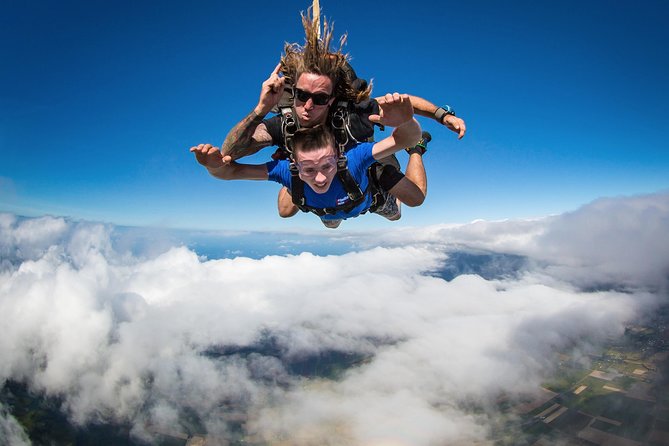
Once it’s time, you jump tandem from up to 15,000 feet (4,572 meters). The freefall is the headline moment. It’s fast, and your senses get loud—ears popping, wind pressure, and that split-second feeling where your body fully understands you’re not controlling the situation anymore. That’s also why tandem works. Your instructor is doing the complex part.
Then the freefall ends, and you move into parachute deployment and the calmer glide down. People describe the shift as almost like switching channels: motion becomes smoother, sound quiets down, and the view becomes the main event. The canopy phase is when you really get to look around and take in the rainforest-to-coast-to-water story from the sky.
Landing is also part of the overall experience. You hold your legs up and your instructor handles the landing mechanics. After that, you move forward on foot, which feels surprisingly manageable compared to how intense the air portion feels.
Reef and Rainforest Views: What to Expect Without Overhyping It
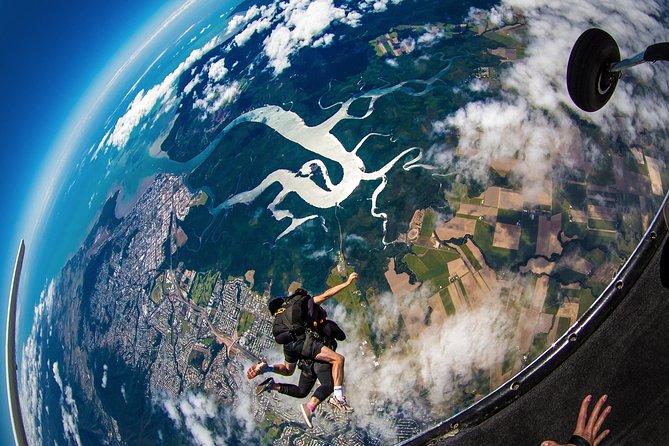
The name reef and rainforest sets expectations. I’d handle it like this: expect views of both, but understand that they can show up differently depending on weather, cloud cover, and where exactly the plane lines up.
Here’s what I think is the most useful way to frame it:
- The rainforest component often feels immediate, because you’re descending into green terrain.
- Reef visibility can be more distant—sometimes best noticed from the plane.
- Your ground landing spot may not look like an ocean edge at all. Some land in agricultural areas nearby, so don’t expect to touchdown with sand between your toes.
That’s not a deal-breaker. It just helps you enjoy the experience for what it is: an aerial perspective on Cairns’ World Heritage area mix, plus a major adrenaline rush.
If your goal is close reef imagery, you might want to pair this with something else later that puts you on the water. If your goal is a once-in-a-lifetime sky moment with the region in view, this delivers.
Instructors Like Sam, Brant, Victor, and Phil Make the Difference
A tandem skydive lives or dies on the instructor vibe. This operation clearly leans into professionalism and reassurance.
I saw a pattern in the names people mentioned: Sam, Brant, Victor, Phil, and also an instructor simply called G. Common thread: clear communication, quick reassurance for anxious first-timers, and constant check-buckles and in-air guidance so you never feel like you’re floating alone in the dark.
One small but important detail: many instructors keep things moving while also watching for comfort. If you’re stiff or overthinking, they tend to talk you through what to do, and that helps you stop treating the experience like something you need to survive.
It’s also worth noting that they use action cameras. Your instructor may record your full experience using a GoPro-style setup, which is why you usually don’t need to worry about capturing it yourself during the jump.
Price and Photos: The Real Cost of the Souvenir
At $250.32 per person, you’re paying for much more than a “ride.” Your base price includes:
- qualified jumper (your instructor)
- all safety equipment
- a commemorative skydive certificate
- Australian Parachuting Levy and administration fee
That said, the photo/video packages are a big separate purchase. The on-day option is A$179 per person, and in practice it can feel close to the cost of the jump itself.
If you’re debating whether to buy, decide based on what you want to remember. The photos are taken during the jump and include a professionally edited video (people describe a short edited package with soundtrack). If you hate the idea of losing those “I did it” moments, buying is easy to justify. If you’re more budget-minded and want the experience only, you can skip it, but you’ll need to be okay with not having your own action footage to replay later.
One more practical point: the operator doesn’t let you bring your own camera for safety reasons. That makes the official package the main souvenir option.
Who This Cairns Tandem Skydive Fits Best
This is a strong fit for:
- first-timers who want a thrill without training
- people who want a clear safety system and a calm instructor lead
- anyone who’s physically capable of getting into position and holding a landing posture
You should also note the limits:
- moderate physical fitness is expected
- maximum weight is 110kgs (242 lbs) on application
- there may be a surcharge for 94kgs (207 lbs) or more
- minimum age is 16, subject to approval
- under 18 needs a parent or guardian
The best compliment to this experience is that it’s not just for young adrenalin machines. People in their 60s have had a fantastic time with this style of tandem operation. If you can follow instructions and move through the gear/briefing calmly, you’re likely in good shape.
If you’re the type who needs full control, tandem skydiving still works, but you’ll need to trust your instructor’s plan. That’s the mental game as much as the physical one.
Weather, Delays, and Staying Flexible in Cairns
This experience needs good weather. If it’s canceled due to poor conditions, you’ll be offered a different date or a full refund. Delays can happen too, especially after rain or changing winds.
That’s not unique to Cairns. It’s just the reality of flying. The way you handle it matters. Build this slot into your trip with some breathing room. If you’re trying to stack it tightly with tours that have fixed start times, you may feel stressed when the schedule adjusts.
The good news: the operation is used to managing timing changes, and people report being informed when conditions cause delays.
Should You Book This Cairns Tandem Skydive?
Book it if you want a first-time-friendly thrill with real aerial views of Cairns’ standout nature areas. The included safety setup, the short briefing, and the dependable tandem structure make it feel approachable, even when your stomach argues at takeoff.
Skip or think twice if:
- you’re expecting reef-level closeness the whole time (the reef may look far off)
- you strongly dislike add-on costs, because the photo/video package is a serious extra expense
- you can’t tolerate schedule movement if weather shifts
If you want one big “yes, I really did that” memory from Cairns—and you’re okay treating photos/video as a premium souvenir—this tandem jump is a smart use of your time.
FAQ
How high is the tandem jump?
You jump from up to 15,000 feet (4,572 meters).
Do I need any previous experience?
No. It’s a tandem jump with a highly trained professional instructor, and previous experience is not required.
What’s included in the price?
Your booking includes a qualified instructor, all safety equipment, a commemorative skydive certificate, and the Australian Parachuting Levy and administration fee.
Are photos and videos included?
No. Video and photo packages are available for purchase at the drop zone for A$179.00 per person.
What should I know about weight limits?
The maximum weight is 110 kgs (242 lbs) on application. A surcharge applies for persons 94 kgs (207 lbs) or more.
What’s the minimum age to participate?
The minimum age is 16 years, subject to approval. Under 18 must be accompanied by a parent or guardian.
Where does the experience start and end?
It starts at 11 Spence St, Cairns City QLD 4870, Australia, and ends back at the same meeting point.
What happens if weather cancels the experience?
If poor weather cancels it, you’ll be offered a different date or a full refund.