REVIEW · MELBOURNE
Melbourne: Tandem Skydive Experience over St. Kilda Beach
Book on GetYourGuide →Operated by Skydive Australia · Bookable on GetYourGuide
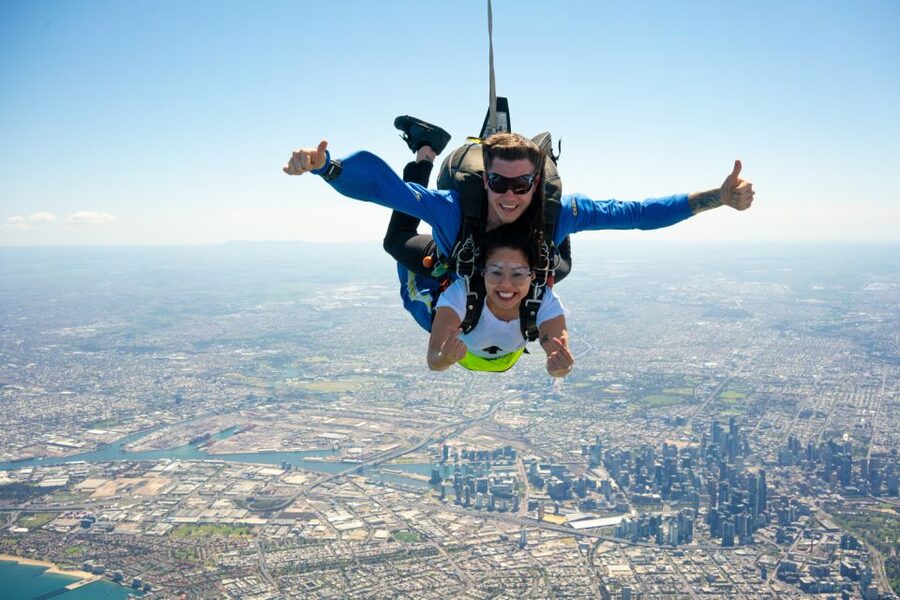
Urban skydiving above St Kilda hits different. This tandem jump uses the closest skydiving center to Melbourne CBD, so you spend less time commuting and more time looking at the Melbourne skyline and Port Phillip Bay from the air. I love the beachfront landing at St Kilda and the fact you’re based steps from Luna Park.
I’m a big fan of the up to 15,000 feet scenic flight with about 60 seconds of freefall, especially because the crew keeps the process clear and supportive, with instructors like Sarah, Kev, Vova, Zack, and Etienne known for staying calm. One thing to weigh: weather can mean waiting or rebooking, and the optional footage is often focused on the instructor angle, so you’ll want to think about what kind of photos you actually want.
In This Review
- Key things that make this jump worth your time
- St Kilda meets the Melbourne skyline: why this feels special
- What the 3–4 hour plan looks like in real life
- From takeoff to 15,000 feet: what you’ll actually see
- The jump moment: tandem control and up-close nerves
- Landing at St Kilda: the part you remember afterward
- Instructors and training: the real difference-maker
- Photos and video: choose what you’ll actually want
- Price ($339) and value: what you’re paying for
- Who should go, and who should skip it
- Weather, timing, and the best way to plan your day
- Should you book this Melbourne St Kilda tandem skydive?
- FAQ
- How long does the tandem skydive experience take?
- How high will I go?
- How long is freefall?
- Where do you land?
- Is photo and video included?
- What group size should I expect?
- Do I need to speak a specific language?
- Is there a weight limit?
- Who is this not suitable for?
- What if weather cancels the jump?
Key things that make this jump worth your time
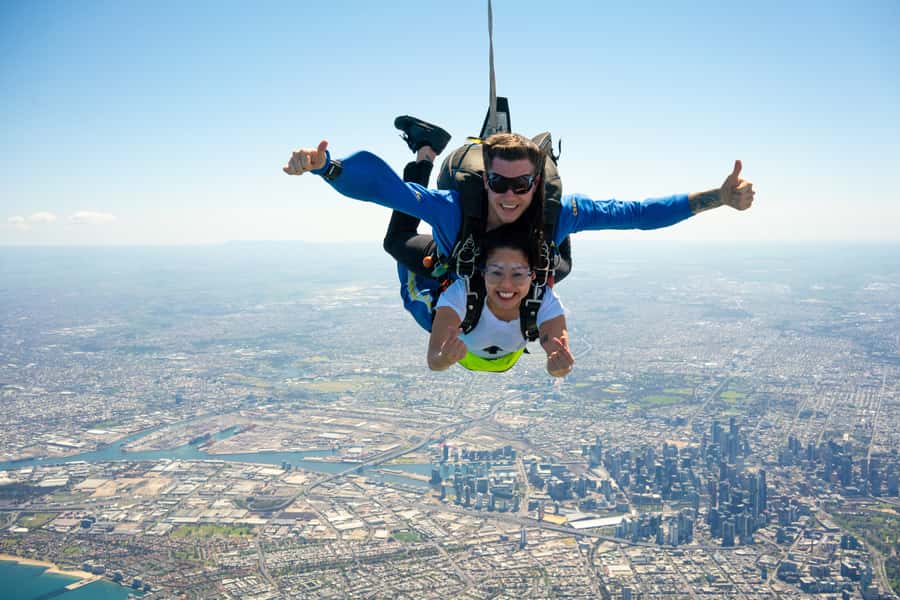
- Closest drop zone to Melbourne CBD: Less travel time, more time in the sky.
- St Kilda Beach landing: You finish right at the coast, not miles away from the action.
- Up to 15,000 feet and up to 60 seconds freefall: Big height, real adrenaline.
- Small group format (up to 8 people): More attention during training and check-in.
- Camera options available on-site: You can choose what you want to buy after you know what you like.
St Kilda meets the Melbourne skyline: why this feels special
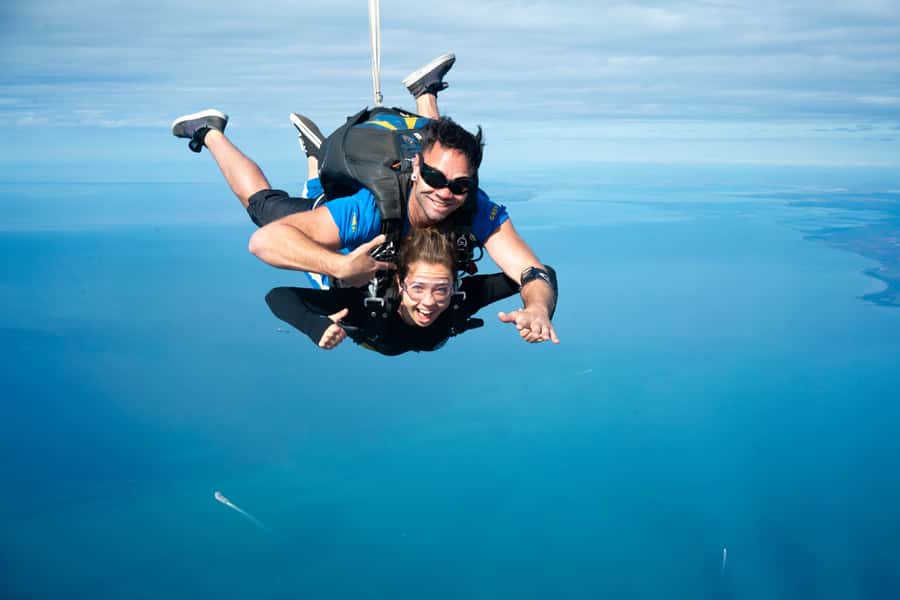
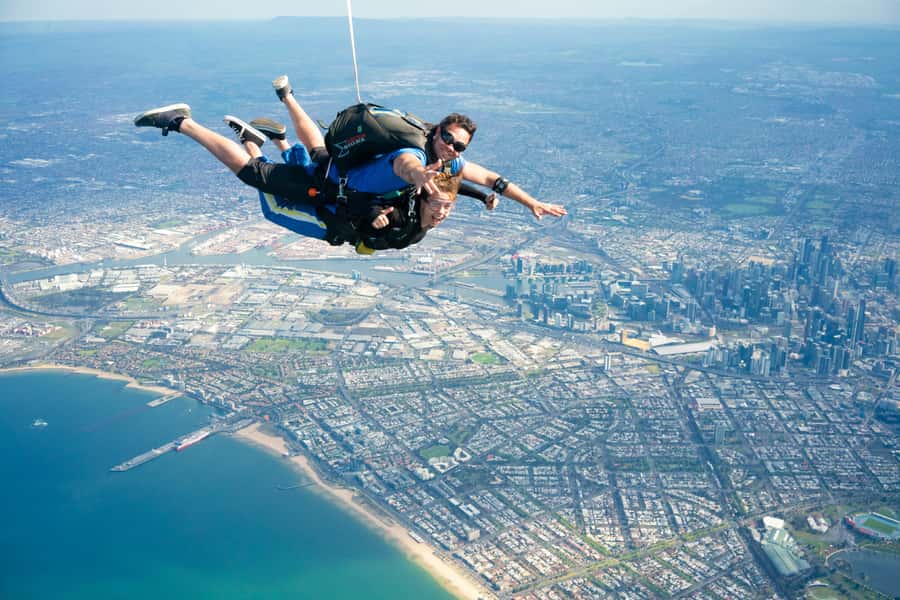
What I like about this experience is the setting. Instead of escaping the city to find open sky, you’re doing the opposite. You climb out above Melbourne’s skyline, then the view widens to Port Phillip Bay and the suburbs rolling out beneath you. It’s urban skydiving with a coastal finish.
The drop zone’s location also changes the vibe. You’re near Luna Park, so the whole day feels grounded in real Melbourne life, not a remote day trip. If your schedule is tight, this matters. A day of travel can turn adrenaline plans into logistics work. Here, the pitch is simpler: get in, get briefed, and get up there.
The St Kilda landing is another practical win. Touching down on a beach means the “wow” factor stays with you even as you come down. It’s not just a jump. It’s a full visual arc: city to coastline to landing.
What the 3–4 hour plan looks like in real life
This runs 3 to 4 hours total. That time includes the whole rhythm: check-in, training, getting harnessed, the flight up, the jump sequence, and then settling back down.
Even if you’re eager, plan for the day to move at aviation speed. That’s normal for skydiving. Weather, cloud cover, and wind can affect timing, and you might wait before takeoff. The best mindset is: treat the extra time as part of the experience, not a delay.
Here’s the flow you should expect:
- Arrival and check-in: You’ll follow instructions from the team and get suited up. Meeting point can vary depending on what option you booked.
- Ground training: You’ll get instructions for what to do before you leave the aircraft, and what to expect under canopy.
- Scenic flight: You rise up toward 15,000 feet.
- Tandem jump and freefall: Up to 60 seconds of freefall while you’re strapped into the tandem setup.
- Parachute opening and glide: After opening, you get time to look around.
- Beach landing at St Kilda: Then you’re done, certificate in hand.
That’s the part most first-timers find comforting: there’s structure. You’re not just thrown out and hoped for the best. You’re trained, harnessed, and coached through each stage.
From takeoff to 15,000 feet: what you’ll actually see
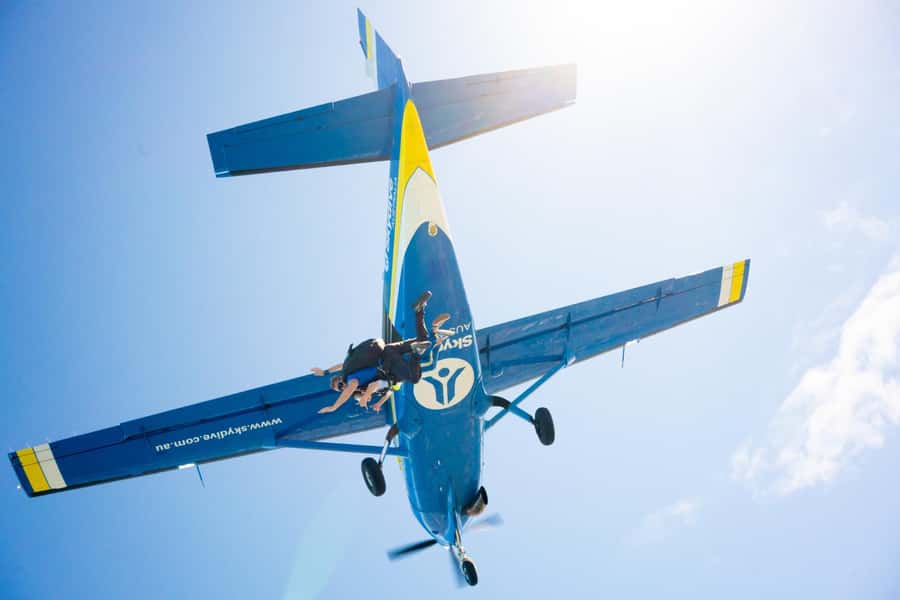
Once you’re in the plane, the experience shifts from anticipation to a slow, unbelievable view-building moment. The aim is scenic flight up to 15,000 feet over Melbourne and St Kilda.
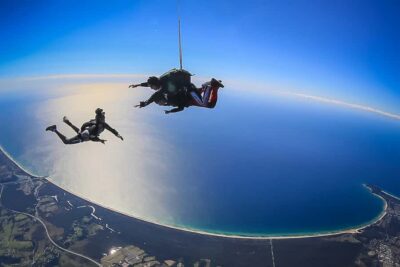
At that height, the city stops looking like streets and starts looking like patterns. You’ll see how Melbourne spreads out—highways, suburbs, and the coastline line-up toward Port Phillip Bay. It’s not only about adrenaline. It’s also about orientation: your brain finally understands the scale of the place you’ve been walking around on all year.
A couple of details that matter here:
- The whole thing is designed for a tight schedule. Because this is one of the closest centers to Melbourne CBD, you’re less likely to burn half the day in transit before you even reach the airstrip.
- The flight is part of the thrill. Even before the jump, you’re already “in it,” looking down as the world gets smaller.
If you’re someone who worries about height, you’ll still feel that tension early. But a common coaching theme is to keep you talking and focused through the aircraft and door moment. Instructors like Sarah and Kev are specifically noted for being supportive and calming, which can make a huge difference if you’re nervous.
The jump moment: tandem control and up-close nerves
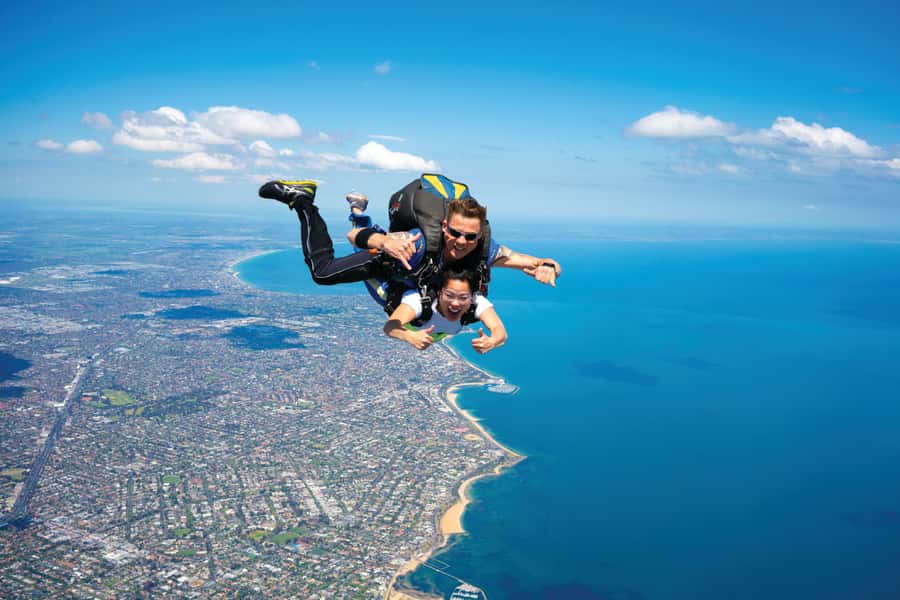
The best way to understand a tandem skydive is that you’re not doing it alone. You’re attached to a qualified jumper, and you get hands-on guidance from the tandem team.
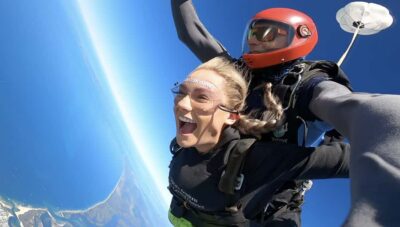
You’ll get up to 60 seconds of freefall. That’s where the adrenaline peaks. The aircraft door moment is intense for most people, even experienced travelers. The good part is that you’re paired with a professional who handles the sequence.
One thing I always tell friends before they go is this: don’t aim to feel fearless. Aim to feel prepared. The ground instruction is there for a reason. When you follow those cues, the jump becomes less like a sudden threat and more like a guided action you can trust.
Also, this is a bucket-list kind of experience for a reason. It’s hard to replicate anywhere else: the combination of height, speed, and the city-bay view makes it feel unique to Melbourne—not just a generic thrill.
Landing at St Kilda: the part you remember afterward
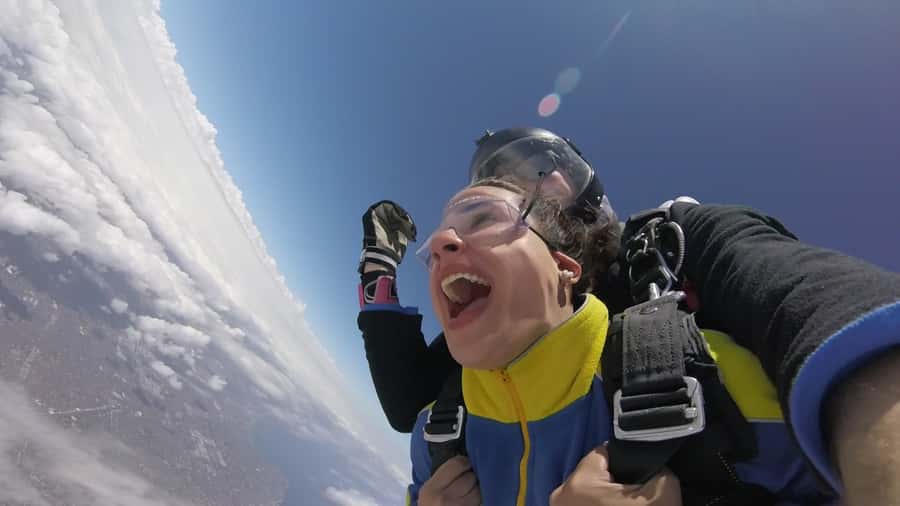
Most people focus on the freefall (fair). But the landing is what often turns nerves into gratitude.
You land on St Kilda Beach, which keeps the whole experience “coastal,” not abstract. The ground-team choreography matters here, too. You’ll be guided through the final approach under canopy, then you touch down and you’re safe.
There’s a strong reassurance signal in the stories from the field: people with physical considerations have reported smooth landings. One example included someone with prior knee replacement surgery who was given confidence about landing impact, and they described it as soft. That’s not a guarantee of your outcome, but it shows the team takes landing comfort seriously.
If you’re someone who’s worried about how your body will handle the landing, ask questions during briefing. You want to feel clear on what’s expected before you step onto the plane.
Instructors and training: the real difference-maker
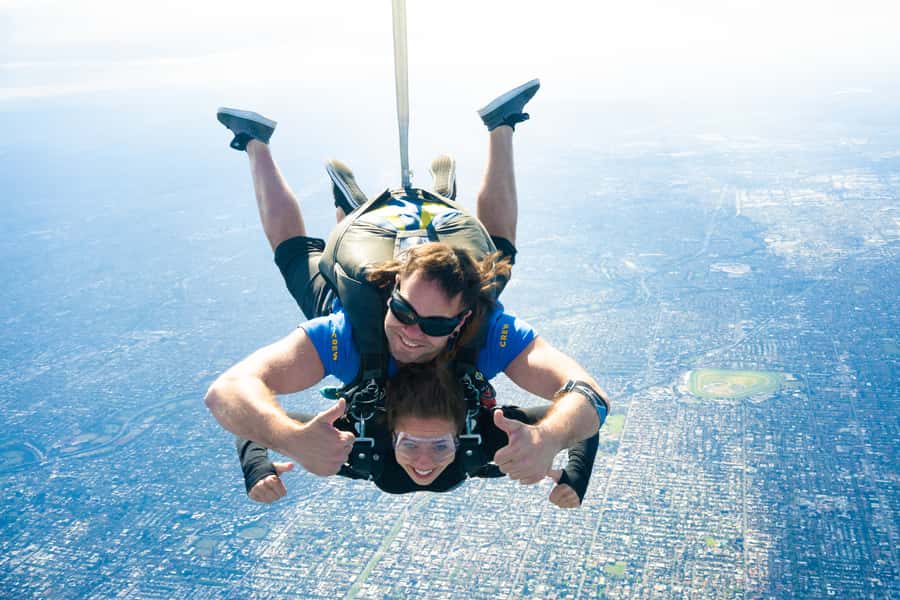
This experience is only as good as the people teaching it. The operation here leans heavily on professional tandem training from highly trained tandem masters (and a qualified jumper), with an English speaking instructor.
What stands out from names mentioned in the field is the tone: calm, friendly, and practical. Instructors such as Vova, Zack, Etienne, Kevin, and Cleave are examples of the kind of support people highlight—especially when someone is nervous about heights or has had surgery in the past.
If you’re anxious, don’t hide it. Tell your instructor before you go up. Instructors can’t read minds, but they can adjust how they explain the sequence, how they pace reassurance, and how they coach you through the door moment.
And if you’re doing this with a friend or partner, you’ll see a second benefit: when the instructor is confident, the whole group relaxes. That matters on a small-group experience.
Photos and video: choose what you’ll actually want
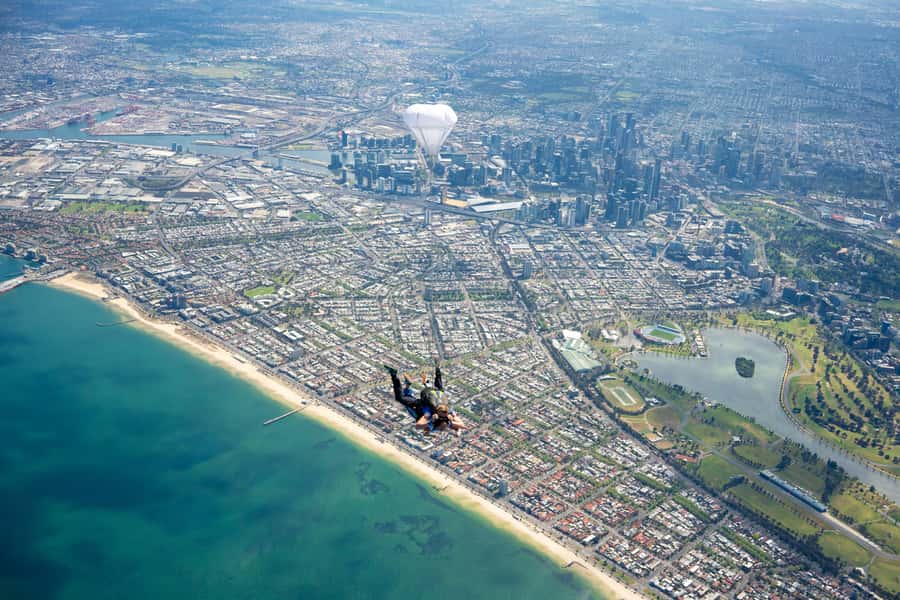
Photo and video are not included. You can purchase camera packages at the dropzone, which is helpful because you can decide after you understand the angles available.
Here’s the practical catch: some footage is shot from an instructor-mounted GoPro. That means your own falling body might not be captured the way you expect. If seeing your own face during freefall is important to you, think about your purchase options carefully when you’re there.
My advice: ask staff what viewpoint you’ll get before you pay. If you want both sky and you, you might consider buying a package that covers more than one angle. If you just want the scenery and the big moments, the standard instructor view may be enough.
Even if you skip the video, you’ll likely feel compelled to buy something after. The views are that good, and you’ll want a souvenir that matches the scale of the moment.
Price ($339) and value: what you’re paying for
At $339 per person, this isn’t cheap. But for skydiving, the price makes sense when you look at what’s included beyond the jump itself.
You’re paying for:
- Qualified jumper and professional tandem training
- Scenic flight up to 15,000 feet
- Up to 60 seconds freefall
- Commemorative skydive certificate
- 3 month membership of the Australian Parachute Federation
- Compulsory Personal Accident Insurance from the Australian Parachute Federation
When you include training, safety setup, insurance, and membership, it’s less like paying only for adrenaline and more like paying for an organized, regulated experience.
Optional transfers may be available from M.O Moran Reserve, which can also reduce friction if you don’t want to handle all transport yourself.
So the key value question is: do you want this done close to Melbourne CBD, in a small-group format, with a coastal landing? If yes, the location and included safety framework help justify the cost.
Who should go, and who should skip it
This isn’t for everyone, and the limits are clear.
You should not book if you are:
- Children under 16
- Pregnant
- Someone with heart problems
- Over 110 kg (242 lbs)
There’s also a weight surcharge if you are over 94 kg (207 lbs). And the max is strict, so it’s worth planning around your current weight, not a best-case guess.
If you’re within the limits, this can work for a range of fitness levels because it’s tandem: you’re not doing the parachute skills yourself.
If you’re nervous about heights, you can still go—just tell the team. People have described it as manageable when the instructor keeps things chill and step-by-step.
Weather, timing, and the best way to plan your day
Weather is the wildcard. Cloud cover and conditions can cause waiting, and sometimes your first attempt gets cancelled. The good news is you’re not forced into a single non-refundable slot. If weather changes, you can often rebook for another time.
Still, don’t schedule this like a hard appointment at 11:00 sharp. Keep your afternoon or evening open so you’re not stressed if you’re delayed.
A simple strategy that works well:
- Plan for a wait.
- Eat and hydrate before you arrive.
- Wear comfortable clothes that you can sit and move in.
- Bring what you need for changing conditions, like a light layer.
This is an activity where being calm helps you enjoy it more.
Should you book this Melbourne St Kilda tandem skydive?
Book it if you want a classic “once in a lifetime” adrenaline hit with Melbourne skyline plus Port Phillip Bay views, and you love the idea of landing right on St Kilda Beach. I also think it’s a smart pick if your time in Melbourne is tight, because the drop zone is close to the CBD and near Luna Park.
Don’t book if you’re outside the safety limits (especially weight or health conditions), or if you know you can’t handle the door moment even with coaching. You should also think twice if you care deeply about getting video that includes your own midair view from your perspective—camera packages can focus more on the instructor angle.
If you’re on the fence, my advice is simple: ask questions early, tell the staff you’re nervous, and then trust the process. A tandem jump is scary in a good way when the training is solid—and the location makes it feel like a true Melbourne experience.
FAQ
How long does the tandem skydive experience take?
It runs about 3 to 4 hours total, depending on availability and start times.
How high will I go?
You can fly up to 15,000 feet.
How long is freefall?
You get up to 60 seconds of freefall.
Where do you land?
You land at St Kilda Beach.
Is photo and video included?
No. Photo and video packages are available to purchase directly at the dropzone.
What group size should I expect?
It’s a small group, limited to 8 participants.
Do I need to speak a specific language?
The instructor provides instruction in English.
Is there a weight limit?
Yes. It’s not suitable for people over 110 kg (242 lbs). There is also a surcharge for people who weigh over 94 kg (207 lbs).
Who is this not suitable for?
It’s not suitable for children under 16, pregnant women, and people with heart problems.
What if weather cancels the jump?
You can cancel up to 24 hours in advance for a full refund, and bad weather can lead to changes in your schedule. The activity notes flexibility options like rebooking when weather affects conditions.