REVIEW · FRANZ JOSEF AND FOX GLACIER
Tandem Skydive 13,000ft from Franz Josef
Book on Viator →Operated by Skydive Franz Josef Limited · Bookable on Viator
Glaciers meet freefall at 13,000 ft. A tandem jump over Franz Josef Glacier is a first-timer friendly way to see New Zealand’s ice fields, mountains, and rugged coast from above, even if you’ve never done anything like this before. What I like is the huge view payoff, plus the fact that your instructor handles the jump with you, so you’re not stuck in indecision mode. The main consideration: this experience depends on favourable weather, so a poor-weather day can mean a reschedule or refund.
You’ll start in Franz Josef Village at 63 Cron Street, and you’ll get a mobile ticket for a smoother check-in. The whole outing is about 3 hours, and while some of that time is simply getting ready and getting to the aircraft, it’s also when you’ll get your gear sorted so you can focus on the moment.
Once you’re up in the air, you’re looking at a fast, controlled experience: freefall at around 120 mph / 200 kph before the parachute takes over for a slower, steadier glide down. If you want keepsakes, you can purchase photography and video afterward, which is handy if you want to enjoy the jump without worrying about holding a phone up in the wind.
In This Review
- Key Points You’ll Care About
- Why Franz Josef Makes This Jump Feel Special
- Tandem at 13,000 ft: What the Jump Feels Like
- The 3-Hour Rhythm: How the Day Actually Unfolds
- Stop 1: Franz Josef Glacier Views From Above
- Price and What You’re Really Paying For ($276.60)
- Gear, Clothing, and Safety Comfort Tips That Matter
- Photography and Video: How to Decide Without Regret
- Weather Rules: How to Stay Flexible (and Still Feel Confident)
- Who Should Book This Tandem Skydiving Experience
- Should You Book the Tandem Skydive 13,000 ft from Franz Josef?
- FAQ
- How high is the tandem skydive from Franz Josef?
- Do I need any previous skydiving experience?
- What’s included in the $276.60 price?
- Is photo and video included?
- What happens if the weather is poor?
- Where do I meet for the activity?
Key Points You’ll Care About
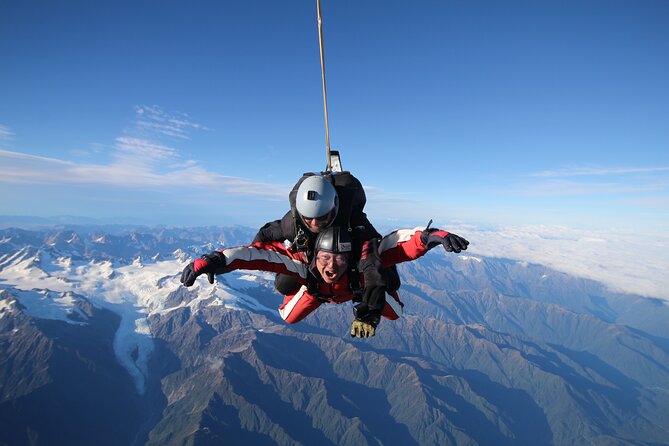
- 13,000 ft tandem from Franz Josef Glacier: fast freefall, then a calmer parachute descent over a dramatic ice-and-mountain setting
- Instructor-led safety and support: no previous skydiving experience needed for your tandem jump
- Huge range of views: you’ll go from mountaintops down toward sea level scenery during the jump
- Warm gear basics provided: helmet, gloves, goggles, and jumpsuit are included so you’re not starting from scratch
- Photography and video are optional extras: buy after the jump if you want the footage, with fast delivery reported when purchased
- Weather can affect timing: the operator runs only with favourable conditions, so plan for flexibility
Why Franz Josef Makes This Jump Feel Special
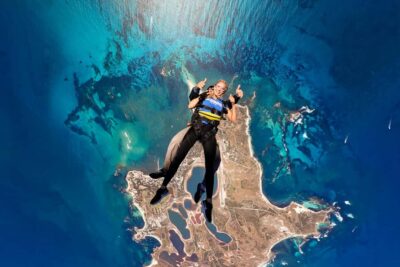
Franz Josef Glacier sits in a wild part of New Zealand where big mountains rise fast, rainforests pack close by, and the Tasman Sea isn’t far away. That’s what makes this jump more than a thrill machine. You’re not just dropping out of a plane—you’re seeing how the region fits together from above: ice fields, steep peaks, mirror-like lakes, braided river beds, and the rugged coast.
I like that your view potential isn’t stuck at one level. The experience is described as aerial views spanning from mountaintops down toward sea level. For you, that means the jump can feel like a moving postcard: the scenery changes while you’re falling, and then again while you float under the parachute.
You can also read our reviews of more tours and experiences in Franz Josef and Fox Glacier.
Tandem at 13,000 ft: What the Jump Feels Like
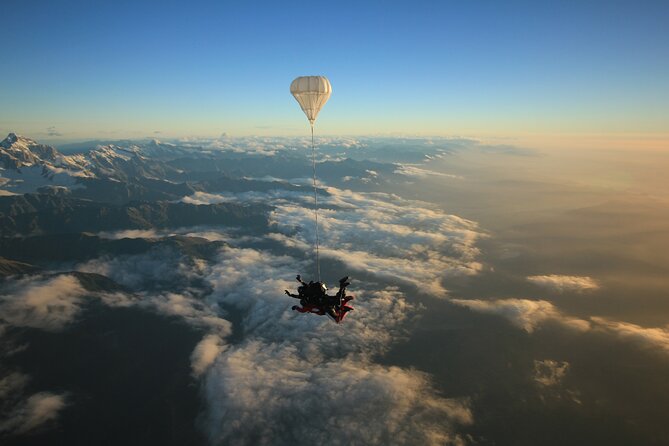
This is a tandem skydiving format, meaning you’re strapped to an instructor who guides the key moments. The key detail for your comfort is that you don’t need to be brave in a technical way. The point of tandem is that the instructor has everything under control once you’re in position.
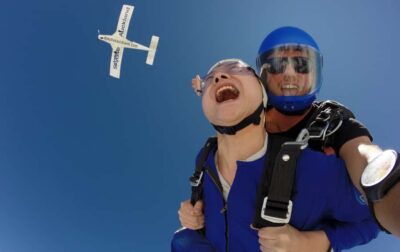
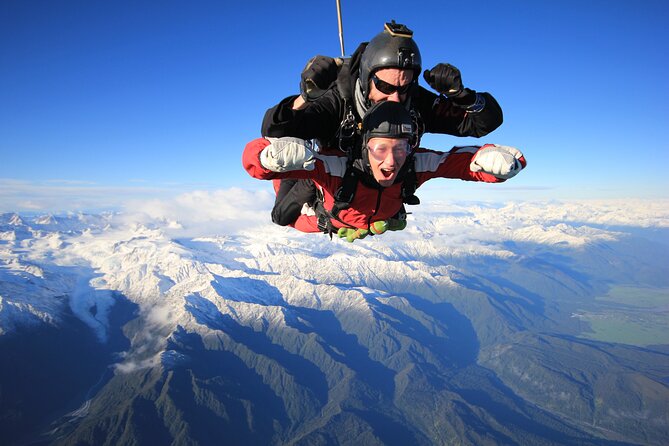
You’ll jump from about 13,000 ft. After you leave the plane, the freefall is around 120 mph / 200 kph, which is fast enough that your body’s focus narrows to sensation: wind, speed, and a very quick reality check that you’re actually doing it. Then the parachute phase shifts the feel dramatically—slower movement, more time to look around, and a steadier descent back toward the glacier region.
You should also know this is a thrill ride with physical requirements, just not an advanced skill test. The experience calls for moderate physical fitness. That usually matters because of getting in gear and managing the brief movements around check-in and boarding, not because you’ll be doing anything complicated midair.
The 3-Hour Rhythm: How the Day Actually Unfolds
The outing runs about 3 hours, and that’s a realistic total if you plan for the full flow: meet, gear up, transfer, jump, then return.
You’ll meet at 63 Cron Street, Franz Josef / Waiau 7886. From there, your package includes a round-trip shared transfer from the booking office to the airport (except under covid restrictions). That shared part is important. It usually means you’re not rushing in your own vehicle—your timing is grouped with others in the same window.
Here’s what I’d mentally budget for:
- Pre-flight time is for check-in and fitting the skydiving gear.
- Waiting time can be part of the experience because the operator needs favourable weather for a safe run.
- On-air time includes the flight up and then the jump sequence.
- Post-jump time is for landing, getting safely back together, and optionally adding the photo/video purchase if you want that extra piece.
One of the standout points from the service side is that the desk keeps people updated while waiting, and that matters. If you’re coming in anxious, steady updates help you relax into the day instead of spiraling.
Stop 1: Franz Josef Glacier Views From Above
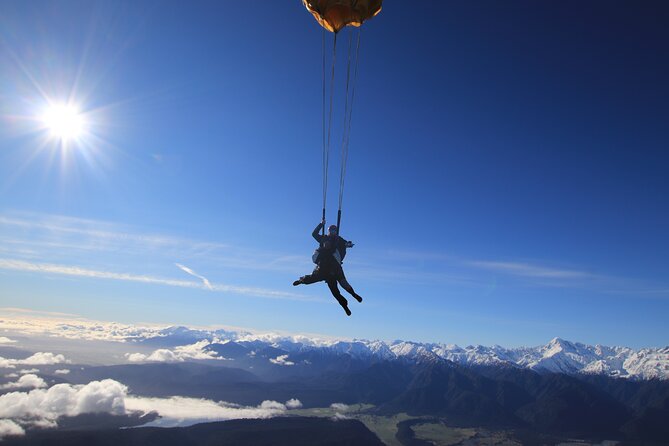
The core moment is the jump itself—Stop 1 is Franz Josef Glacier.
The setting is described as one of the most beautiful places in the world to skydive, and the reason makes sense when you picture it: glaciers sit near towering peaks and rugged coastlines, with ice and rock making strong contrast. Once you’re in freefall, the contrast is what you’ll notice first—white ice zones, dark mountain shadows, and the darker, textured outline of rivers and coastline.
Then, as you shift from freefall to parachute flight, your brain has a second job: looking. This is where the “mountaintops to sea level” idea becomes more than marketing. You get the chance to watch how the terrain changes as the ground comes closer.
What you should consider: the weather that affects scheduling also affects what you can see. On a clear day, the contrast and depth feel dramatic. On a cloudier day, you may still jump if conditions are favourable, but the view can be more muted. That’s not a fault in the experience—it’s just how sky experiences work.
Price and What You’re Really Paying For ($276.60)
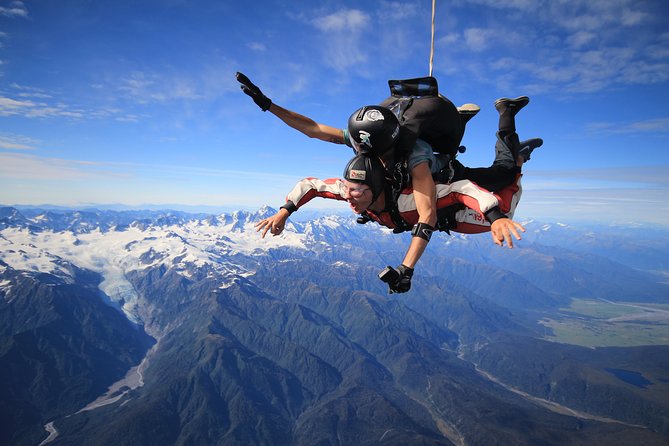
At $276.60 per person, you’re paying for a tandem skydiving slot at 13,000 ft, plus the supporting pieces that make it smooth: round-trip shared transfer (when running under normal conditions), equipment, and the basics you need to stay comfortable.
Here’s what’s included:
- Use of skydive equipment
- Helmet, gloves, goggles, and jumpsuit
- Round-trip shared transfer from the booking office to the airport, except under covid restrictions
And here’s what’s not included:
- Photo and video options (available to purchase)
- T-shirt and hoodies (available to purchase)
To judge value, I look at what would cost extra if you had to source it yourself. You’re not just buying the jump—you’re also buying gear, training support from the instructor, and the logistics of getting you airborne safely. The optional photos and video are then a second-stage purchase. That’s a good structure for you, because you can choose based on how much you want the keepsake after you experience it firsthand.
Also, there’s a cap on max travellers for the activity (up to 70). That tells you it’s a managed operation, not an endless crowd scene. It’s still smart to show up early, because the day’s timing and weather conditions control the pace.
Gear, Clothing, and Safety Comfort Tips That Matter
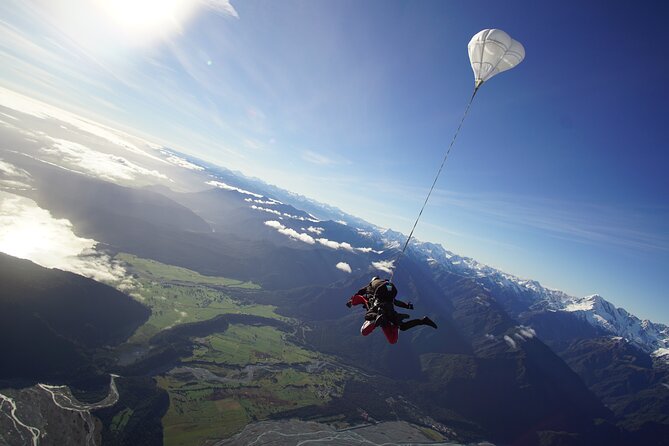
The operator provides the helmet, gloves, goggles, and jumpsuit, which removes a lot of hassle. Still, you have control over how comfortable you feel before you even get on the plane.
Wear warm lightweight clothes. On the West Coast, conditions can shift fast, and you’ll be out in the open long enough for the air to matter. Also bring secure shoes, preferably with laces. That helps with a couple of practical things: moving around calmly and getting comfortable in your provided gear.
You don’t need heavy hiking gear based on what’s required, but you do want to feel steady on your feet. When you’re waiting, your body can get cold even if you’re not moving much.
On the mental side, the tandem format is designed to take uncertainty away. You’re not making complex decisions mid-step; your instructor does the work. That doesn’t remove nerves, but it does remove ambiguity.
Photography and Video: How to Decide Without Regret
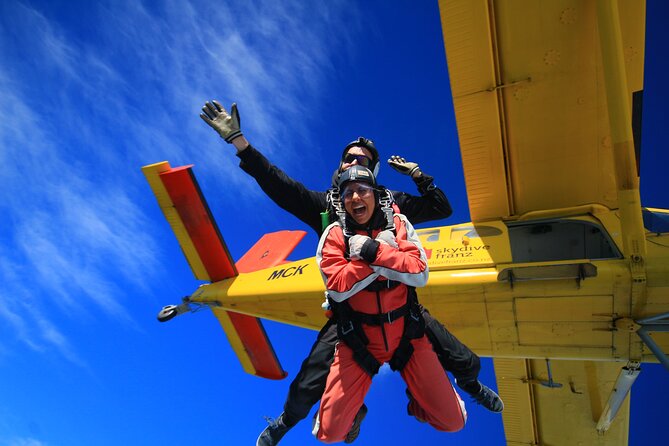
You have the option to buy photography and video after the jump. This is one of those choices where I think it’s worth planning in advance how you’ll spend the money.
Here’s why: during freefall and the parachute descent, you’re focused on body sensations and the view. Your best photos often depend on what’s captured outside your direct attention. And if you do want footage, it’s nice to know the process is handled by the team rather than by you trying to hold a camera through wind and goggles.
One reported detail that really helps your decision-making: a customer noted that after purchasing the video, they received three different videos and over 300 photos within hours. That’s the kind of quick turnaround that can turn the purchase into a satisfying instant keepsake, not a long waiting game.
If you’re budget-minded, you can also choose to go lighter: buy only video, or only photos. But if this is a once-in-a-lifetime bucket list moment, having the full sequence can be worth it.
Weather Rules: How to Stay Flexible (and Still Feel Confident)
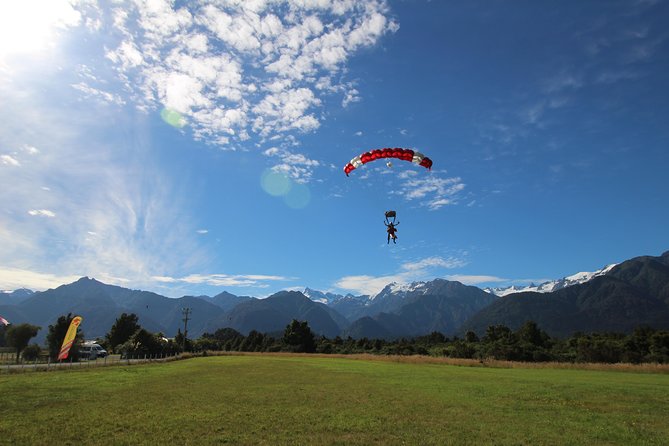
This experience is subject to favourable weather conditions. That’s not a small footnote—it’s the central reality of skydiving.
If the operator cancels due to poor weather, you’ll be offered an alternative date or a full refund. I like that option structure because you’re not trapped in a maybe-yes situation with no exit. If sky conditions don’t cooperate, you still have a path forward.
What you can do to protect your plan:
- Build in flexibility if you can, so you can take a new date if one is offered.
- Keep your packing simple and warm enough for an outdoor wait.
- Expect that your exact timing can shift based on weather windows.
Who Should Book This Tandem Skydiving Experience
This is ideal if you fit a few simple boxes.
You’ll love it if:
- You’re doing your first tandem skydiving jump and want instructor support throughout
- You want dramatic aerial views over ice, mountains, and toward the coast
- You’re aiming for a bucket list moment with a clear structure and included gear
- You’re comfortable with the idea of fast freefall for a short, guided moment
It’s also a strong match for couples, friends, or solo travellers who want an activity that feels unmistakably real. The tandem format plus the calm, professional operation (as reflected by strong ratings and comments about staying calm) makes it easier to enjoy even if you start nervous.
The one group that should think twice: anyone who’s not meeting the moderate physical fitness requirement, or anyone who knows they’ll struggle with cold and waiting outdoors. If that’s you, you might still enjoy the region, but you may want to choose a different activity that doesn’t depend on jumping conditions.
Should You Book the Tandem Skydive 13,000 ft from Franz Josef?
I’d book it if you want your New Zealand trip to include a single headline moment. The combo is tough to beat: 13,000 ft, tandem instruction, and the chance to see Franz Josef Glacier from above with views reaching from mountains down toward sea level.
It’s also good value in practical terms because the essential gear and transfer are included, and you only pay extra if you want photos and video. And if you care about confidence during the jump, the operator’s service track record looks strong, with people calling out helpful staff and instructors who keep things calm.
The only real reason to hesitate is simple: weather. If your schedule is rigid to the point where rescheduling would ruin your trip, you might feel stress waiting for a go/no-go decision. If you can flex by a day or two, this becomes a much more relaxed purchase.
FAQ
How high is the tandem skydive from Franz Josef?
It’s a tandem skydive from 13,000 ft above Franz Josef.
Do I need any previous skydiving experience?
No. This is designed for first-timers. You jump with a tandem instructor.
What’s included in the $276.60 price?
Included are the use of skydive equipment, and the use of helmet, gloves, goggles, and jumpsuit. Round-trip shared transfer from the booking office to the airport is also included except under covid restrictions.
Is photo and video included?
No. Photo and video options are available to purchase after the jump.
What happens if the weather is poor?
The experience is subject to favourable weather. If it’s cancelled due to poor weather, you’ll be offered an alternative date or a full refund.
Where do I meet for the activity?
The meeting point is 63 Cron Street, Franz Josef / Waiau 7886, New Zealand, and the activity ends back at the meeting point.