REVIEW · CHICAGO
Chicago-Rosemont Indoor Skydiving with Two Flights
Book on Viator →Operated by iFLY Indoor Skydiving · Bookable on Viator
You can fly without a plane. At iFLY Chicago-Rosemont, you float in a wall-to-wall wind tunnel with nonstop instructor support, plus you get two 60-second solo flights. What I like most is how quickly the training gets you comfortable, and how the facility aims for beginner-friendly confidence instead of intimidation.
The one drawback to think about is physical fit: you must meet health and weight limits (and you cannot fly with certain injuries or if you’re pregnant).
In This Review
- Key things to know before you go
- How indoor skydiving at iFLY Chicago actually works
- Training first: the part that makes your flight feel possible
- Your two 60-second solo flights: fast, focused, and worth doing twice
- What the session includes at iFLY Chicago-Rosemont
- The group setup: up to six in your session, one-on-one for you
- Safety, rules, and who can’t fly
- What to wear so you don’t spend your flight thinking about your clothes
- Price and value: is $131.25 worth it?
- Booking timing: how to pick a start time that feels good
- The best kind of person to book this for
- Should you book iFLY Chicago-Rosemont?
- FAQ
- How does the Chicago-Rosemont indoor skydiving experience work?
- How safe is this experience?
- What’s the minimum age to fly?
- Are there weight restrictions?
- What conditions prevent you from flying?
- Do I need to take a training session first?
- How long does each tunnel flight last?
- Can friends or family watch if they don’t participate?
- What should I wear and bring?
Key things to know before you go
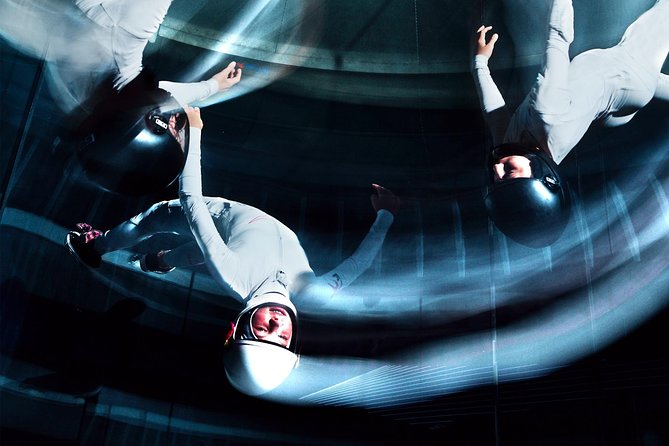
- Two solo sessions: you’ll fly 1-on-1 with your instructor twice, for 60 seconds each.
- Safety-by-design airflow: the stable, column-like cushion of air helps you stay in position with less panic.
- Short but intense: the whole experience runs about 75 minutes to roughly 90 minutes depending on flow and check-in.
- Small-group setup: up to six people in your session, so you’re not stuck waiting in a huge crowd.
- Real instruction, not just a ride: you get hands-on coaching, plus a flight achievement certificate.
- Plan for limits: weight under 300 lbs is required, and 260–300 lbs has extra check-in evaluation.
How indoor skydiving at iFLY Chicago actually works
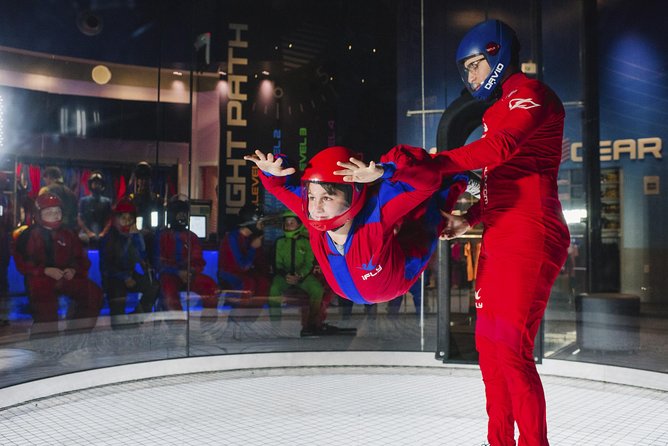
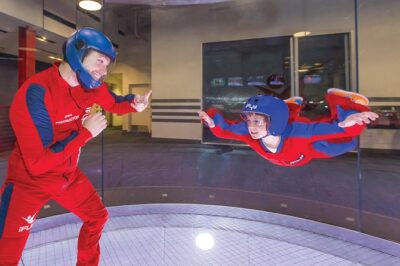
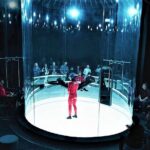
Let’s translate the hype into plain mechanics. You’re not jumping out of anything. You step into a vertical wind chamber where powerful fans push air upward, then re-circulate it to create a smooth column. As the wind tunnel ramps up, you begin to float and then stay stable in that airflow while your instructor gives direction.
A key detail is the airflow design. The wind is strong enough to hold you up, but it’s shaped so you don’t just get knocked around and flung into the walls. Your instructor stays close the entire time, and the goal is controlled stability—think learning to hover in a steady “air column,” not learning to survive chaos.
In the Chicago-Rosemont facility, the experience includes wind speeds that can reach 130 to 175 mph, which is why it feels like a rush even though it’s enclosed. You’ll likely notice the main sensation as strong wind across your face and a total focus on body position. It’s adrenaline without the landing anxiety.
You can also read our reviews of more tours and experiences in Chicago.
Training first: the part that makes your flight feel possible
You start at iFLY Chicago-Rosemont by getting fitted with gear and going through a specialized training session led by a certified flight instructor. For first-time flyers, training is required, and you’ll practice the flying position before you even step into the wind chamber for your solo runs.
This matters more than you might think. Indoor skydiving works because tiny body adjustments change how the airflow supports you. Training gives you quick answers to the questions your brain will ask later: How should your arms sit? Where should your head be? What posture helps you stay stable?
The staff also run you through safety basics so you can stop guessing once the wind hits. And because it’s one-on-one coaching, you get corrections in real time. That’s the difference between feeling like you’re doing it yourself and feeling like you’re being guided through it.
I’ve seen people specifically light up when instructors explain what’s happening, not just what to do. One reviewer mentioned an instructor demo that made everyone want to learn. Another highlighted instructors being amazing with kids, which usually comes down to clear, calm coaching. That’s exactly what you want before your own turn.
Your two 60-second solo flights: fast, focused, and worth doing twice
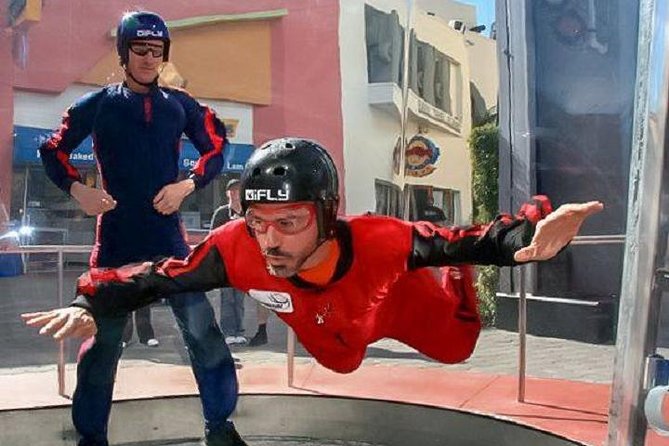
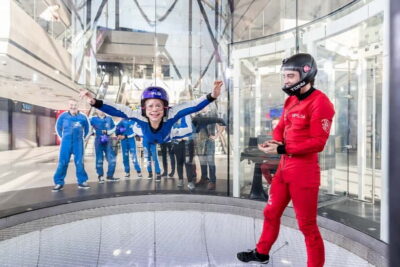
You fly one-on-one with your instructor for 60 seconds twice. Those two runs are the sweet spot. Your first flight is about finding balance and learning what stable feels like. Your second flight is where most people relax enough to enjoy the moment and try the movements your instructor suggests.
A practical way to think about it: your body learns quickly, but only if you get feedback right away. The second session lets you apply what you learned in the first run instead of repeating the same experience with no new info.
During both flights, the tunnel operator controls wind speed and gradually increases it until you and your instructor are airborne. Because you stay inside the flight chamber the whole time, there’s no jump, no drop, and no motion sickness-style falling sensation. You’ll still feel intense wind, and your brain will still treat it like a big deal, but it’s not the same feeling as freefall.
Also, watch for the instructor demo at the end. Several reviews mention instructors showing tricks or advanced movement after flights. Even if you’re a beginner, it helps you see that your “first day” is part of a bigger skill ladder.
What the session includes at iFLY Chicago-Rosemont
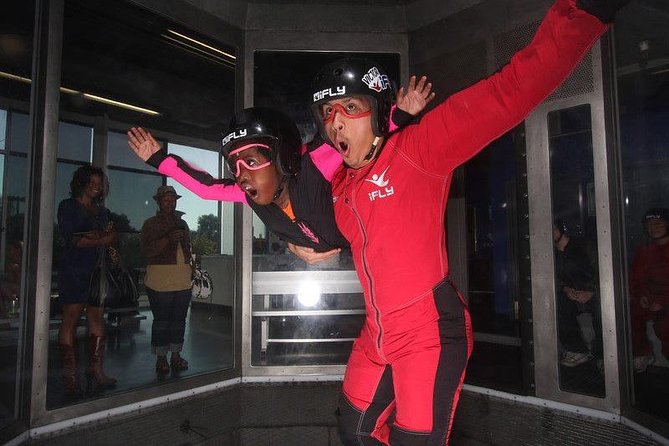
Your indoor skydiving experience runs about 75 minutes from start to finish, though your total time can be closer to 1.5 hours depending on your session flow. The plan is simple:
- Check in and gear up
- Training and practice in the facility
- Two wind-tunnel flights, one-on-one each time
- Debrief and a certificate of flight achievement
That certificate is a small thing, but it’s nice because it turns the experience into something you can point to later. It also makes sense for kids and first-timers who want proof they did something real, not just “stood in a room and watched a video.”
If you need to choose a start time, do it based on how you handle waiting. The experience is short enough that picking a time with fewer delays can make the day feel smoother.
The group setup: up to six in your session, one-on-one for you
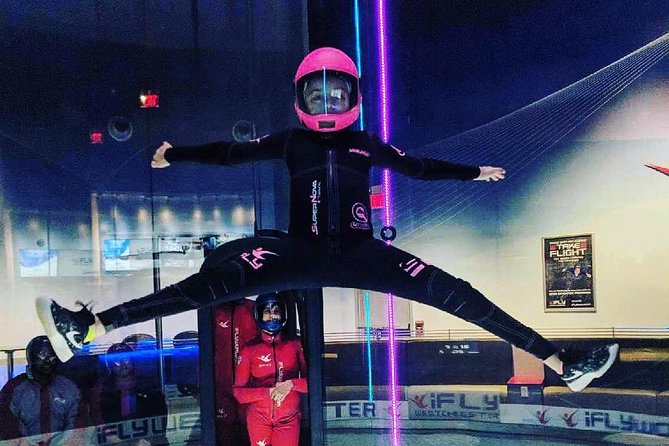
Each tunnel session is small—up to six people in the group—so the environment stays focused. You won’t be “in the tunnel together.” Instead, your friends or family might be nearby in the same session, but you fly at your own turn with your instructor while others wait in the observation area.
This is a big deal for families. Kids often get excited watching the people before them, and the observation area gives everyone a chance to react in real time. One review specifically praised the experience for kids and mentioned a strong instructor presence. If you’re bringing younger flyers, you’ll appreciate that the vibe is active and social without becoming chaotic.
If you’re the type who hates being separated from your group, plan ahead for the timing: you’ll go when your turn comes, and you may have a little waiting in between. The upside is that it stays manageable because group sizes are capped.
Safety, rules, and who can’t fly
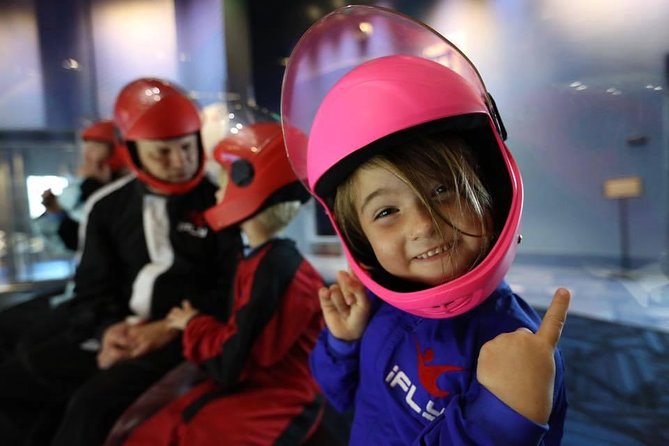
Indoor skydiving is built to be safe, and the core safety logic is the stable airflow plus trained instructors who stay with you. Your instructor is in position to guide and spot as needed, and the design is meant to reduce the chance of you slipping out of the airflow column.
That said, there are clear limits. You won’t be able to fly if you have previous neck or back injuries, heart issues, shoulder dislocations, are pregnant, or if you’re wearing a hard cast. These restrictions aren’t about comfort—they’re about risk management.
Weight limits are also part of safety. You must weigh less than 300 lbs. If you’re between 260 and 300 lbs, you have additional evaluation during check-in, and iFLY may not be able to accommodate you. The team will decide locally after you arrive.
Health and weight limits aren’t usually a “maybe.” If you’re on the edge, it’s worth confirming before driving out. The staff can also evaluate you at check-in, but you don’t want to build your day around an outcome you can avoid.
Minimum age is 3 years. If you’re flying with kids, remember that children under 18 must have a parent or guardian sign their waiver.
What to wear so you don’t spend your flight thinking about your clothes
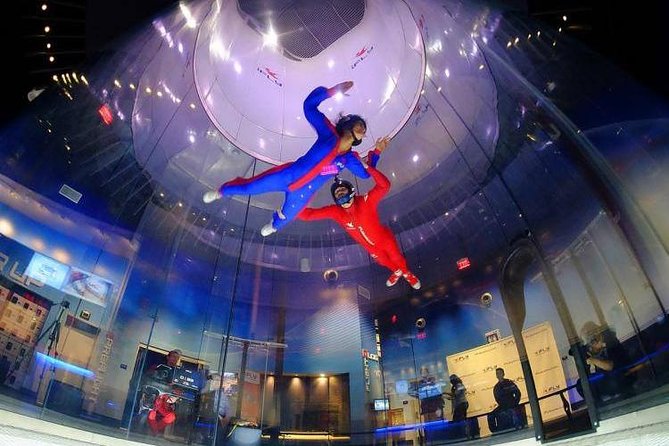
This is one of those experiences where clothing can either help you or distract you. Wear well-fitting, lace-up sneakers or running shoes and comfortable clothes. Prefer pants and a shirt without a collar, since you’ll wear the flight suit on top.
A few practical prep tips that matter once you’re in the chamber:
- Remove items that could flap or loosen (jewelry, watches, hair accessories, anything small and dangling).
- Empty your pockets.
- If you have long hair, tie it in a low bun or braid so it stays secure.
- If you wear glasses, you can use larger goggles that fit over them.
No one wants to worry about your watch during a wind blast. The goal is to keep you focused on posture and breathing.
Breathing is straightforward in this setup. You’ll feel wind across your face, but you’re not breathing through a mask or anything restrictive. You just breathe normally through your mouth or nose.
Price and value: is $131.25 worth it?
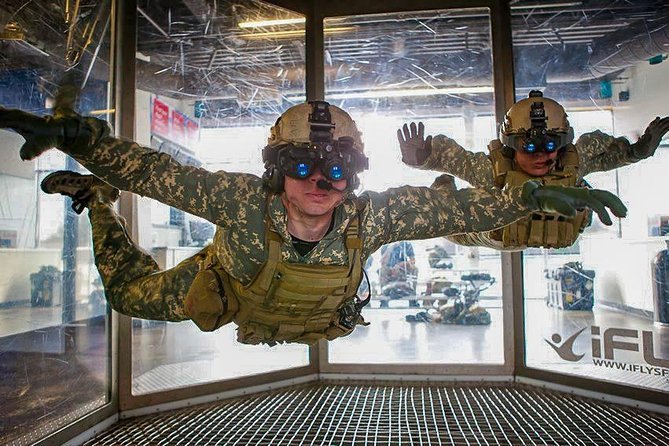
At $131.25 per person, the cost may feel high if you compare it to a typical “attraction.” But this isn’t a long museum visit. You’re paying for a skilled instructor, a guided training session, gear, and two real one-on-one flights inside a high-powered wind tunnel.
That’s why it often lands well as a birthday gift, a first-time adventure, or a “we need something different” day in Chicago. The flights are short, but they’re intense—and you don’t get that kind of beginner-friendly, coached thrill at most activities.
Also, you’re not stuck with one try. Two solo sessions for one price is part of the value. The second flight is your opportunity to improve on what you just learned.
If you’re traveling with a group, you might feel the budget hit more. Still, for families and couples, it’s one of those “everyone talks about it later” experiences. Reviews back up that it’s especially loved by first-timers and kids, largely because instructors make it feel doable quickly.
Booking timing: how to pick a start time that feels good
The experience lets you choose a start time. Do yourself a favor and pick one that reduces stress. Indoor skydiving isn’t long, but it does require time for gear and training. You’re also asked to arrive 10–15 minutes early so check-in doesn’t compress your whole experience.
Plan for a short day, not a marathon. The facility runs sessions, so arriving on time keeps you in sync with the schedule. If you go in knowing you’ll be ready to start promptly, the whole day feels smoother.
The good news: the session itself is efficient. You aren’t waiting hours between training and flight. The “getting started” time is built into the experience flow.
The best kind of person to book this for
This is a great match if you want a safe, beginner-friendly thrill that teaches you something physical right away. It’s also a smart choice if you’re traveling with kids old enough to follow directions and handle the excitement.
It’s especially well-suited for:
- First-time thrill seekers who don’t want freefall anxiety
- Families looking for an experience that feels interactive
- Couples who want something more memorable than a standard attraction
- Gift-givers who like experiences that come with a real “wow” moment
If you’re an adrenaline person who wants bigger tricks, you might find some advanced movement possible later. The facility notes that flips and tricks are for experienced flyers, but beginners may be able to do turns or controlled movements depending on the instructor and your progress.
A small but useful mindset shift: go in expecting learning. The goal isn’t perfection. It’s having control by the second run.
Should you book iFLY Chicago-Rosemont?
I think you should book if you want a straightforward way to experience the feeling of flight with training, two coached runs, and a good chance of leaving with a grin (and a certificate). The instructor-led format is the core reason this works, and the best reviews consistently point to instructors making it fun, clear, and confidence-building.
Skip it or double-check first if you’re dealing with the listed medical limits, you might be right at the weight boundary, or you know your day can’t handle strict adherence to timing. Also, if you hate waiting, pick your start time carefully so you’re not sitting around too long.
If you want one practical decision tip: bring the person in your group who gets nervous easily, then bring the patient instructor energy that you’ll feel once training starts. That combo is where this experience shines.
FAQ
How does the Chicago-Rosemont indoor skydiving experience work?
You fly using a vertical wind tunnel that moves air in a vertical column. Fans create a smooth airflow that lets you float while an instructor guides you.
How safe is this experience?
It’s designed to be safe thanks to the wind tunnel’s stable airflow and the presence of certified instructors who stay with you during the flight.
What’s the minimum age to fly?
The minimum age is 3 years.
Are there weight restrictions?
Yes. You must weigh less than 300 lbs. If you weigh between 260 and 300 lbs, additional evaluation by local staff is required, and accommodation may not be possible.
What conditions prevent you from flying?
You won’t be able to fly with previous neck or back injuries, heart issues, shoulder dislocations, pregnancy, or if you’re wearing a hard cast.
Do I need to take a training session first?
Yes. First-time flyers are required to take the training class before flying.
How long does each tunnel flight last?
Each wind tunnel flight lasts 60 seconds, and you’ll fly twice.
Can friends or family watch if they don’t participate?
Yes. If someone chooses to watch, they can accompany you and watch from the observation area.
What should I wear and bring?
Wear well-fitting lace-up sneakers or running shoes and comfortable clothes. Remove loose jewelry and empty your pockets. Long hair should be secured, and glasses can be worn with goggles that fit over them.