REVIEW · FRANZ JOSEF TOWN
Franz Josef: 13,000ft, 16,500ft or 18,000ft Skydive
Book on GetYourGuide →Operated by INFLITE Mt Cook Ski Planes & Helicopters · Bookable on GetYourGuide
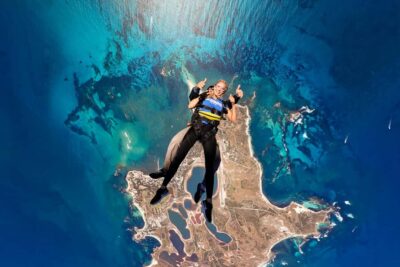
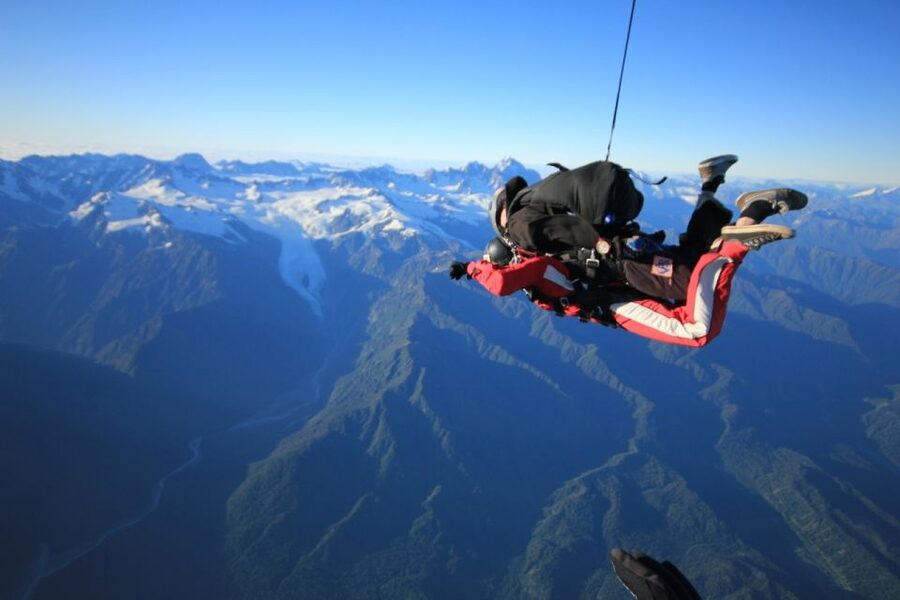
The glacier views hit before you land. This tandem sky jump is all about raw air time over Franz Josef. You trade solid ground for a quick exit, a controlled freefall, and a smooth parachute float back down with mountains, temperate rainforest, and glaciers in your window.
What I like most is the tandem setup with an experienced instructor, plus the fact you can choose from 13,000, 16,500, or 18,000 ft. That lets you match your nerves to your ambition. The one real drawback is weather. Flights can shift or be delayed, so you need flexibility and a backup day if possible.
In This Review
- Key things that make this jump worth it
- Why Franz Josef’s tandem sky jump feels different
- Choosing 13,000 vs 16,500 vs 18,000 ft: what changes
- Your 3 hours on the ground: what the schedule usually feels like
- The moment you leave the plane: nerves, control, and real talk
- From parachute to landing: where the scenery takes over
- Price and value: what you’re really paying for
- Restrictions you should follow before you go
- Who should book this jump—and who should think twice
- Should you book INFLITE Mt Cook Ski Planes & Helicopters in Franz Josef?
- FAQ
- What heights are available for the jump?
- Is this a good option if it’s my first time?
- What if the weather isn’t good on my scheduled day?
- What’s included in the $25 price?
- Are there any restrictions on what I can bring?
- Are there weight and age limits?
Key things that make this jump worth it
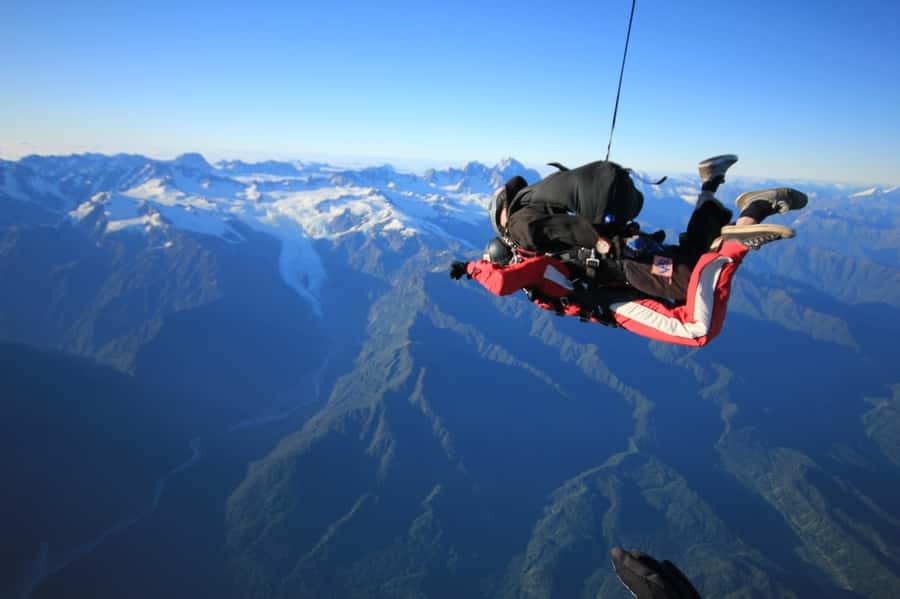
- Highest height options near Franz Josef: pick 13,000, 16,500, or 18,000 ft depending on your comfort level
- Time in the air varies by height: freefall is about 45, 65, or 85 seconds
- Safety brief + full gear included: you’re not figuring anything out alone
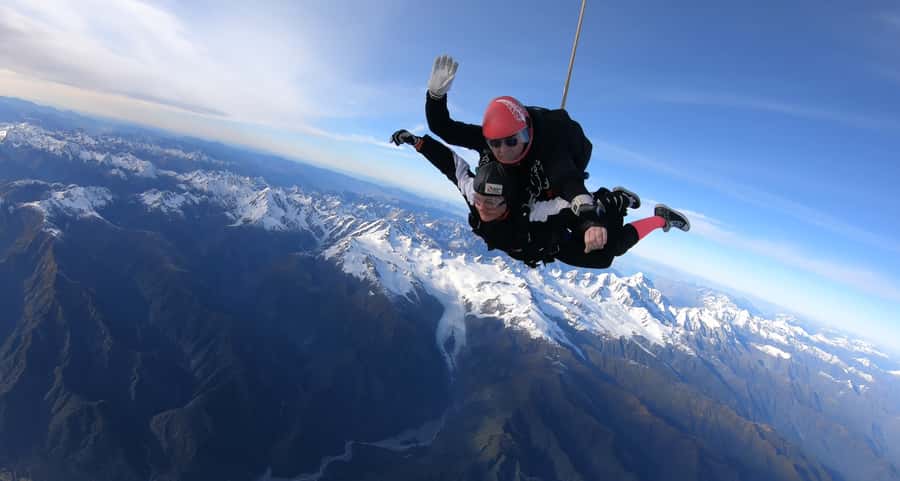
- Glacier and rainforest scenery: dramatic mountains and a temperate rainforest look from above
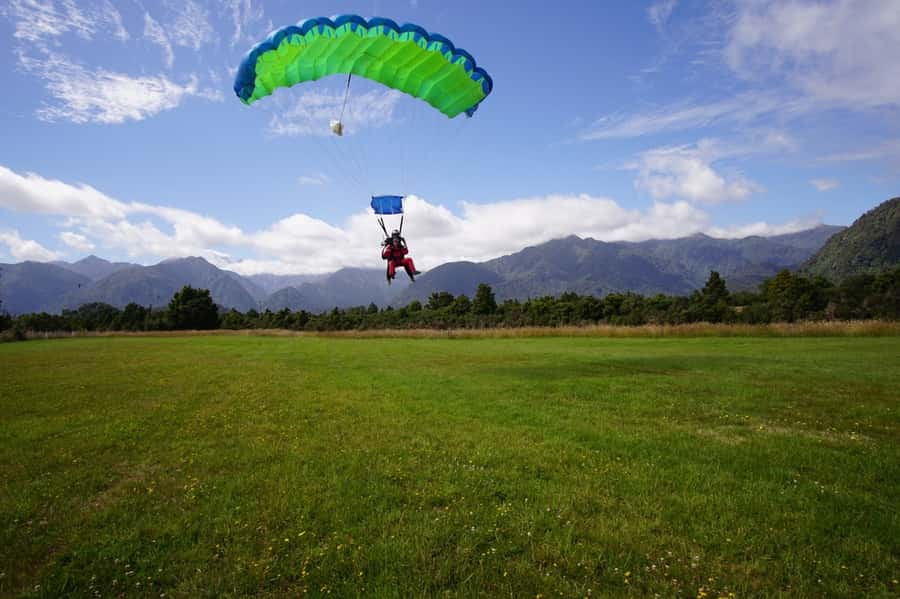
- Landing isn’t at sea level: your canopy descent ends around 300 feet above sea level
- Instructors can be calming: people call out crew members who keep first-timers steady
Why Franz Josef’s tandem sky jump feels different
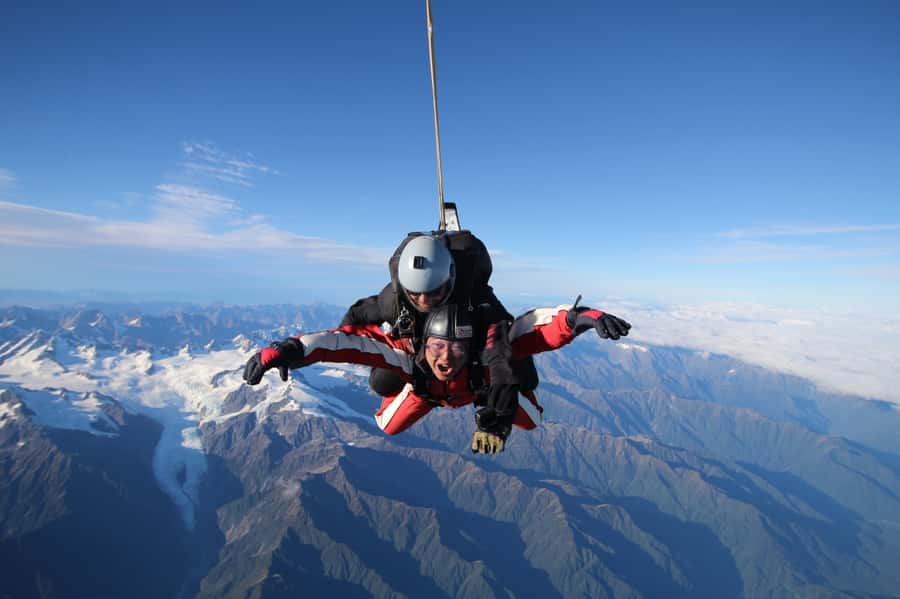
Franz Josef is the kind of place where the ground already looks otherworldly. That’s why jumping here hits so hard: you’re not just doing an adrenaline activity, you’re changing perspective on a whole region.
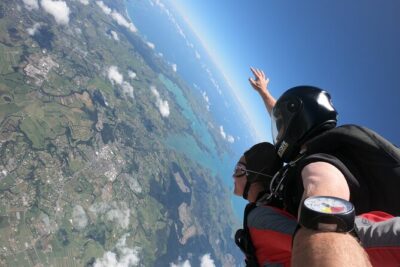
From up high, the mountains and glacier country stretch out in a way that feels almost too big for the plane window. Then, once you’re under canopy, you get that slower, more scenic phase. Several jumpers describe the view as insane, especially when you’re above cloud level. That slow float is where you can actually look around instead of counting seconds.
The other thing I appreciate is the format: it’s a tandem jump. That means you’re attached to your instructor the entire time. For first-timers, that’s the difference between hesitating at the door and just staying present for the moment.
Choosing 13,000 vs 16,500 vs 18,000 ft: what changes
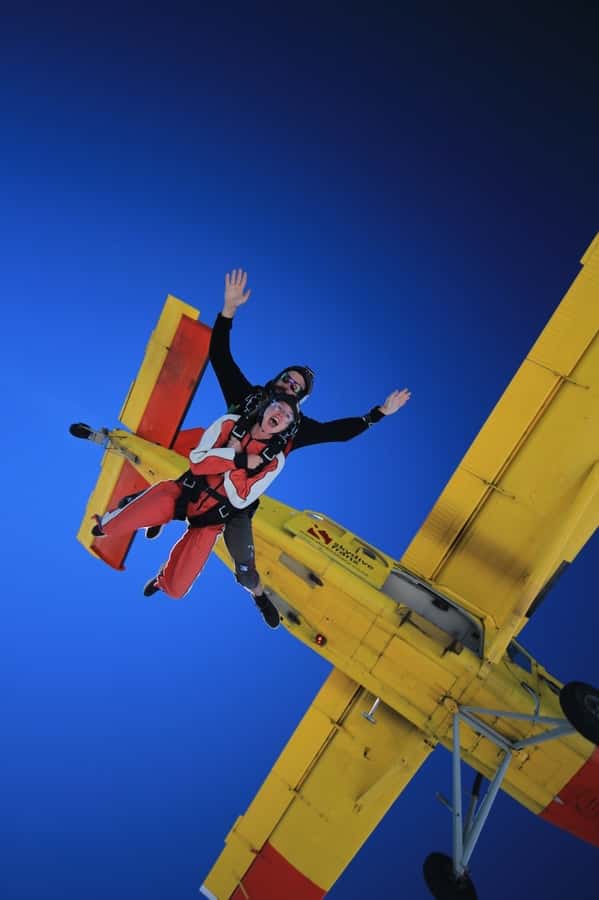
You’ve got three jump heights, and they directly affect your freefall time.
- 13,000 ft: about 45 seconds of freefall
- 16,500 ft: about 65 seconds of freefall
- 18,000 ft: about 85 seconds of freefall
If you’re nervous, the lower height is often the best first step. You’ll still get that immediate drop feeling, but you’ll spend less time in the high-speed phase. If you already know you want the full hit, the 18,000 ft option is the one people mention with zero regrets.
Also pay attention to the rules: children aged 13–16 can only jump at 13,000 ft. If you’re 16 and up, you may be able to jump at any height, but anyone under 18 requires written parental consent.
Your 3 hours on the ground: what the schedule usually feels like
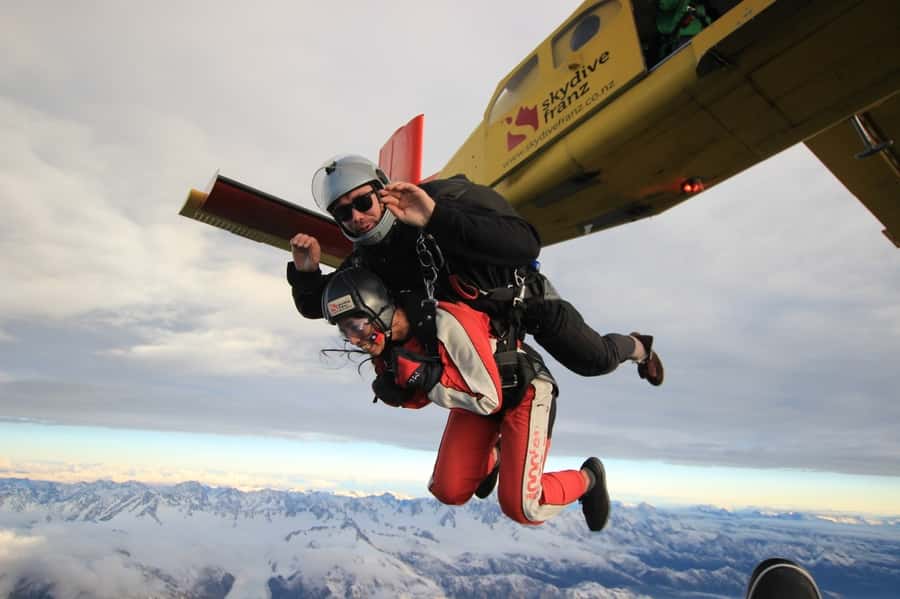
This is listed as a 3-hour activity. That doesn’t mean you’re in freefall for three hours. It’s the total block: check-in, paperwork, gear, briefing, transport, and the waiting that happens when weather decides it wants a say in timing.
Here’s what you can expect in order:
- Meet your instructor and get your safety briefing.
- Prepare equipment with the team. You’re harnessed for a tandem jump, and your instructor handles the setup.
- Head to the airfield/aircraft with the operator’s transport service (the transport quality is rated very highly, with 93% giving a perfect score).
- Fly up to your chosen flight level.
- Jump, freefall, parachute deployment, then canopy landing.
That last part matters because you’ll want to treat this like a mini outing, not a quick in-and-out. Wear comfortable clothes, and plan to be on Franz Josef time: relaxed, flexible, and ready to wait if needed.
The moment you leave the plane: nerves, control, and real talk
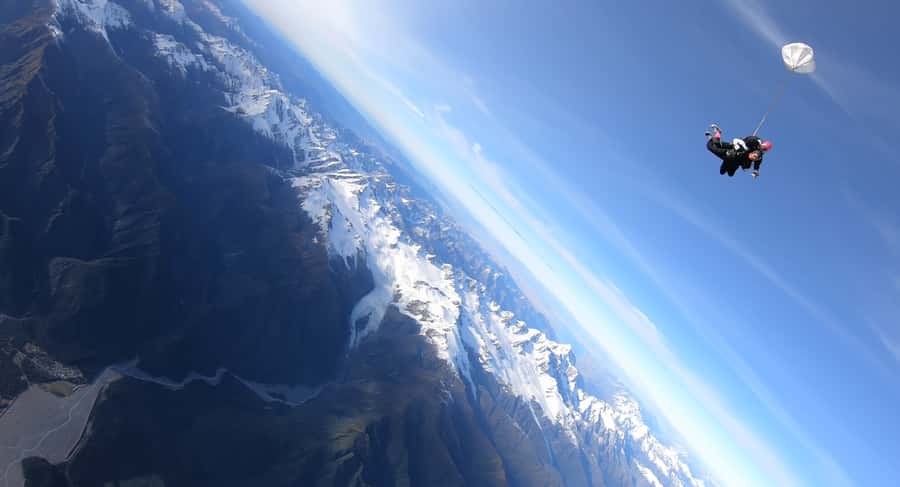
The first seconds are the mental hurdle for most people. Even in positive reviews, people call out that the opening moments can feel scary. That’s normal. Your body reacts before your brain can do anything fancy.
What helps is that you’re not doing this alone. Your instructor gives you the safety briefing, stays with you through the exit and freefall, and helps you feel secured. More than one review specifically mentions instructors calming a nervous first-timer, using straightforward reassurance and keeping things under control.
You might hear names like Lauren (shown as assisting at the airfield) and instructors such as Danny and Dani in feedback. That’s a good sign of consistency: the team seems to focus on comfort and clear communication, not just the thrill.
One practical tip: stop trying to mentally choreograph everything. Instead, focus on a simple plan—listen to the briefing, breathe when you can, then let the instructor guide what comes next.
From parachute to landing: where the scenery takes over
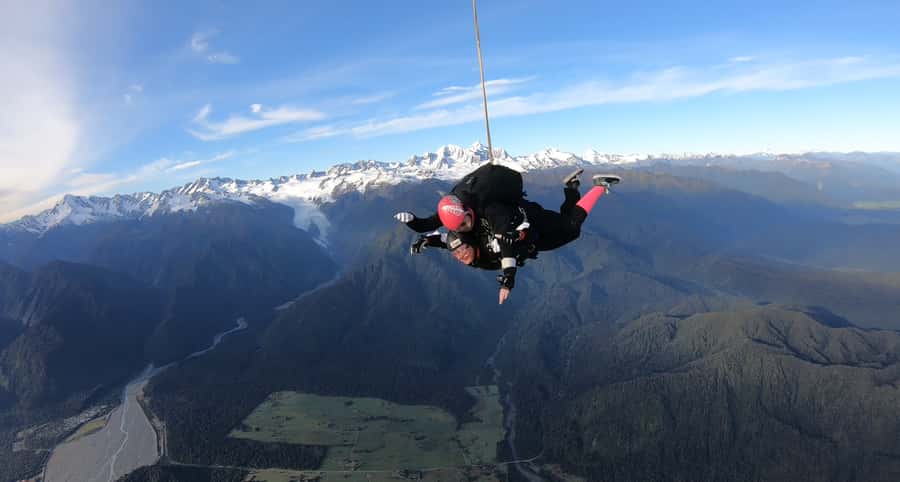
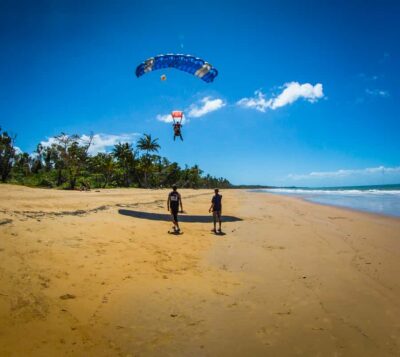
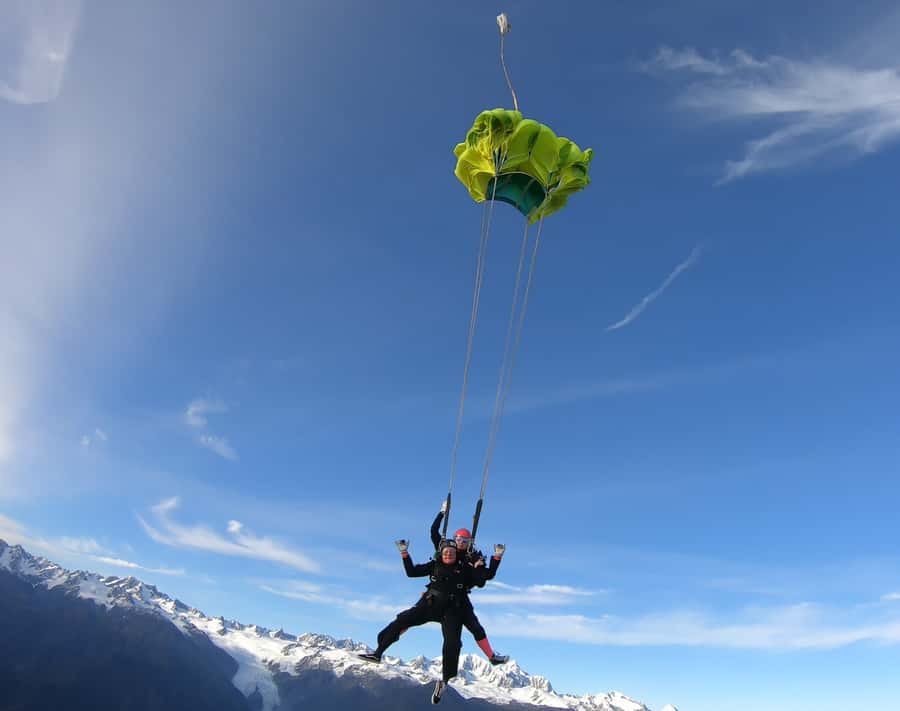
After your freefall segment, the parachute opens and the tone changes fast. You go from speed and sound to a calmer, controlled ride where your attention finally has somewhere to land—literally and visually.
You’ll float back down to an area about 300 feet above sea level. During that canopy phase, you’re looking at:
- dramatic mountains
- temperate rainforest
- glacier country
- and often a big view of sky and cloud layers
This is also where the jump becomes more than adrenaline. Reviews repeatedly mention the wow factor of the scenery, including views above clouds. If your goal is to collect a memory you’ll replay for years, the parachute phase is where it locks in.
Price and value: what you’re really paying for
At $25 per person, this is priced like a steal—especially because the cost you’re seeing includes a lot of what usually makes sky activities expensive.
Included:
- the jump
- safety briefing
- your instructor
- all equipment
Not included:
- food and drinks
On top of that, keep two value notes in mind:
- Weather can adjust timing. All jumps depend on favorable conditions. You may wait, reschedule, or shift to the first available day. Plan with flexibility so you don’t end up stressed and late for the rest of your trip.
- Weight assessment can change what you pay. People over 100 kilograms may incur surcharges on the day. That’s not unusual for operations that must keep strict safety margins—just know it ahead of time so there are no surprises.
Finally, one review mentions the media package can be pricey. The good news: it sounds optional. If you want video or photos, budget extra, and only buy it if it’s meaningful to you.
Restrictions you should follow before you go
This operator is clear about what not to bring or use:
- No drones
- No selfie sticks
If you’re thinking about filming, plan to rely on the instructor team’s setup and any offered media add-ons. Trying to bring your own gear is a good way to waste time at check-in.
Also remember: your date and/or time might differ from what you request. The operator confirms the exact flight time by email after booking, so double-check your messages before heading out.
Who should book this jump—and who should think twice
This is a strong fit if:
- you want a first-time-friendly tandem format
- you’re excited by scenery as much as the adrenaline
- you want to choose your intensity level (45 vs 65 vs 85 seconds of freefall)
- you like the outdoors and you’re already planning to base yourself around Franz Josef
You might pause before booking if:
- you can’t handle uncertainty around weather timing (jumps rely on favorable conditions)
- you know you’ll be unhappy with delays or rescheduling
- you’re bringing extra personal filming gear (because selfie sticks and drones are not allowed)
For most people, the decision comes down to one question: are you okay trading comfort on the ground for a short burst of controlled chaos in the sky? If yes, this is a very good way to spend a day in South Island New Zealand.
Should you book INFLITE Mt Cook Ski Planes & Helicopters in Franz Josef?
I’d book it if you want the real Franz Josef view—glaciers, rainforest, and mountains—seen from above, with an instructor doing the hard parts. The tandem format, safety briefing, and included equipment make it feel accessible, even when you’re nervous at first. The price also makes it easy to justify, especially compared with many similar high-adrenaline activities.
Just book with two practical habits:
- Choose your first available day, and leave an alternative day free if you can.
- Think about your intensity level honestly: 13,000 ft is still a lot of adrenaline; 18,000 ft is for people who want the longest freefall.
If that sounds like your kind of trip, this is one of those experiences you’ll talk about for years.
FAQ
What heights are available for the jump?
You can choose a flight level of 13,000 ft, 16,500 ft, or 18,000 ft. Freefall time is listed as about 45 seconds, 65 seconds, or 85 seconds respectively.
Is this a good option if it’s my first time?
Yes. It’s a tandem jump with an experienced instructor, which is described as the fastest, easiest, and safest way for an inexperienced skydiver to enjoy the thrill of jumping out of a plane.
What if the weather isn’t good on my scheduled day?
All jumps are subject to favorable weather conditions. It’s recommended to book for your first available day in Franz Josef and keep an alternative day free for flexibility. If you can’t rearrange to another date, you’ll receive a full refund.
What’s included in the $25 price?
Your booking includes the jump, safety briefing, instructor, and all equipment. Food and drinks are not included.
Are there any restrictions on what I can bring?
Yes. Drones and selfie sticks are not allowed.
Are there weight and age limits?
Participants are subject to a tandem master assessment, and people over 100 kilograms may incur surcharges on the day. Children aged 13–16 can only jump at 13,000 ft. Children over 16 may jump at any height, but those under 18 need written parental consent.