REVIEW · BAY OF ISLANDS
Bay of Islands: 9000ft Skydive
Book on Viator →Operated by Skydive Bay of Islands · Bookable on Viator
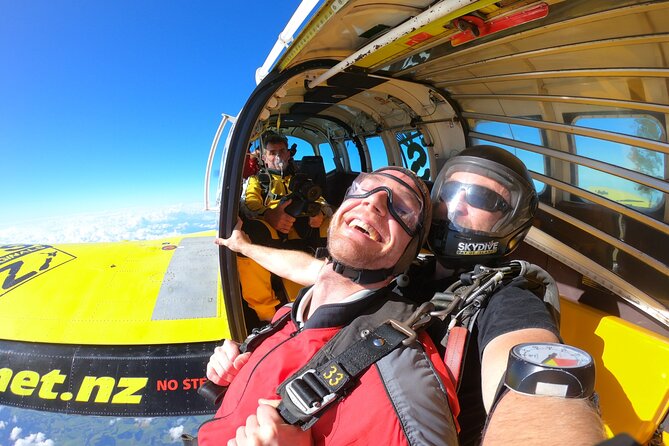
A good skydiving day starts with a map. From 9,000 feet over the Bay of Islands, you get a rare view of how this place is built—lots of water, lots of islands, and then the drop. The best part here is the tandem setup, so you’re not stuck figuring out gear and procedures mid-thrill.
Two things I really like about this experience are the clear focus on doing it safely with all training and equipment provided, and the way the day is paced like a mini tour before you jump. The other big plus is the optional instructor photo and video purchase afterward, so you can relive it without wrestling with a GoPro while freefalling.
One thing to consider: the process at the drop zone can take a while, especially if you’re in a later group, and you should expect strict handling for harness setup. I also saw one report with a coach named Andrew using harsh wording for a nervous jumper—if you’re anxious, it’s worth saying so up front and asking for reassurance before you step into the gear.
In This Review
- Key highlights worth planning for
- Bay of Islands skies: what a 9,000-foot jump really shows you
- Tandem reality check: safety gear, nerves, and how the day feels
- Your 4-hour day: pickup, weather calls, and what to budget
- Itinerary on the ground: Bay of Islands spots you’ll recognize from above
- The island archipelago briefing
- The northernmost tip reference point
- Coastal town views during the drive
- The historic waterfront town across the bay
- Birthplace-of-modern-New Zealand grounds from above
- The largest island and its clear-water look
- Inland historic stop with some of the oldest stone buildings
- Cape Brett: rugged cliffs and a natural arch
- Rainbow Warrior memorial near Matauri Bay
- Jump day details that affect your comfort (more than you think)
- Photos and video: the souvenir you’ll actually want
- Price and value: does $204.11 make sense here?
- Who should book this skydive, and who should reconsider
- Should you book Bay of Islands 9,000ft Skydive?
- FAQ
- What height is the skydive from?
- Is this a tandem skydive?
- How long does the experience take?
- Do you offer pickup from Paihia, Kerikeri, or the cruise port?
- What is the weight limit?
- Do I need to print my ticket or voucher?
- What should I wear?
- Do I need to call the day of my jump?
- Are service animals allowed?
Key highlights worth planning for
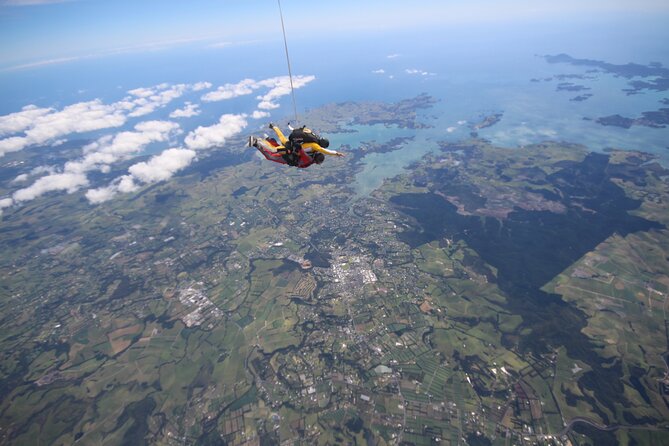
- 9,000-foot tandem jump with a fast freefall and a calmer canopy descent
- Photo/video included from the instructor for purchase after your jump
- Hotel and cruise pickup from central Paihia, Kerikeri, and the cruise port
- Clear-day views of the meeting point of two oceans, even if it’s not always visible in the jump itself
- A full Bay of Islands aerial tour vibe using multiple scenic reference points before takeoff
- Max 20 travelers, so you’re not crammed into a huge cattle line
Bay of Islands skies: what a 9,000-foot jump really shows you
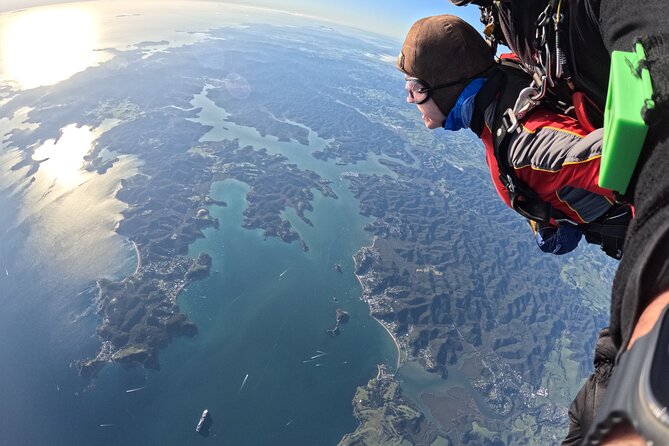
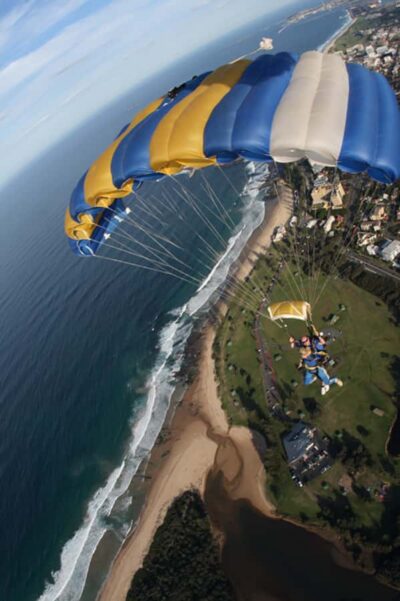
When you picture the Bay of Islands, you probably think beaches and boats. From the air, it’s something else. You see why people come here: the water changes shades as the islands scatter out like puzzle pieces. With the jump around 9,000 feet (2,750 meters), you’re high enough to understand the scale, but still low enough to feel the speed when you hit freefall.
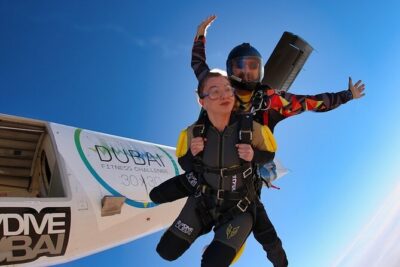
The experience is tandem, which matters more than it sounds. You’re not managing altitude charts or body position—you’re following a qualified instructor through the jump sequence. That means your attention can go to the stuff that counts: the view, the sensations, and the quick way your day flips from waiting to flying.
You’ll also get references to the wider region during the day. On a clear day, the jump area can offer sightlines toward where the Tasman Sea meets the Pacific Ocean. Even when you can’t see it directly from your exact jump path, the day’s route gives you a sense of place so the aerial view makes sense instead of feeling random.
You can also read our reviews of more tours and experiences in Bay of Islands.
Tandem reality check: safety gear, nerves, and how the day feels
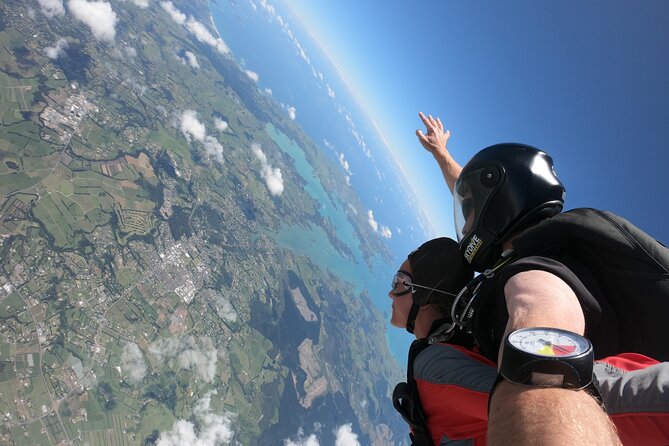
This is one of those experiences where “safe” is not a slogan. The day is built around training and equipment being provided, plus an instructor who rides with you. That also means you’ll go through harness checks and setup that are firm and deliberate.
All training and safety equipment are provided, and the activity is limited to people with at least moderate physical fitness. You’ll also want to wear comfortable clothing and closed-toe shoes, because you’ll be moving around on the ground before you ever get in the air.
If you’re nervous, be proactive. One negative review described a coach named Andrew speaking bluntly to a nervous flyer and then handling the harness in a way that felt harsh. That’s not the tone I’d prefer, and it’s a reminder that you should speak up early if you need patience or a gentler explanation. The good news: the same overall set of feedback also includes reports of instructors being fantastic and safety being taken seriously. Translation: you’re very likely to be looked after—but your best move is to tell them how you feel before they start strapping you in.
Also keep expectations realistic about timing. Processing can run long, and you might be placed in a later group if lots of people show up at once. That’s annoying when you’re excited. Plan for it so you don’t feel rushed.
Your 4-hour day: pickup, weather calls, and what to budget
The whole experience runs about 4 hours total, but the actual skydive time is typically around 1.5 hours. That difference is normal in aviation days. Weather and operational needs can change plans, so it’s smarter to treat your schedule like you’re building a buffer, not like you’re catching a tight train connection.
You can get two-way transfers from central Paihia or Kerikeri hotels and also from the cruise port. The start point is at 182 Wiroa Road in Kerikeri, and the activity ends back at the meeting point. If you’re staying in the Bay of Islands region, this makes the experience feel more “simple day out” and less “drive yourself through a weather decision.”
One very practical rule: you must call 1 hour before your skydive time to confirm conditions are suitable. It’s one of those things that can feel old-school, but it also protects you from showing up expecting a jump that may not happen. If you’ve never skydived before, set a reminder early so you don’t lose that call time in the adrenaline of the day.
Finally, plan clothing and footwear for motion. You’ll be walking and getting ready, and you want to feel steady on your feet before you’re suspended in a harness.
Itinerary on the ground: Bay of Islands spots you’ll recognize from above
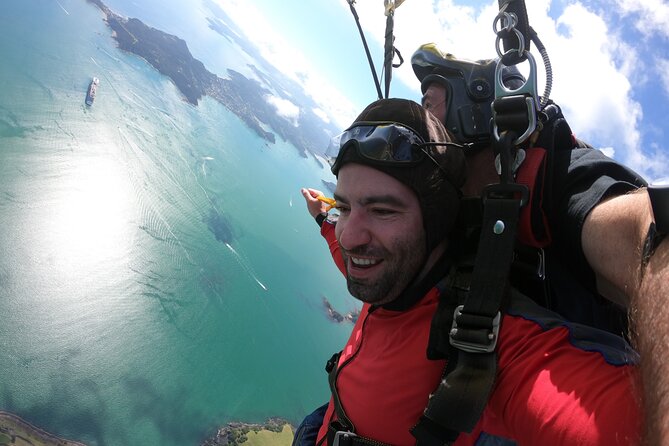
This day isn’t only about the jump. It also sets you up with visual landmarks, so when you’re in the air you’re not staring at random water and wondering where you are.
The island archipelago briefing
You start with the big idea: a wide spread of islands and clear water, with beaches and marine life you’d never notice from a road viewpoint. Even though you won’t count every island from the sky, you’ll get the “shape” of the region early, which makes the jump feel more meaningful afterward.
The northernmost tip reference point
You’ll also hear about the northernmost tip of New Zealand, where the Pacific and the Tasman Sea meet. It’s important that this part is described as reference/spiritual significance, because that doesn’t mean you’ll necessarily see it during most jumps. Still, it gives you context so your pilot’s route and the day’s geography clicks.
Coastal town views during the drive
A coastal town offering stunning vistas is often visible during jumps. That matters because you’ll likely spot a familiar shoreline angle when you’re up there. If you’re the type who likes to “map” what you’re seeing, this helps a lot.
The historic waterfront town across the bay
Next is a historic town across the bay from Paihia. Even if you don’t explore the town on the ground, it helps you connect the air view to real places. From the sky, bays read like bowls. From the road, they read like coastlines. Put the two together and you start understanding the Bay of Islands like a local.
Birthplace-of-modern-New Zealand grounds from above
There’s a stop tied to the birthplace of modern New Zealand, with historical grounds and aerial views of the area. You don’t need a lecture to appreciate it. When you’re above, the shape of a place becomes its own story: how roads connect, how shorelines wrap, and where land meets water.
The largest island and its clear-water look
You’ll also reference the largest island in the Bay of Islands, known for hiking trails and crystal-clear water. From the air, that clarity is obvious because shallow areas often show up as lighter patches. It’s the kind of detail you can’t replicate from a boat at the right angle—so it’s worth paying attention.
Inland historic stop with some of the oldest stone buildings
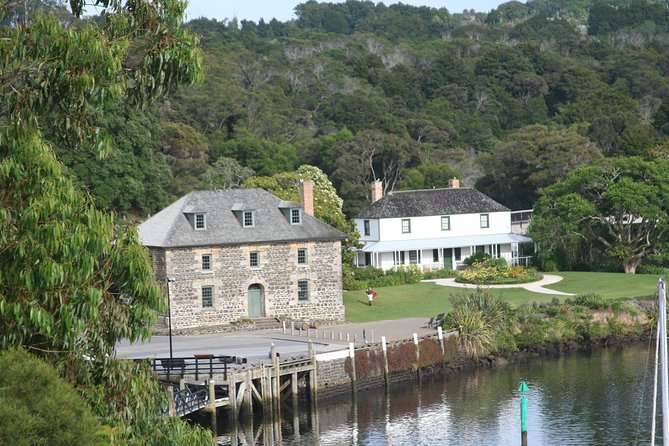
Then there’s an inland historic area known for some of the oldest stone buildings, surrounded by lush greenery. This stop is a contrast: you go from coastlines and bays to land-based detail. That helps you appreciate how varied the region is in such a short distance.
Cape Brett: rugged cliffs and a natural arch
Later you get to Cape Brett, where the coastline gets tougher and the views look dramatic. The route includes a famous rock formation with a natural archway, and also the rugged peninsula with cliff views. Even if you don’t spot the exact arch from your jump path, seeing Cape Brett from the road viewpoint first helps you recognize it quickly in the air.
Rainbow Warrior memorial near Matauri Bay
One stop that adds weight is the memorial near Matauri Bay dedicated to the Rainbow Warrior ship, bombed in 1985. This is not just scenery. It’s the kind of place where your aerial view feels connected to real events, not only vacation photos.
Jump day details that affect your comfort (more than you think)
A few rules really shape how smooth your day goes:
- Weight limit is strict: 100kg. If you’re near that number, contact the provider to check. This is not a place to guess.
- Service animals are allowed. That’s good to know if you travel with an animal and need support.
- Scuba diving within the last 24 hours is a no-go. Pressure changes are the reason, so don’t test the rule.
- If you have pre-existing medical conditions, you should seek professional medical advice first.
Comfort on the ground also matters. Wear closed-toe shoes and clothing that you can move in. You’ll likely wait, shuffle, and get geared up, and you don’t want your day derailed by blisters or an outfit you can’t adjust.
Also note the maximum group size is 20 travelers. That’s not tiny, but it’s also not a mega-line where you lose track of time completely.
Photos and video: the souvenir you’ll actually want
Most people don’t think about this until it’s too late. You can’t easily capture high-quality footage while strapped in and focused on your own stability. That’s why I like that the instructor takes photos and video during the jump so you can purchase them afterward.
Souvenir photos and a DVD are available for purchase, but they aren’t included. Plan for that in your budget if you’re the type who wants proof beyond your memory. If you’re traveling with family or friends, these extras are also a nice way to share the experience without asking someone to hold a camera awkwardly while you’re flying.
Price and value: does $204.11 make sense here?
At $204.11 per person, this isn’t a bargain-bin activity. But it also isn’t an out-of-wait-for-your-life stunt pricing you’d expect in some larger tourist centers.
Here’s what you’re paying for, in plain terms:
- a full tandem operation (instructor, aircraft time, safety gear, and training)
- a jump height around 9,000 feet
- pickup from central Paihia/Kerikeri and the cruise port
- a day that includes pre-jump scenic context and a guided feel
- all safety equipment and training provided
Where the value gets tricky is what’s not included. Souvenir photos and a DVD are extra. If you’re budget-sensitive, you may want to decide ahead of time whether you’ll buy them after you land.
To me, the value also depends on what you want to remember. If you want the aerial experience and you’re okay with photos being an add-on, this pricing feels fair for a real tandem skydiving day. If you need every single cost controlled, factor in possible photo/video purchases before you say yes.
Who should book this skydive, and who should reconsider
This skydive makes sense if:
- you want a once-in-a-lifetime view of the Bay of Islands without doing the training yourself
- you prefer a structured, instructor-led experience
- you like the idea of aerial landmarks, not just a blind drop
- you can handle waiting a bit at the drop zone while weather and operations are confirmed
You might want to reconsider (or at least think harder) if:
- you’re very tight on schedule and can’t handle a broader 2–4 hour window
- you need a very gentle, patient approach. You can still request reassurance before harnessing, but one review described harsh handling in that moment.
- you’re within range of the 100kg limit
- you’ve scuba dived within the last 24 hours
- you have medical concerns that you haven’t discussed with a professional
If you’re coming from Paihia or Kerikeri, the pickup makes this feel like a smooth outing. If you’re cruising, the cruise port transfers make it a realistic shore excursion option.
Should you book Bay of Islands 9,000ft Skydive?
My take: book this if you want the Bay of Islands from above and you’re ready for a real tandem skydiving operation. The value sits in the whole package—pickup, the instructor-led jump, and the chance to see the region’s shape from the sky.
I’d hold off if your main goal is a short, predictable timeline. This activity can take longer than the skydive itself because you’re planning around weather and operational timing. Also, if nerves are your biggest issue, tell them early and ask for reassurance before harnessing—especially if you’ve learned from others that communication can be blunt in tense moments.
If you’re flexible, can follow the comfort rules (closed-toe shoes, moderate fitness, weight limit), and you’re excited about that moment when the ground disappears, this is a strong choice for the Bay of Islands.
FAQ
What height is the skydive from?
The jump is from around 9,000 feet (about 2,750 meters).
Is this a tandem skydive?
Yes. You jump tandem with an instructor.
How long does the experience take?
The skydive typically takes about 1.5 hours, but you should plan for roughly 2–4 hours total, and it’s listed as about 4 hours.
Do you offer pickup from Paihia, Kerikeri, or the cruise port?
Yes. Complimentary two-way transfers are offered from central Paihia and Kerikeri hotels and from the cruise port.
What is the weight limit?
There is a strict 100kg weight limit.
Do I need to print my ticket or voucher?
Yes. Tickets or vouchers must be printed and presented upon arrival at the drop zone.
What should I wear?
Wear comfortable clothing and closed-toe shoes for safety purposes.
Do I need to call the day of my jump?
Yes. You must call 1 hour before your skydive time to confirm conditions are suitable for jumping.
Are service animals allowed?
Yes. Service animals are allowed.