REVIEW · SYDNEY
From Sydney: Tandem Skydive Experience over Beach
Book on GetYourGuide →Operated by Skydive Australia · Bookable on GetYourGuide
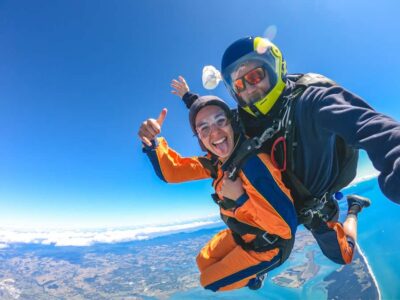
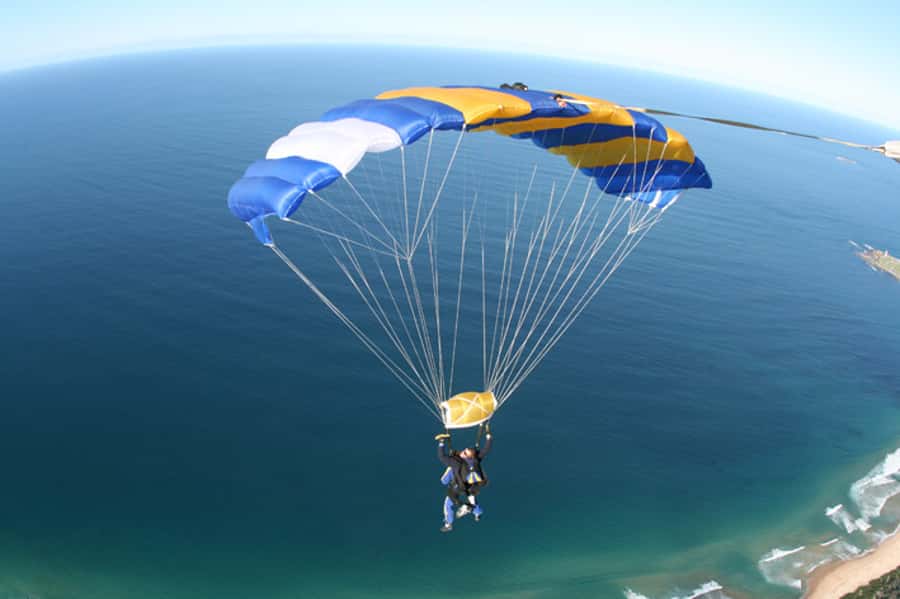
Beach meets freefall over Wollongong. You go up to 15,000 feet, then jump for up to 60 seconds of freefall over the NSW coast, with a beach landing that turns the whole thing into something you’ll remember with your camera still in your hand.
Two things I really like are the way the operation is run and the quality of the instruction. The instructors are consistently described as calm, confident, and safety-focused, from Andy’s steady professionalism to Mitch’s ability to make first-timers feel in control. Second, the logistics are friendly: there are complimentary transfers from Sydney CBD (when that option is booked), and the bus drivers get real points for personality and making the long wait feel shorter, like Pete and Mario in the past jumpers’ stories.
One drawback to plan for is timing at the end of the day. Even though the jump experience itself is tight and well run, you can end up waiting around after you land for the return bus, so don’t treat this like a quick in-and-out stop.
In This Review
- Key things that make this skydive worth it
- Sydney-area skydive: what you’re actually signing up for
- Getting there from Sydney: transfers that save your energy
- The skydive day flow: what happens before you ever leave the plane
- Up to 15,000 feet: the view you’re really paying for
- Freefall time: what “up to 60 seconds” feels like
- Beach landing: the finish that makes it feel complete
- Instructors and safety: what to look for in the real-world operation
- What you get included, and where you may spend extra
- What to wear and bring: small choices that prevent big hassles
- Who should do this, and who should skip it
- After the jump: use the coastal time you’ve paid for
- Should you book this tandem skydive over Wollongong?
- FAQ
- How high do you jump, and how long is the freefall?
- Where do you land?
- How long does the experience take?
- Is transport from Sydney included?
- Are photos and video included?
- What are the age and health limits?
- What should I wear?
Key things that make this skydive worth it
- Up to 15,000 feet with a freefall stretch of up to 60 seconds
- Beachside touchdown for a dramatic, photo-friendly finish
- Small group (max 10) so check-in and setup don’t feel chaotic
- Sydney-to-dropzone transfers (optional return) to cut down travel stress
- Big coastal views tied to the route: Lake Macquarie, Newcastle, and the Hunter River
- A dropzone known for spectators, so you get more than just a flight and van ride
Sydney-area skydive: what you’re actually signing up for
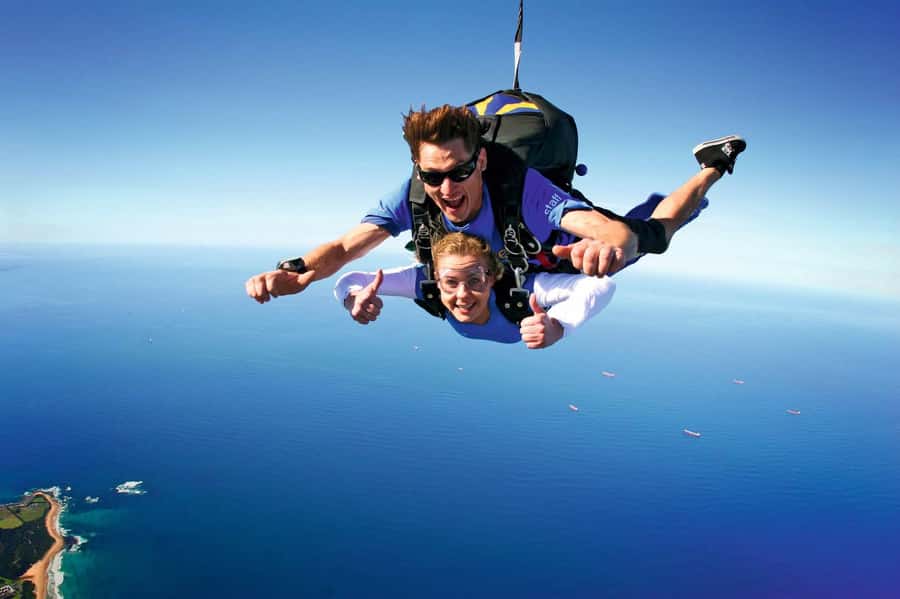
This is a classic Sydney-area tandem skydive, but the details matter. You’re not doing a generic jump over flat land. The route is designed for coastline and dramatic scenery, with the experience built around seeing more than just sky.
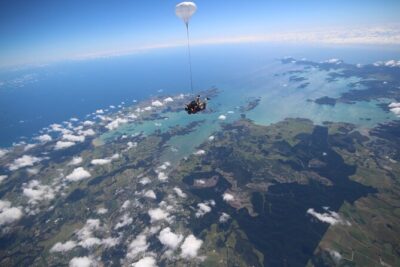
You’ll typically be in the air long enough to notice what’s underneath you changing. From the higher point you’ll get sweeping views of the coast and the region’s shape—big waterlines, curved beaches, and the river system threading through the city area. The operator also highlights an exclusive skydive over Lake Macquarie, which is a big part of why the jump feels different from every other “jump over somewhere near Sydney” option.
The tandem format also changes the whole vibe. You’re not learning skills or worrying about parachute control. Instead, you focus on following instructions, staying relaxed in the harness, and enjoying the view long before the door moment arrives.
You can also read our reviews of more tours and experiences in Sydney.
Getting there from Sydney: transfers that save your energy
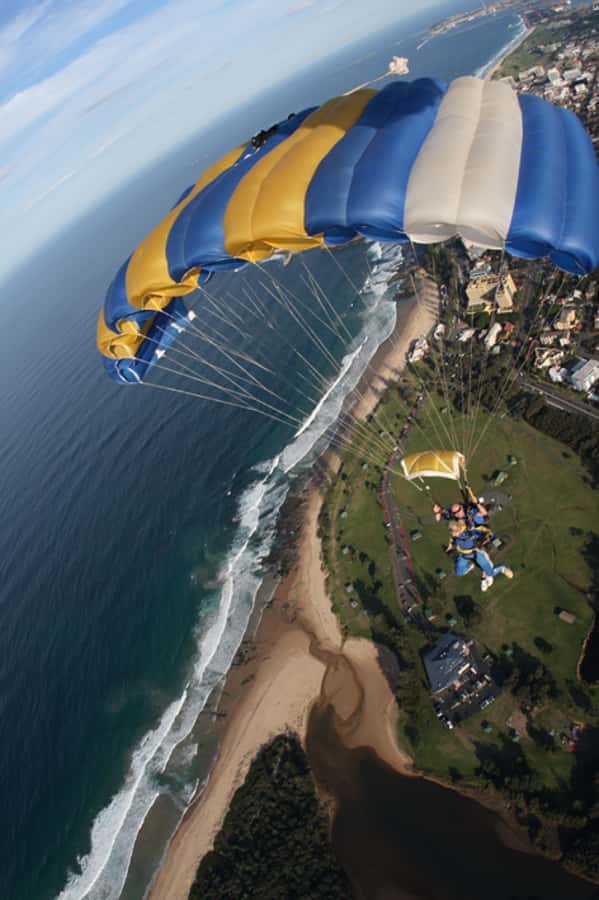
If you’re coming from Sydney, the transport plan is one of the clearest value points here. The experience offers complimentary transfers from Sydney CBD when that option is booked, and the dropzone is positioned about 1.45 hours from Sydney CBD and 20 minutes south of Newcastle CBD. In other words, you’re not spending half your day just trying to get to a parking lot.
More than that, the rides seem to be handled with a human touch. In the stories from recent skydivers, bus drivers like Pete and Mario are singled out for being genuinely friendly and for chatting during the break. That matters more than it sounds. When you’re about to do something intimidating, calm faces and easy conversation take the edge off the nerves.
That said, keep your expectations realistic about timing. One common theme in the experiences shared is that the return ride can mean some waiting after the jump. If you’re planning dinner immediately after, pick something nearby with flexibility, or give yourself a buffer.
The skydive day flow: what happens before you ever leave the plane
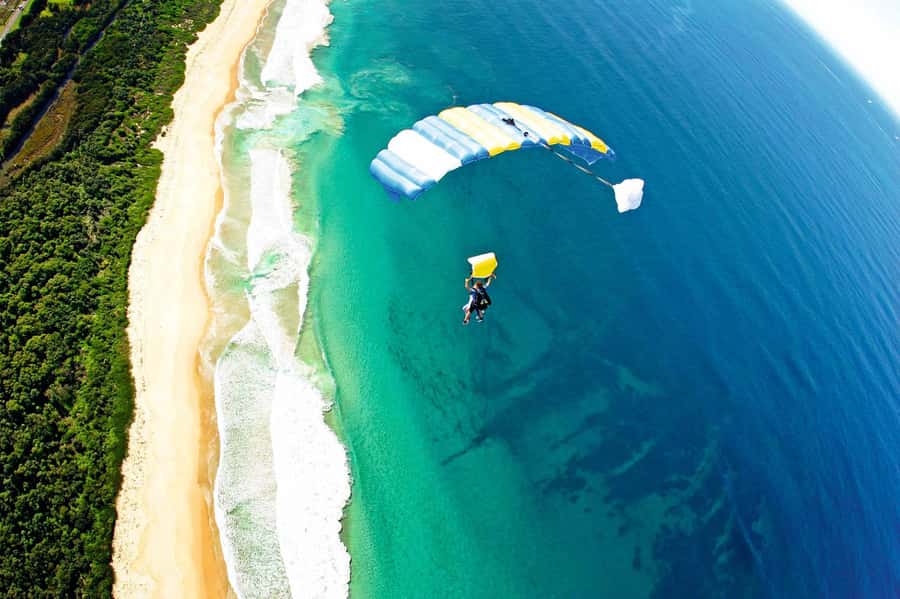
Most tandem skydives follow the same skeleton: arrive, check in, get your safety briefing, suit up, then wait for your jump slot. What makes this one feel smoother is the way the team handles first-timers.
You’ll be guided through:
- Check-in and setup
- A safety briefing
- Fitting and harness checks with your instructor
- Moving to the aircraft when it’s your turn
The group size is limited to 10 participants, which helps. Smaller groups usually mean less confusion, fewer people crowding the same staging areas, and a more predictable pace while you wait. It also helps your instructor do their job without juggling a line of anxious minds.
Language is English, and there’s an optional audio guide in English. If that kind of thing helps you focus before the jump, it can be useful. If not, it’s easy to ignore and just listen to what your instructor says.
Up to 15,000 feet: the view you’re really paying for
The height is part of the selling point, but it’s also why the experience feels different. Going up to 15,000 feet gives you time to look. You’ll see the coastline in layers: near water changing texture, further bays and headlands, and the bigger pattern of the region as the ground falls away.
The operator specifically calls out the kind of scenery you’ll want to recognize:
- Newcastle from above
- The Hunter River
- The scenic coastline
- Lake Macquarie as an exclusive route element
This isn’t only about pretty photos. The views help you understand what you’re doing in real time. Instead of feeling like you’re just dropping into emptiness, you’re moving across a map you can actually picture—coastlines you can point to later, water that looks calm from far above but obviously isn’t.
Freefall time: what “up to 60 seconds” feels like
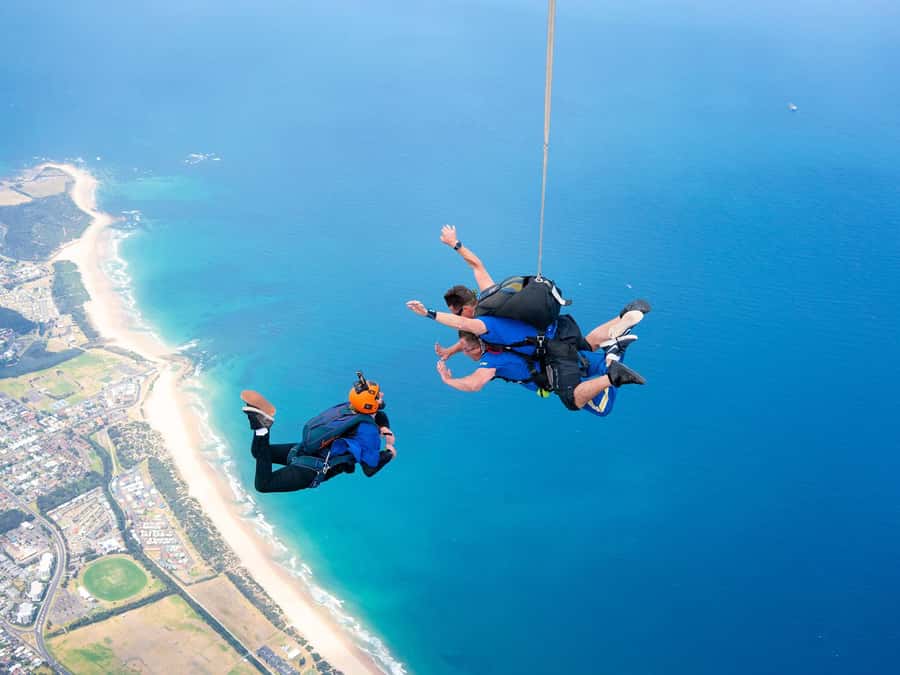
You’ll experience a freefall stretch of up to 60 seconds. That number sounds simple, but it’s long enough to split into moments.
First you feel the shock of motion. Then you lock into the sensory mix: wind, speed, and the fact that you’re truly going down. After that, the world starts to feel crisp. Edges sharpen in your mind because you’re watching so much at once.
Then, just as fast as it arrives, you’re moving toward the next phase. That’s why tandem skydives are popular as bucket-list experiences: the most intense part is brief, and you don’t spend hours waiting for adrenaline. You get a concentrated hit, then a controlled landing.
Beach landing: the finish that makes it feel complete
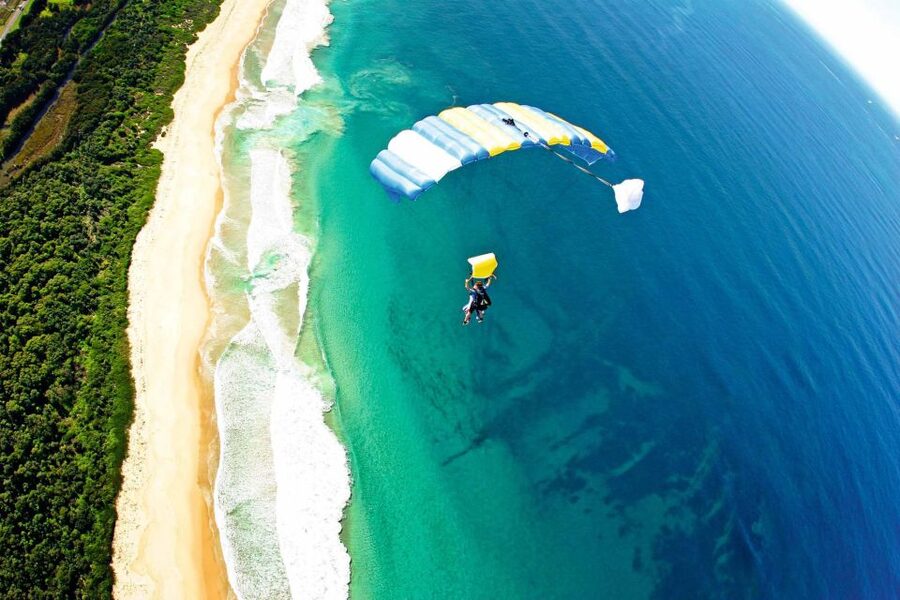
The best part for many people isn’t the climb or the door moment. It’s the landing. This jump is designed to end with a beachside landing, which turns the whole experience into something visual and cinematic.
You’re not just touching down on grass somewhere. You’re coming in where the coast is right there—so when you land, the day feels like it wrapped itself up in the right place. Several of the descriptions emphasize that beach finish as a standout feature.
Also, this is where your nerves usually flip into satisfaction. Once the parachute phase is done and you’re on sand, you get a rare combination: you survived the hardest part, and you get to immediately look around and take it all in.
Instructors and safety: what to look for in the real-world operation
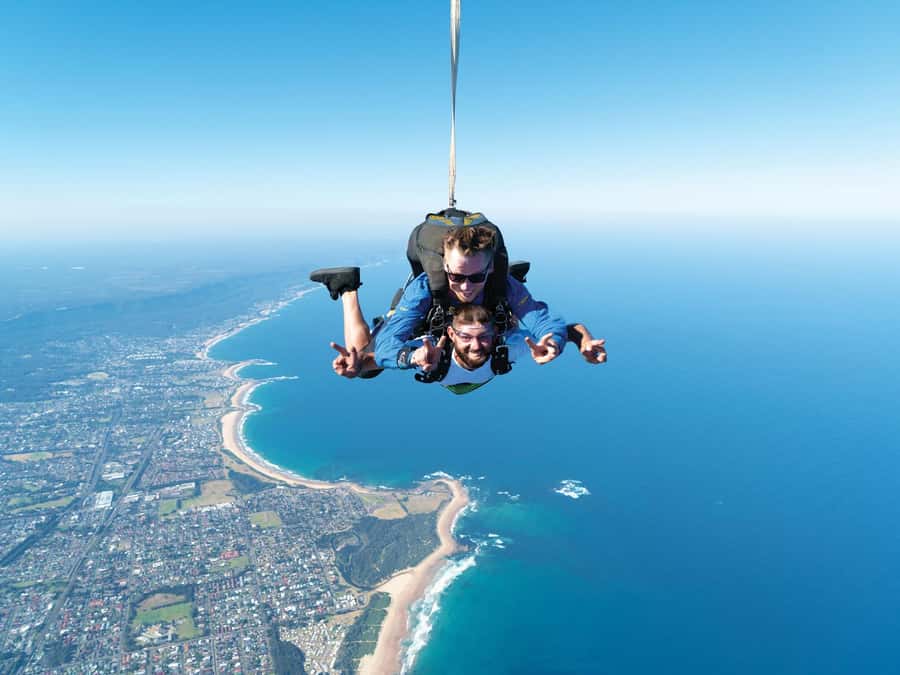
No matter how beautiful the views are, a tandem skydive lives or dies on instruction. The stories around this dropzone focus strongly on professional behavior: instructors described as cool, calm, collected, and safety-first.
Names that show up in the experiences shared include Andy, Danny, Jason, Mitch, Callum, Ken, and Riss. You can treat those as proof points that the team has a range of instructors who handle first-timers well—not just a single star.
What you should take from that: when you arrive, you’ll likely be talked through exactly what to do. Your job is mostly to listen, move when they say move, and trust that the harness work is being checked properly.
If you’re nervous about heights, this kind of support matters. One first-timer in the set of experiences described enjoying it despite being scared of heights, which lines up with how tandem jumps work: you don’t have to manage fear by yourself. You follow cues from the instructor.
What you get included, and where you may spend extra
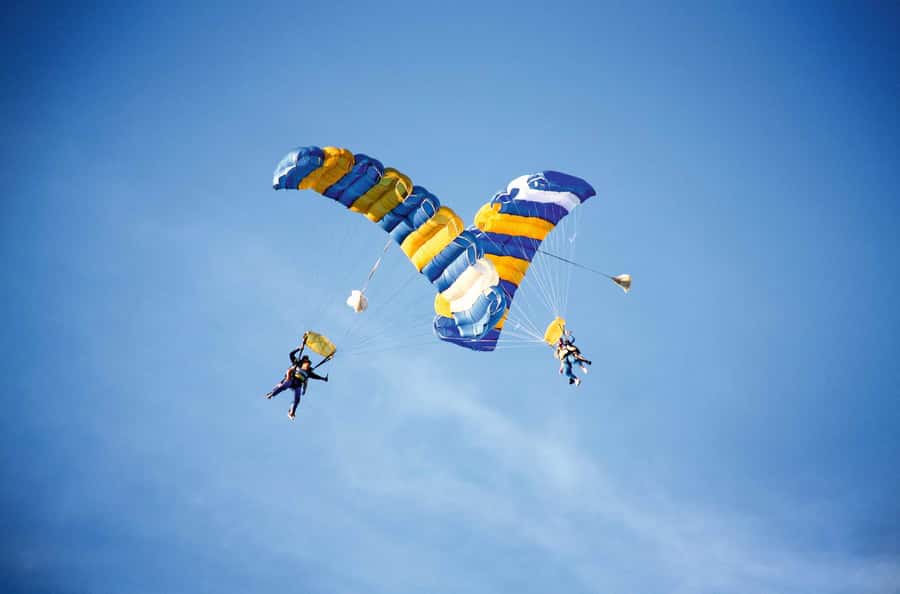
This skydive bundles a lot of the essentials:
- Highly qualified and experienced instructors
- A safety briefing
- A personalized certificate
- 3 month membership of the Australian Parachute Federation
- Compulsory personal accident insurance via the Australian Parachute Federation
- Optional return transfers (depending on the option you choose)
- Photo & video are not included, but can be purchased on-site
Now the price: $282 per person. On paper, that’s not cheap. But you’re paying for a full tandem operation: aircraft time, instructor time, safety gear, insurance, and the admin layer (certificate and federation membership). Add the fact you’re getting coastline views tied to the route, not just any generic jump, and it starts to read as good value for a major bucket-list activity.
The most common extra expense is the photo and video package. People mention it as pricey, but also make it clear they’d still recommend the experience. If you want proof you did it, factor that add-on into your budget now rather than deciding last minute while you’re hyped up.
What to wear and bring: small choices that prevent big hassles
What you wear can affect how smoothly the team fits you and how comfortable you are during the wait.
Bring:
- Comfortable shoes
- Comfortable clothes
Not allowed:
- Jeans
- High-heeled shoes
This is a practical ruleset. You’ll be suiting up and moving around a bit before the jump, and you want clothing that won’t restrict movement or make fitting harder.
Also, consider weight. There’s a weight surcharge for customers 94 kg and over, and there are clear upper limits for safety: it’s not suitable if you’re over 110 kg (243 lbs).
Who should do this, and who should skip it
This is best for people who want the thrill, but also want a guided experience where someone else handles the technical side.
It’s suitable for:
- Adults and teens 16+ (under 18 needs a guardian present)
- People who can follow instructions under stress
- Anyone comfortable with a big adrenaline moment and then a controlled landing
It’s not suitable for:
- Pregnant women
- People with heart problems
- People with epilepsy
- People over 110 kg (243 lbs)
- Children under 16
Even if you’re not in those categories, you should honestly weigh your risk tolerance. The safety notice is blunt: parachuting is inherently dangerous and depends on conditions like weather and health. That’s not there to scare you. It’s there so you enter with clear eyes.
After the jump: use the coastal time you’ve paid for
You’re not just driving to the dropzone and flying back out. After your jump, the plan is to enjoy the relaxed coastal area nearby. The operator encourages downtime to explore beaches and cafés in the local community, and the location being just outside Newcastle makes that easy to do.
This is where you can turn the experience into a full day rather than a single event. If you have energy, grab a late lunch or coffee and sit near the water. It helps your brain file the experience as real.
Should you book this tandem skydive over Wollongong?
If your priority is a proper Sydney-region tandem skydive with big-name coastline views and a beach landing, I think it’s a strong choice. The combination of small group size, professional instruction (including instructors repeatedly described as calm and experienced like Andy, Mitch, and Danny), and transport help from Sydney makes it feel less stressful than many DIY setups.
I’d especially recommend it if you want a “main character” travel day where the view and the landing feel special, not just a checkbox activity. Just budget time for the day to be longer than you expect, and decide ahead of time whether you’ll want the on-site photo and video add-ons.
If you dislike waiting or you have a tight schedule with no buffer, build in extra time after the landing for the return pickup.
FAQ
How high do you jump, and how long is the freefall?
You jump from up to 15,000 feet, with freefall for up to 60 seconds.
Where do you land?
Your skydive is designed to finish with a beachside landing.
How long does the experience take?
The duration is listed as 2 hours – 1 day, depending on starting times and availability.
Is transport from Sydney included?
Complimentary transfers from Sydney CBD are available with certain options, and optional return transfers are also offered. Meeting point can vary by option.
Are photos and video included?
No. Photo and video packages are available to purchase directly at the dropzone.
What are the age and health limits?
Minimum age is 16 (under 18 requires a guardian). It’s not suitable for pregnant women, people with heart problems, or people with epilepsy. There are weight limits, including a restriction if you’re over 110 kg (243 lbs).
What should I wear?
Wear comfortable shoes and comfortable clothes. Jeans and high-heeled shoes are not allowed.