REVIEW · SYDNEY
Sydney: Indoor Skydiving Experience
Book on GetYourGuide →Operated by iFLY Indoor Skydiving AU · Bookable on GetYourGuide
Want free-fall without a plane? This wind-tunnel experience gives you the feel of a sky jump in a fully controlled setup. I love the hands-on instructor coaching and the fact you get two flights, so you’re not just doing one quick taste. One thing to plan for: the whole session is only 90 minutes, so the adrenaline can feel a bit short if you’re hoping to stay airborne longer.
After you sign in, you’ll gear up fast, learn how to lean and fly in the airflow, and then repeat it again. It’s a great pick when you want an adrenaline hit, but you also want structure, safety rules, and a clear path from first-timer to feeling more in control.
In This Review
- Key Things You’ll Remember
- The 90-Minute Flow: What Happens Before and During Your Two Flights
- Gear Up Like a Pro: What to Wear, What You’ll Use, and the Fit Checks
- Inside the Wind Tunnel: How the Free-Fall Feeling Works
- Your Instructor Makes It Worth It: Training, Personal Assistance, and Calm Confidence
- Two Flights, Real Progress: Why the Second Run Feels Like a Win
- Who This Suits Best (and Who Should Skip It)
- Price and Value: Is $84 Worth It?
- Location in Sydney: Planning Around the Meeting Point and Getting There
- Should You Book This Indoor Free-Fall Experience in Sydney?
- FAQ
- How long is the indoor skydiving experience in Sydney?
- How many flights do I get?
- Is equipment rental included?
- Do I get any training or help during the flights?
- Is a video recording included?
- What should I wear or bring?
- What are the size and weight limits?
- What time do I need to arrive?
- Is it suitable for kids and families?
- Is it wheelchair accessible, and are there medical cautions?
Key Things You’ll Remember
- Two flights per person means you get a second chance to improve your body position
- English-speaking instructors keep the learning curve friendly and direct
- A controlled airflow tunnel gives you the free-fall sensation without aircraft logistics
- Safety briefing + personal assistance help you feel guided start to finish
- A customized flight certificate gives you something tangible to take home
- Clean, modern setup (and even extra options like VR nearby) makes it easy to turn this into a full outing
The 90-Minute Flow: What Happens Before and During Your Two Flights
This experience runs for 90 minutes, and it’s paced like a well-run class: you’re not just dropped into the wind and hoped for the best. You’ll arrive early enough to settle in and be ready when your flight time starts—late arrivals can’t be refunded, so give yourself slack.
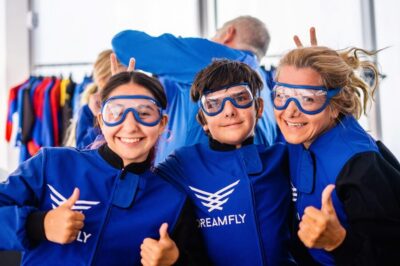
Expect a sequence that feels familiar from activities like climbing gyms or flight simulators, but with more “wow” built in. You sign in at reception, meet your instructor, then do a safety briefing. After that you’ll suit up with the required gear—helmet and goggles—then get guided into the airflow and start learning the body position.
The best part is that it’s not a single-and-done thrill. You do one flight, get coached, then do it again. That second run matters more than you’d think. The first flight is about trust and learning how your body reacts. The second flight is where you start feeling like you’re actually flying.
You can also read our reviews of more tours and experiences in Sydney.
Gear Up Like a Pro: What to Wear, What You’ll Use, and the Fit Checks
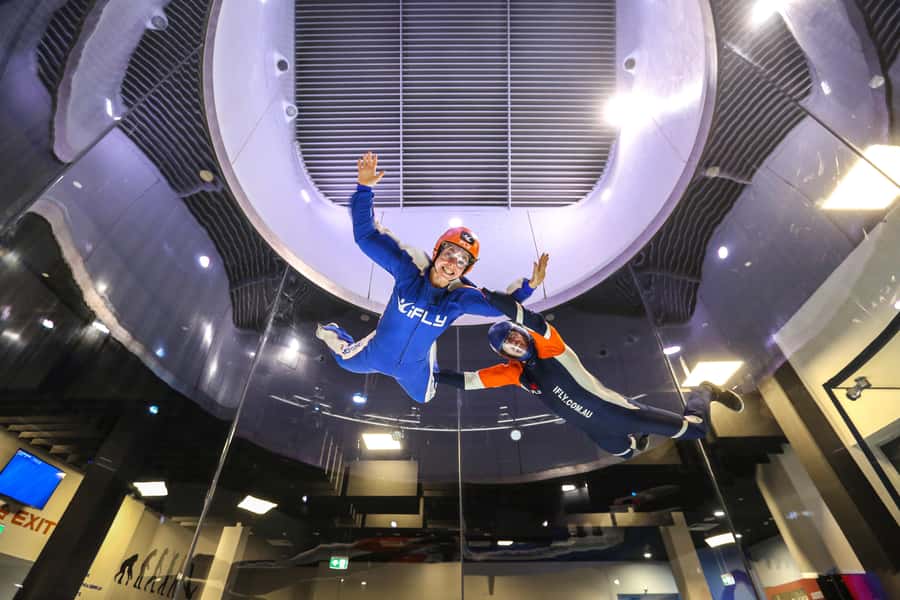
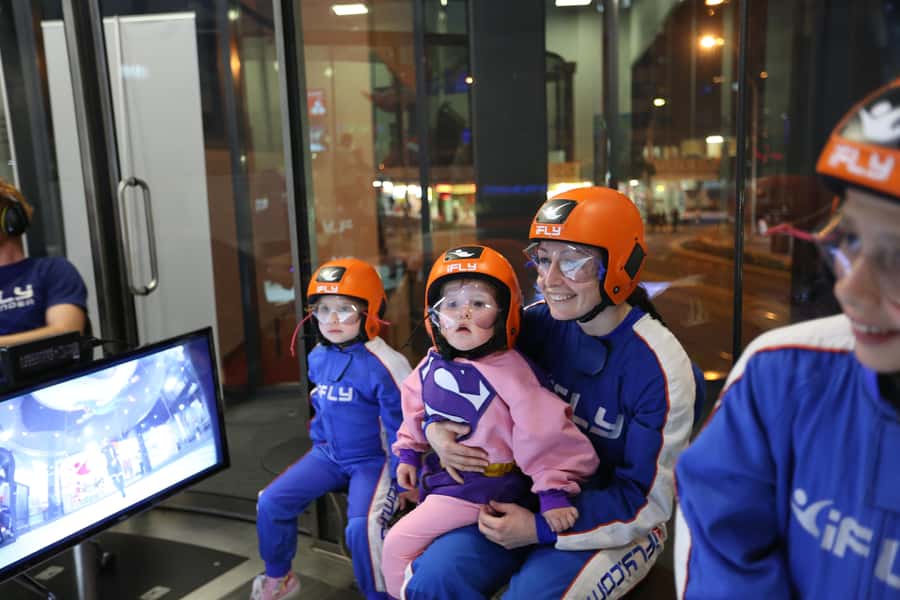
The center provides the equipment rental, but you’ll want to show up ready to move. Bring comfortable clothes and closed-toe shoes. If you’re unsure, pick something you can bend, crouch, and stand in without fuss.
You’ll also get a helmet and goggles. That’s not just for safety—it also helps you focus. When you can see clearly and feel secure, it’s easier to follow the instructor’s cues inside the airflow.
There are some important physical limits you should read carefully before you go:
- If you’re under 180 cm tall, you must weigh less than 105 kg
- If you’re over 180 cm tall, you must weigh less than 115 kg
- People over 230 lbs / 104 kg are not suitable
Those numbers aren’t there to be picky. The whole point of indoor free-fall is controlled airflow and safe stability, so they’re making sure the system can match you properly.
One more practical note: anyone 18+ signs a liability waiver. If you’re booking for a minor, a parent or guardian signs. Build that into your plans so nobody gets stuck at the desk.
Inside the Wind Tunnel: How the Free-Fall Feeling Works
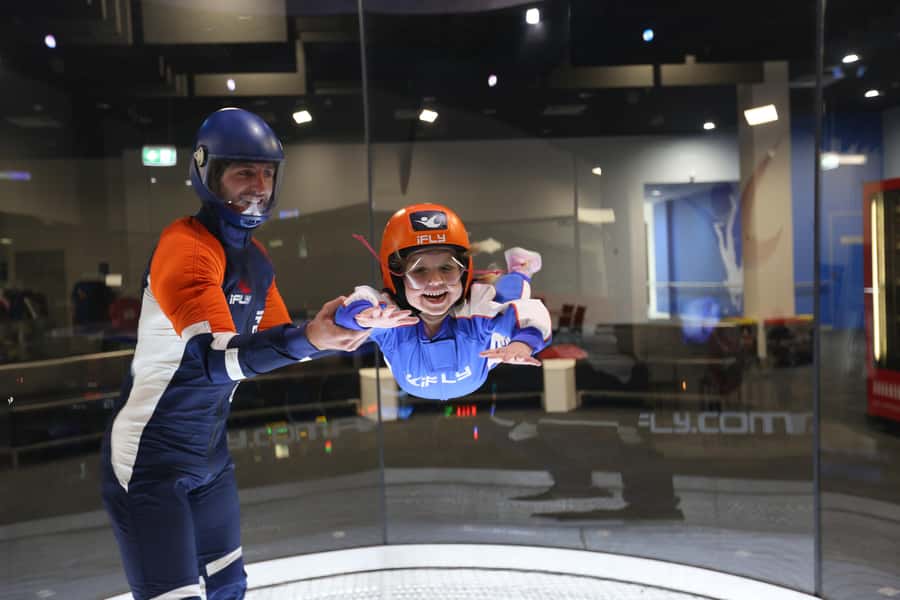
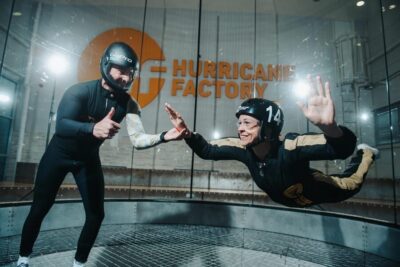
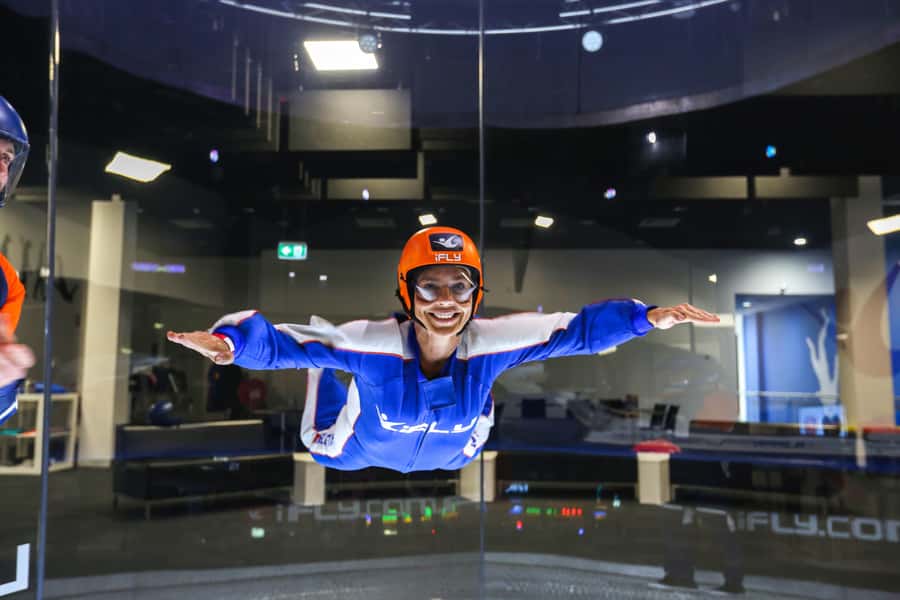
Here’s what makes this different from a video or a simulator: you get the sensation of being lifted by nothing but air. You’ll walk into a giant glass tunnel environment, climb into position, and your instructor guides you into the airflow.
Then comes the key moment. Instead of standing on a plane wing or jumping from a height, you’ll lean into the wind and the airflow creates a column of lift around you. Your body feels the same “no attachment to the ground” sensation you associate with sky jumps—just without the aircraft part.
During the flight, your instructor guides you so you can learn how to fly your body with basic free-fall positioning. It’s not just thrill-seeking. You’re learning a physical skill: how to angle yourself, how to stabilize, and how to respond when your body starts drifting.
The feeling tends to be addictive in a very specific way: the more you understand your body position, the more fun it gets. That’s also why the second flight is such good value. You’re not repeating the exact same panic. You’re building confidence.
Your Instructor Makes It Worth It: Training, Personal Assistance, and Calm Confidence
The training isn’t a lecture and it isn’t vague. You get a comprehensive training session, and then you get hands-on personal assistance while you’re actually in the airflow. That combination is what turns this from a stunt into a skill-building experience.
In plain terms, a good instructor helps you translate instructions into body movement. And inside the tunnel, that matters because wind changes how your balance feels. You’ll rely on their cues for the basics—how to position your arms, how to keep stable, and how to adjust once you’re flying.
The vibe also seems to be part of the success: the staff are consistently described as friendly and attentive, and the experience is run professionally. One person even mentioned beating vertigo during the session, which gives you an idea of how supportive and structured the environment can be.
You’ll also get an individualized flight certificate afterward. It’s a small thing, but it makes the whole experience feel real, especially for first-timers and families.
Two Flights, Real Progress: Why the Second Run Feels Like a Win
If you’ve only ever done one guided thrill activity, you might assume your second flight is just doing it again. In practice, it’s much more valuable than that because your body learns faster the second time.
On your first flight, expect yourself to focus on:
- Getting comfortable with the airflow sensation
- Following the instructor’s cues quickly
- Staying calm when things feel intense
Then the second flight turns into your “I can do this” moment. You’re already suited up, already oriented to the tunnel, and you know how it feels when your body position changes. You can focus more on flying rather than on figuring out what’s going on.
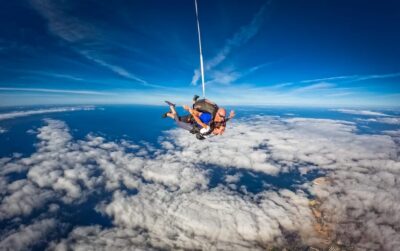
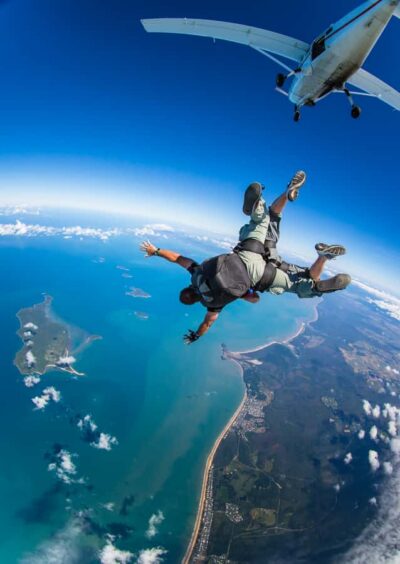
The experience is also positioned as giving twice the amount of free-fall time compared with a tandem skydive. Even if you’ve never skydived, the point is clear: you get more actual time in the air sensation for the money, and that tends to deliver a better payoff than one shorter rush.
Who This Suits Best (and Who Should Skip It)
This is built for families and first-timers in a controlled, instructor-led environment. It’s described as suitable for the whole family, and people have brought kids and had a great time.
That said, not everyone should book:
- Children under 3 years are not suitable
- Pregnant women are not suitable
- People with back problems should not book
- People with heart problems should not book
If you have a medical history like prior heart problems or neck/back injuries, you should consult a doctor before your flight date. And if you’ve had previous shoulder dislocations, you’re strongly advised not to fly.
On accessibility: the facility is wheelchair accessible, and people with certain physical impairments, including amputation and paraplegia, can fly. If you’re in that category, it’s worth checking with the provider directly so you get the right fit and guidance for your situation.
The group is kept small, and sessions are structured, which often helps nervous first-timers feel supported rather than overwhelmed.
Price and Value: Is $84 Worth It?
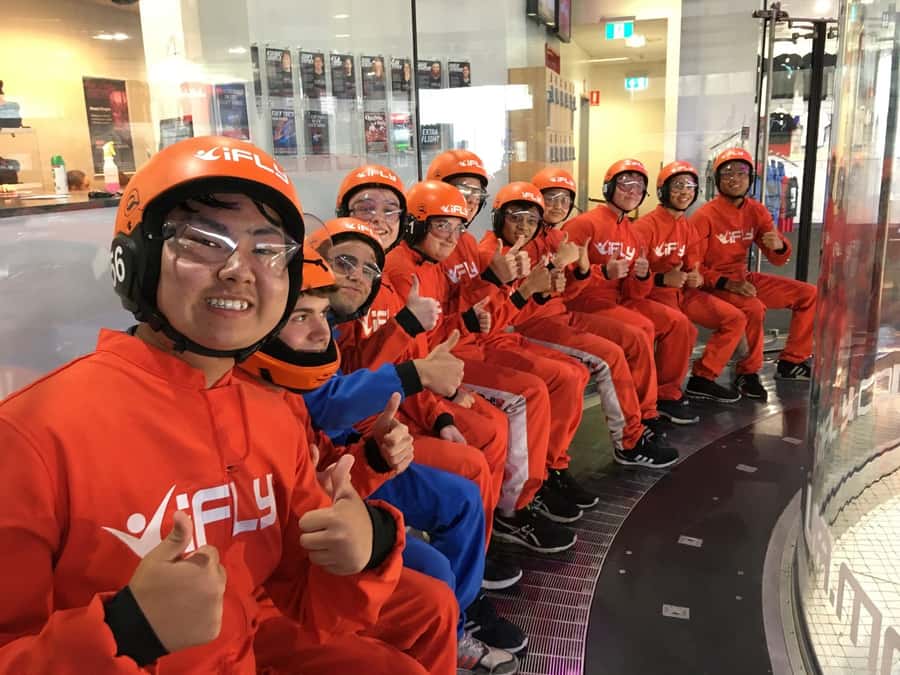
At $84 per person and two flights, this isn’t priced like a “one-and-done” thrill. It includes equipment rental, comprehensive training, and personal assistance from your instructor. You also leave with a personalized flight certificate, which makes the session feel like an actual experience, not just a temporary adrenaline hit.
What’s not included matters too. Video recordings of all flyers in your session are available for purchase, but they’re not part of the base price. If you want a souvenir video (and you’re planning to share it with family), budget for that separately.
Compared to real-plane skydiving, the value logic is simple: no aircraft costs, no jump logistics, and you still get the free-fall sensation. You also get the benefit of a repeat flight, which increases your total time in the air-feeling and improves your odds of ending the session feeling proud instead of overwhelmed.
If you’re the type who likes structured, repeatable fun, this pricing makes sense. If you’re chasing hours of airborne time, it may feel short—but for most people, it lands in a sweet spot.
Location in Sydney: Planning Around the Meeting Point and Getting There
This experience runs in New South Wales, Australia. Your exact meeting point may vary depending on the option you book, and there’s no hotel pickup and drop-off included.
A practical tip from real-world experience: it’s possible to get there using public transport. One helpful example mentioned getting to Penrith Station, then taking about a 5-minute bus ride from there. If you’re staying in central Sydney, check your route ahead of time so you’re not rushing.
Because you must arrive at least 1 hour before your flight time, build your travel plan with that buffer. Indoor sky/air experiences are fast-moving once your time slot starts, and late arrival can’t be refunded.
Should You Book This Indoor Free-Fall Experience in Sydney?
I’d book it if you want:
- A safe-feeling way to experience free-fall sensations
- Two chances to learn and improve
- A family-friendly outing with real instruction
- A modern, clean facility and a professional team
- Something memorable enough to justify the effort of getting there
I’d think twice if:
- You need longer total airborne time than two flights can provide
- You fall into any of the medical categories where this isn’t suitable
- You’re worried about arrival timing and can’t reliably show up early
If you’re fit for the experience and you can make it on time, this is one of those rare “I didn’t expect that to feel so real” activities. The moment you lean into the airflow and your body floats, you’ll understand why people come back for a second go.
FAQ
How long is the indoor skydiving experience in Sydney?
The total duration is 90 minutes, with different starting times depending on availability.
How many flights do I get?
Your package includes 2 flights per person.
Is equipment rental included?
Yes. Equipment rental is included, along with the required gear.
Do I get any training or help during the flights?
Yes. You’ll receive a comprehensive training session and hands-on personal assistance from your flight instructor.
Is a video recording included?
No. Video recordings are not included, but they may be available for purchase.
What should I wear or bring?
Bring comfortable clothes and wear closed-toe shoes.
What are the size and weight limits?
If you’re under 180 cm tall, you must weigh less than 105 kg. If you’re over 180 cm tall, you must weigh less than 115 kg. People over 230 lbs (104 kg) are not suitable.
What time do I need to arrive?
You must arrive at least 1 hour before your flight time. Late arrivals cannot be refunded.
Is it suitable for kids and families?
Children under 3 years are not suitable. Anyone 18 and over signs a liability waiver, and anyone under 18 needs a parent or guardian to sign.
Is it wheelchair accessible, and are there medical cautions?
The facility is wheelchair accessible, and people with certain physical impairments, including amputation and paraplegia, can fly. People with prior heart problems or neck/back injuries should consult a doctor, and people with previous shoulder dislocations are strongly advised not to fly. Pregnant women are not suitable.