REVIEW · MATTEN BEI INTERLAKEN
Interlaken: Airplane Skydiving over the Swiss Alps
Book on GetYourGuide →Operated by Outdoor Switzerland AG · Bookable on GetYourGuide
The Alps meet sudden freefall.
This airplane skydiving experience from Interlaken is built around two things I really like: the 45-second freefall from 4,000 meters and the up-close, dramatic views of Eiger, Mönch, and Jungfrau (plus Interlaken’s two lakes) from the air.
One thing to consider: the base price is $543, and photo/video isn’t included, so you may want to plan extra cash on the spot if you want keepsakes.
Key things to know before you go
- 45-second freefall from 4,000 m with a fast, gut-check rush as you hit about 200 km/h (120 mph)
- 15-minute scenic flight first, so you’re not dropped in cold; you build up to the jump
- A 5–7 minute canopy ride that turns adrenaline into scenery (safely back to the ground)
- Small group (up to 8) and tandem guidance in English or German
- You’ll ride to the drop zone in Reichenbach (about 30 minutes from Interlaken), while spectators make their own way
In This Review
- Entering The Alps From Interlaken
- Price and What $543 Really Buys
- Meeting at Höheweg Shop, Then Rolling to Reichenbach
- What Happens Before You Fly: Briefing, Gear, and Calm
- The 15-Minute Scenic Flight: Lakes First, Then the Peaks
- The Jump: 45 Seconds of Freefall From 4,000 m
- Canopy Time: 5–7 Minutes Where Fear Turns to Flying
- Safety and Tandem Instruction: The Real Value
- Small Details That Affect Your Day
- Should You Book This Interlaken Skydiving?
- FAQ
- How long is the skydiving tour in total?
- Where do I meet for the experience?
- How high is the jump and how long is the freefall?
- What happens after the freefall?
- Is photo and video included in the price?
- What are the age and weight requirements?
Entering The Alps From Interlaken
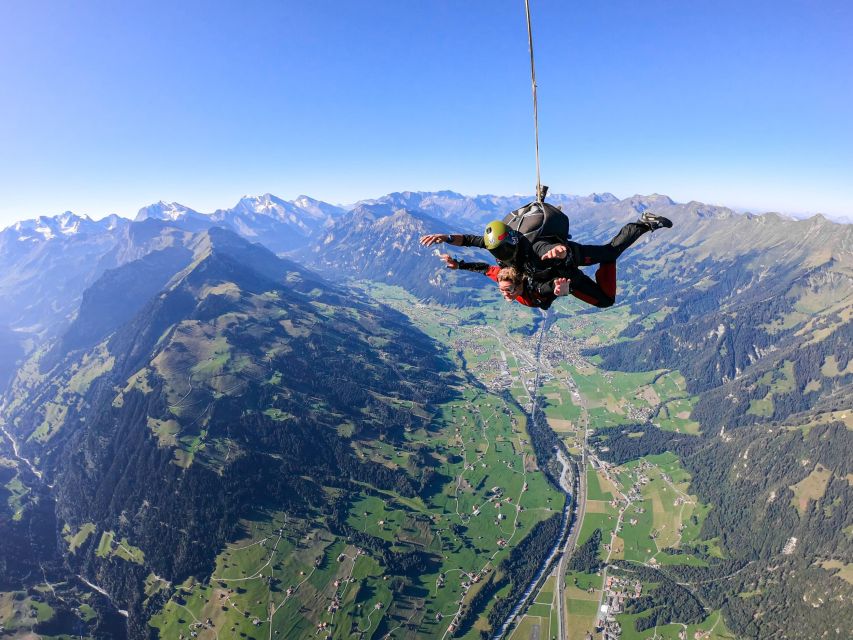
Interlaken sits right in the postcard zone of the Swiss Alps, and this skydiving tour is designed to make you feel that reality fast. You’ll start with an airplane climb over water and villages, then shift into a short, intense freefall that’s timed for maximum impact, not waiting around.
I like that the experience is very clearly paced. First you get a flight you can enjoy and orient yourself. Then you get the jump. Finally you get the canopy time to breathe and watch what you just did.
Another smart piece: you’re always with a tandem instructor. This isn’t “go figure it out” skydiving. You’re strapped in and guided, and that matters a lot when your brain is doing math like How high is this? and What if I panic?
Price and What $543 Really Buys
At $543 per person, this is not cheap. Switzerland has that effect, and skydiving is one of those activities where the cost is tied to aircraft time, jump operations, and certified staff.
Here’s what your money covers: skydive, a safety briefing, skydiving equipment, and the tandem master. So you’re not paying just for the moment of jumping—you’re paying for the whole system that makes the moment possible.
What’s not included: photo and video. You can purchase it separately on the spot. That’s the main financial wildcard. If you want a souvenir, budget for it. If you don’t, you’ll still get plenty of “I can’t believe that happened” memories without spending extra.
One practical tip: when you’re offered the add-on, ask what format you’ll actually receive and how it’s captured. There’s a difference between a full edit and footage that’s basically taken from the tandem master’s viewpoint.
Meeting at Höheweg Shop, Then Rolling to Reichenbach
Your starting point is the Outdoor Höheweg Shop at Höheweg 95, 3800 Interlaken. From there, the operation lines you up for the next step of the day.
Here’s how the logistics work: the airfield and drop zone are in Reichenbach, about 30 minutes from Interlaken. There’s also a bus plan, and space is reserved for jumpers. If you’re coming with spectators, they should plan their own transportation to the airfield, because they may not get the bus seat.
If you’re the one jumping, that separation is useful. Your day stays focused. You’re not trying to manage multiple groups while people wait for the right van or the right check-in line.
What Happens Before You Fly: Briefing, Gear, and Calm
Before you go up, you’ll get a safety briefing and skydiving equipment. Expect the process to be straightforward and geared toward first-timers. The best sign in these operations is whether they keep things simple when your nerves spike.
The tone you want: clear instructions, quick steps, and a team that keeps moving. In many cases, jumpers feel safest when their tandem instructor talks them through each stage rather than dropping information in a panic moment.
You can also look for the human factor. People who have jumped with tandem masters like Abel and Andy have described feeling safe and supported. Others paired with Tim or Alex often mention patient, professional coaching. You can’t control who you get, but you can control how you show up: listen closely, ask questions early, and then follow the plan.
What to bring is simple but important: weather-appropriate clothing and closed-toe shoes.
The 15-Minute Scenic Flight: Lakes First, Then the Peaks
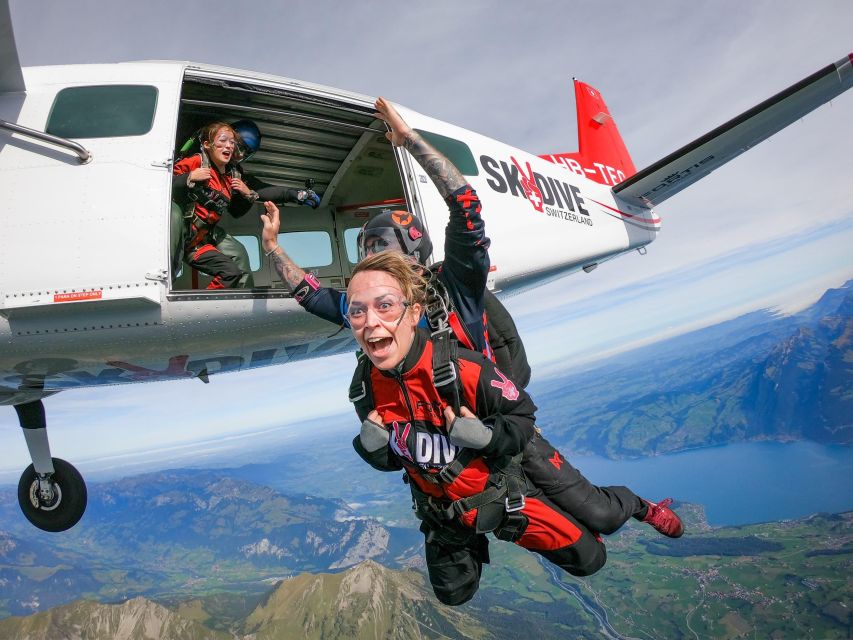
The flight portion is about 15 minutes. That’s not just travel time. It’s a built-in buffer that lets you see where you are and what you’re about to do.
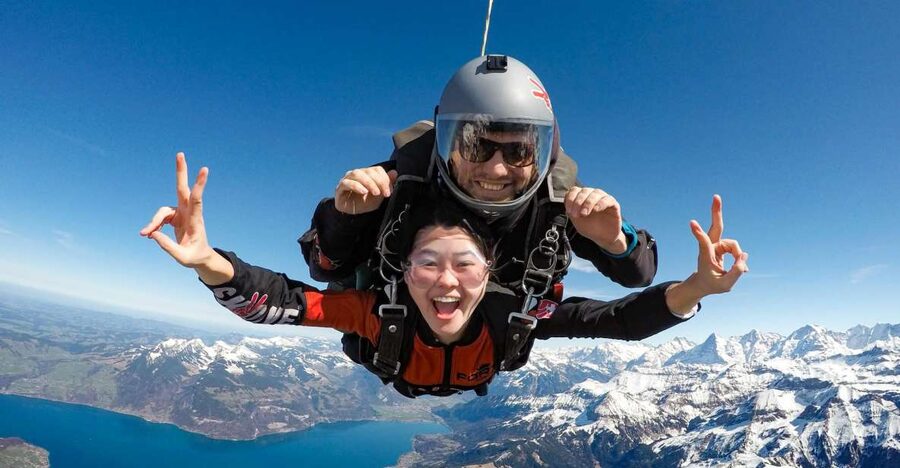
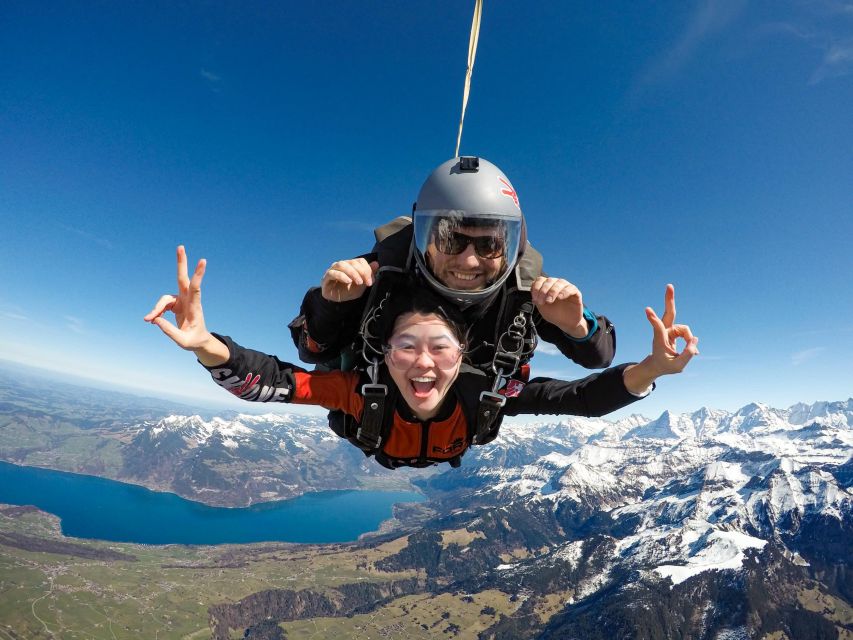
As the plane climbs, you’ll get views of Interlaken’s two lakes and the big Swiss-Alps wall. The highlights you’re likely to recognize include Eiger, Mönch, and Jungfrau.
This part matters more than you’d think. When your eyes have something beautiful to track—water, ridges, small villages—you’re less likely to fixate on fear. You’re also building awareness for the moment you exit the plane, which can help your body stay responsive.
If weather is clear, this is where the “bucket-list” feeling ramps up. If conditions aren’t great, the operation still keeps you safe and moving. The experience is designed to run daily in summer or winter, so there’s usually a plan to operate when conditions allow.
The Jump: 45 Seconds of Freefall From 4,000 m
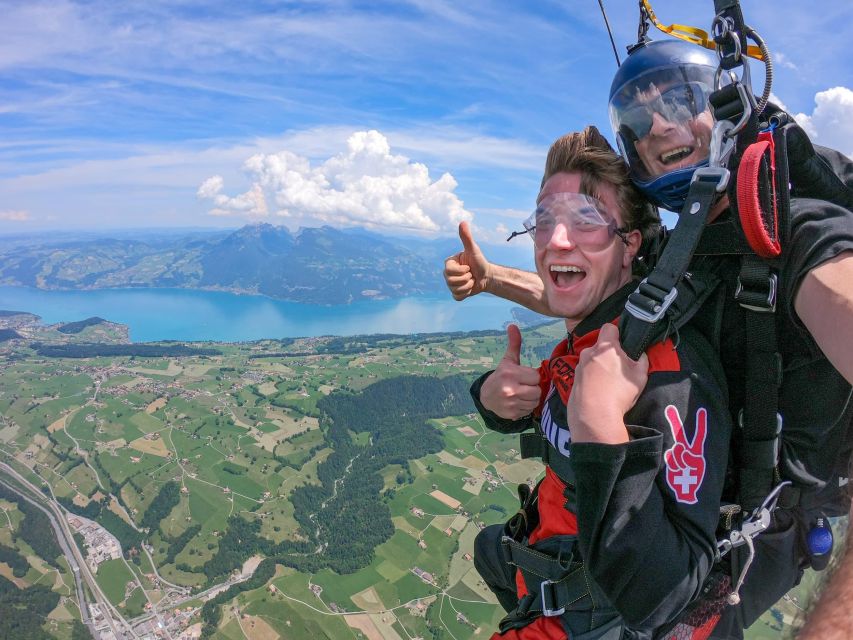
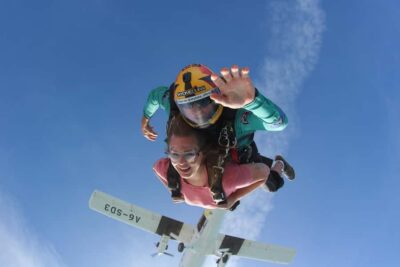
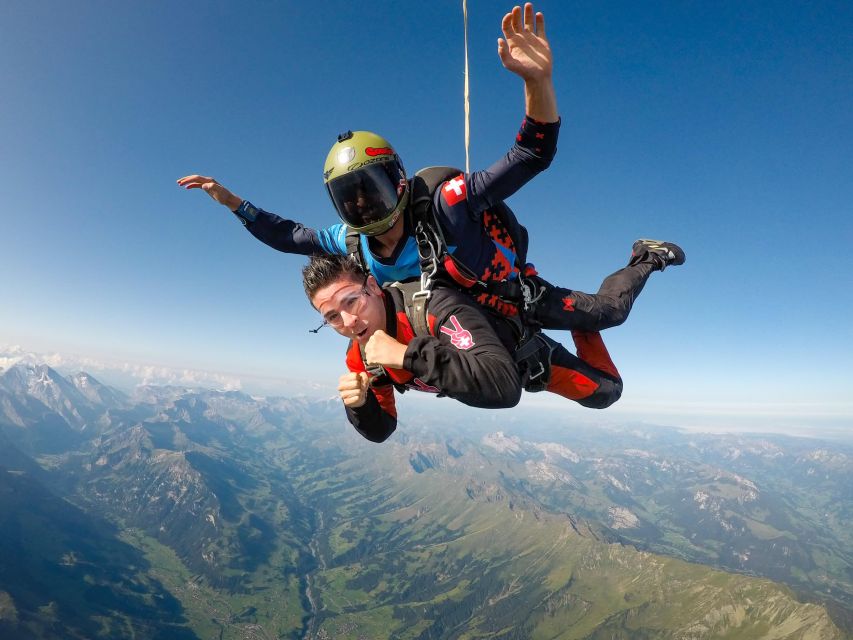
Now the main event. Your freefall is 45 seconds from an altitude of 4,000 meters (13,000 ft).
In those 45 seconds, the ground rushes toward you at about 200 km/h (120 mph). That’s the sensation people remember: a sudden, overwhelming speed that doesn’t feel like “falling.” It feels like your body is strapped into motion, and the world has moved closer.
This is why tandem skydiving is such a good first choice. Your instructor handles the stability and timing. Your job is to follow instructions and stay present long enough to enjoy the strangest rush your life is likely to deliver.
A good mindset helps: treat the freefall like a short film. You don’t have to “think your way through it.” You just experience it, moment by moment.
Canopy Time: 5–7 Minutes Where Fear Turns to Flying
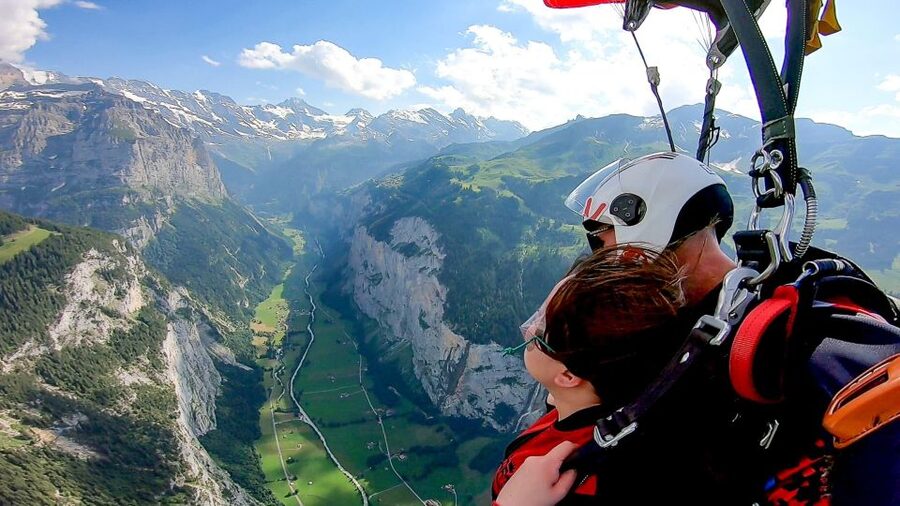
After freefall, the parachute deploys and you’ll get a 5–7 minute canopy ride. This is the phase where your brain catches up.
The speed drops dramatically, and the view takes over. You’ll feel the shift from intensity to control, and the air becomes something you can look at instead of just survive.
This is also where you’ll understand what Swiss Alps sky views really mean. You can spot valleys, ridges, and the geometry of mountains in a way that ground-level hiking never gives you.
Some participants have even mentioned getting a chance to help with parachute steering—like taking part in a maneuver under instructor direction. You might not always get that moment, but if you do, it’s a fun way to turn a passenger experience into a personal one.
Safety and Tandem Instruction: The Real Value
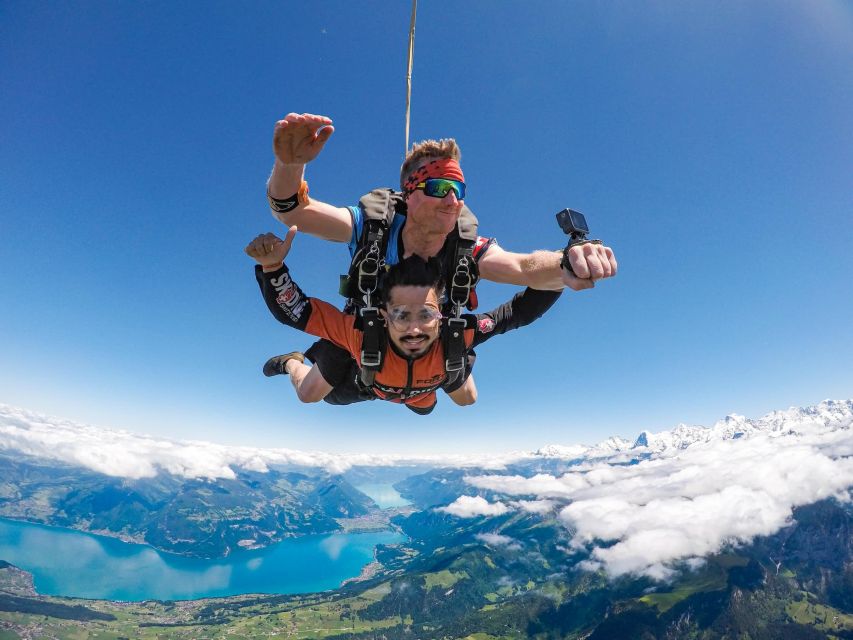
The safety system here is the tandem model. One tandem instructor per customer keeps the setup tight and the responsibilities clear. The briefing and equipment handling are part of that, not an add-on.
Also notice the operation’s small-group size: up to 8 participants. Smaller groups usually mean fewer delays and less confusion at check-in.
You’re also operating with real boundaries. The jump has strict requirements:
- Minimum age 12
- Participants 12–15 must be accompanied by a parent
- Participants 16–17 need written parental consent
- Minimum height 1.4 m (4 ft 7 in)
- Minimum weight 40 kg (88 lbs)
- Maximum weight 105 kg (231 lbs)
- The info also lists not suitable for people over 220 lbs (100 kg), so if you’re near the limit, confirm directly before you commit.
And the dropzone manager can deny the jump if rules aren’t met at the time of your trip. That’s not flexible, so check your numbers early.
If you want a reassurance-based angle, the best reviews repeatedly mention instructors who are calm, patient, and clear. People described instructors like Robert, Dave, Mark, Tim, and Andy as friendly and supportive, especially for first-timers who felt nervous. That’s what you want from a tandem team: competence plus emotional steadying.
Small Details That Affect Your Day
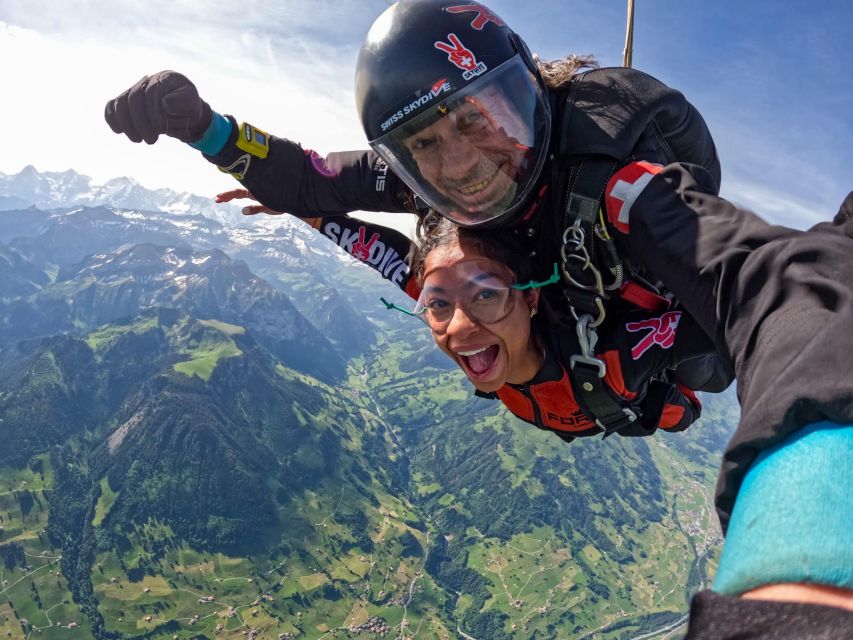
A few things can make or break your experience, even though they sound minor.
First, bring closed-toe shoes that you can actually walk in on uneven ground. Second, dress for altitude and wind. Even if it’s mild in Interlaken, open-air moments feel colder.
Next, plan your expectations about time. The tour length is about 3.5 hours, but that includes the full flow: meeting, transport, briefing, flight, jump, canopy return, and landing. If you arrive thinking you’ll be done in an hour, you’ll feel rushed. If you treat it like a half-day slot, it feels manageable.
Finally, don’t ignore the photo/video reality. Since it’s not included, you have to decide if you want to pay extra for it. If you do, ask questions before buying. One key detail is that handcam footage is filmed from the tandem master’s wrist, so the framing is instructor POV style rather than a head-mounted “selfie” angle.
Should You Book This Interlaken Skydiving?
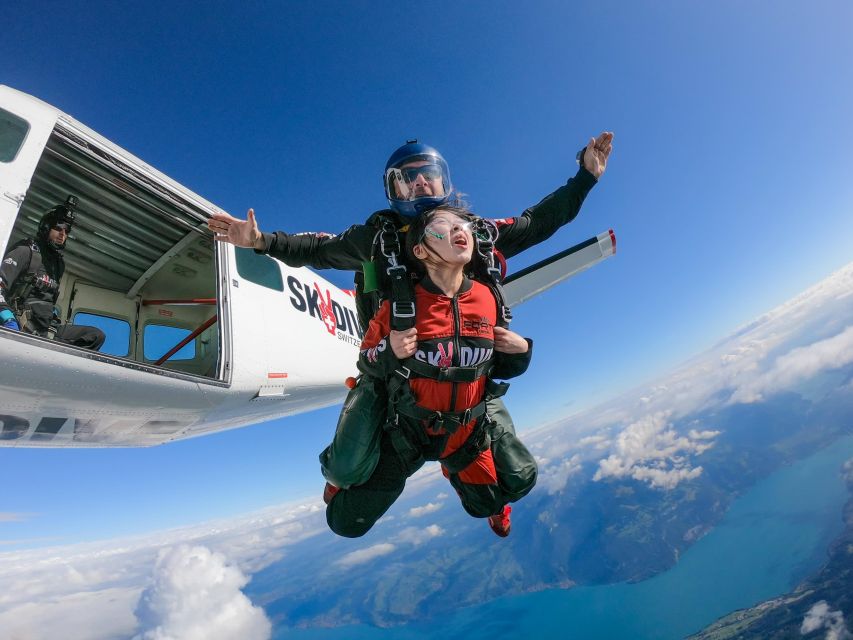
If you’re looking for one “do it now” experience, this one fits the bill. You get a serious altitude jump with a strong adrenaline hit, but it’s structured for first-timers through tandem instruction and a smooth pacing plan.
Book it if:
- You want Swiss-Alps views (Eiger, Mönch, Jungfrau are the big names here) as part of the experience.
- You like the idea of small-group operations and clear guidance.
- You’re okay paying a higher price for a guided, turnkey thrill—and you might add photo/video later.
Consider skipping or shopping alternatives if:
- You’re sensitive to high costs and don’t want to spend extra for photos/video.
- You might fall close to the weight/height/age limits and aren’t sure you meet every rule.
If you do book, my advice is simple: double-check your requirements early, dress for wind, and show up ready to listen. Then let the 15-minute climb set the stage for one of the fastest, most memorable 45-second experiences you’ll ever buy.
FAQ
How long is the skydiving tour in total?
The total duration is about 3.5 hours, including the scenic flight, the jump, and the canopy ride back to the ground.
Where do I meet for the experience?
Meet at the Outdoor Höheweg Shop at Höheweg 95, 3800 Interlaken.
How high is the jump and how long is the freefall?
You freefall for about 45 seconds from an altitude of 4,000 meters (13,000 ft).
What happens after the freefall?
Once the parachute opens, you’ll enjoy a 5–7 minute canopy ride before landing.
Is photo and video included in the price?
No. Photo and video service is available for an extra charge on the spot.
What are the age and weight requirements?
The minimum age is 12. There are strict minimum and maximum weight limits (minimum 40 kg, maximum 105 kg) and a minimum height of 1.4 m. Requirements for minors include parent accompaniment or written parental consent depending on age.