REVIEW · DUBAI
Tandem Skydive experience in Dubai
Book on Viator →Operated by ORIENT TOURS LLC SOLE PROPRIETORSHIP · Bookable on Viator
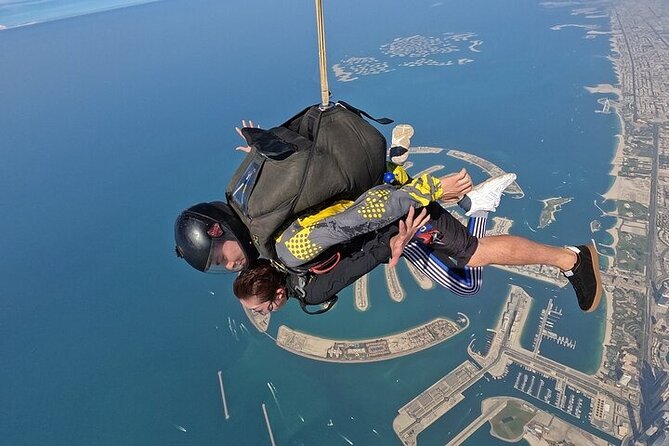
That first look over Dubai from altitude is the moment it clicks. This tandem experience is built around a simple promise: you jump attached to a world-class instructor, hit a fast freefall near 60 seconds, then float down with big views. I love that you get a choice between the Palm drop zone and the Desert drop zone, so you can match the vibe to your trip. I also really like that the team handles the heavy lifting with a safety briefing, a harness check, and even a camera flyer who captures your reaction after you land. The main thing to consider is Dubai weather can delay or cancel the jump, and you should plan your day as if it might run late.
Here’s the practical part: you’re at the meeting point for about 3 to 4 hours total from check-in to completion, even though the thrill segment is shorter. You’ll also do a weigh-in and BMI check on site, and the limits are strict—especially for landing safety and instructor safety.
In This Review
- Why the Palm vs Desert choice changes the whole feel
- Key highlights you’ll actually feel
- Check-in at Skydive Dubai Marina: waivers, BMI weigh-in, and harness time
- Meeting your instructor: what that pre-jump briefing really does
- The ride to altitude: 20 minutes up and a lot of waiting energy
- Boarding, the exit, and 60 seconds of freefall near 120 mph
- Parachute deployment around 6,000 feet: the “catch your breath” segment
- Landing and the reaction interview: why the footage feels personal
- Price and value: what $745 buys you (and what it doesn’t)
- Health, rules, and comfort prep: small steps that prevent big problems
- Dubai weather and timing: how to avoid a frustrating day
- Who should book this tandem freefall over Dubai?
- Should you book it?
- FAQ
- How long does the tandem jump experience take from check-in to landing?
- What are the weight and BMI requirements?
- Is there a minimum weight requirement?
- What happens during check-in?
- What are the freefall and parachute timings?
- Do you offer pickup from a hotel?
- What’s included in the price and what isn’t?
- What should I avoid before the jump?
Why the Palm vs Desert choice changes the whole feel
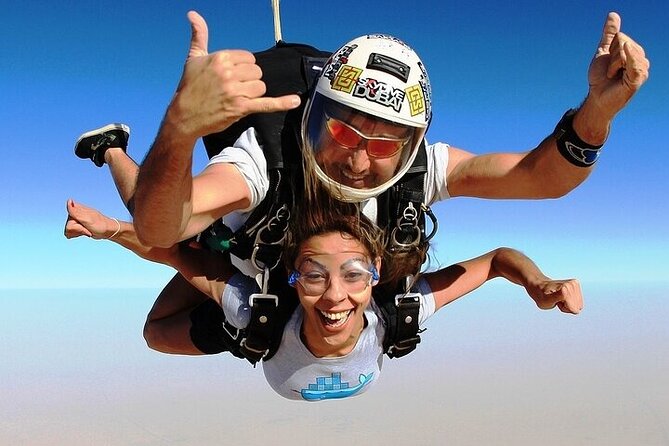
Picking the drop zone isn’t just scenery. It changes what you’re thinking about during freefall and how your parachute ride lands emotionally—fast and cinematic over the Palm, or wider and more open over the desert.
Palm Jumeirah drop zone
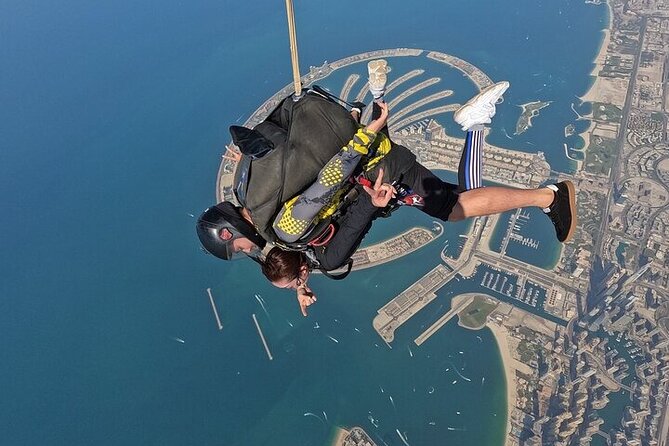
You’re aiming for iconic city-and-ocean views right away. If Dubai is the reason you’re here, this is the “instant wow” choice.
Desert drop zone
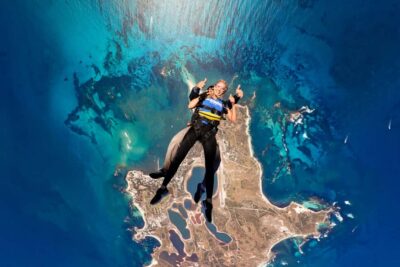
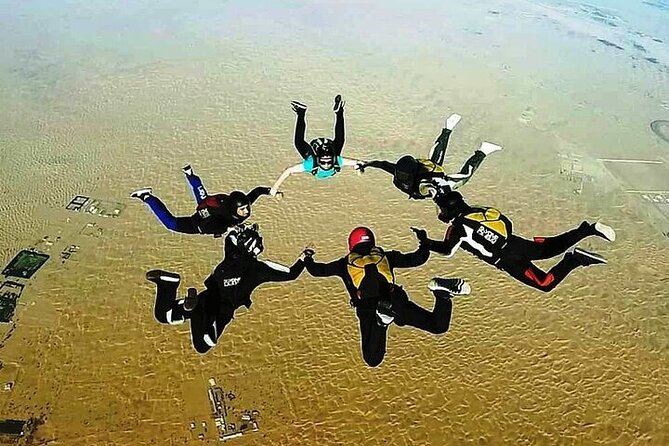
You trade the landmark density for that huge, open feel. The parachute segment can feel slower and more spacious, which is great if you want a calmer view after the high-speed part.
Key highlights you’ll actually feel
- Strict BMI and weight limits for safety, with real numbers checked on the day
- Instructor-led body position training before you board
- A 60-second near-freefall moment that hits speed fast and then ends quickly
- Parachute deployment around 6,000 feet for a controlled landing and a clear view ride
- Edited photos and professional video plus an interview-style reaction capture after touchdown
You can also read our reviews of more tours and experiences in Dubai.
Check-in at Skydive Dubai Marina: waivers, BMI weigh-in, and harness time
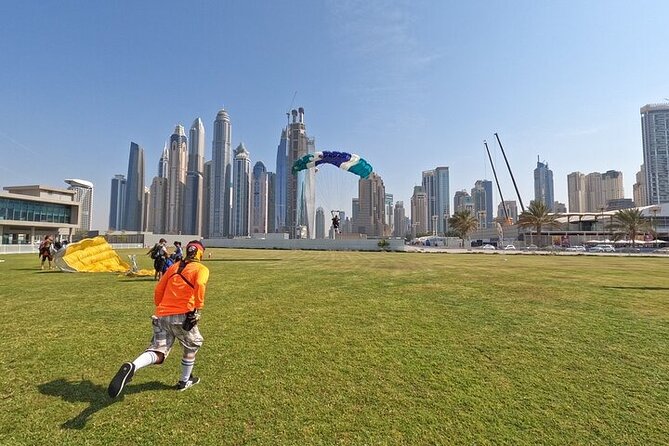
Your day starts at the Skydive Dubai check-in location at Al Seyahi St in Dubai Marina. Arrive at the time listed in your confirmation email—this is your arrival/check-in time, not your jump time. The operator encourages you to plan for roughly three to four hours total on site, mainly because weather, air traffic control, or other conditions can shift schedules.
When you reach the registration desk, you’ll fill out paperwork and sign the liability waiver. Then comes the weigh-in and BMI calculation. This part matters, because it decides whether you can fly safely on the equipment manufacturer requirements. You’ll be weighed with your shoes and clothes on, which is a detail worth remembering when you pack and dress.
Here’s what the limits are, clearly:
- Men: must be 100.0 kg (220 lbs) or less and BMI 30.0 or less
- Women: must be 90.0 kg (198.0 lbs) or less and BMI 27.5 or less
No minimum weight requirement exists, so smaller divers aren’t automatically excluded. But if you’re near the upper edges, do not assume it will be waved through. This is one of the biggest “value protectors” in the whole operation: they’re trying to ensure the harness fit and landing safety for both you and your instructor.
Practical tip: bring comfortable clothing that lets the harness sit well. You’ll want sleeves (t-shirts with sleeves are recommended) and shorts that cover the thigh area so the harness fits comfortably.
Meeting your instructor: what that pre-jump briefing really does
About 20 to 30 minutes before you board the plane, you’ll meet your instructor. This is where the experience turns from nervous to doable.
You’ll get:
- A safety briefing on what to expect and how to behave during each phase
- Instruction on the best body position for the freefall moment
- Harness fitting and a harness check
This isn’t about memorizing a lecture. It’s about giving you just enough clarity to stop fighting the moment. The best part is that your instructor isn’t asking you to do “expert skydiver stuff.” You’re attached and guided—your job is to follow their directions and stay calm when your brain wants to panic.
If you end up with instructors Michael and Martin (based on past participant feedback), you’ll likely feel that upbeat, professional energy right away. Instructors like that can make the difference between white-knuckle fear and controlled excitement.
The ride to altitude: 20 minutes up and a lot of waiting energy
Once you’re geared up, the aircraft ride goes up to about 13,000 feet (around 4,000 meters), and that climb is roughly 20 minutes. From the ground it can feel like you’ll be stuck waiting forever. From inside the plane it’s more like: settle in, breathe, and get ready to move.
During this time, keep your eyes on the basics:
- Your harness should feel secure and comfortable
- Your eye protection (goggles) will be provided
- If you wear prescription glasses or lenses, plan to use them so you don’t lose the views
There’s also a psychological trick here. If you try to “win” your fear by thinking too hard, you can spiral. Instead, use the climb to focus on one simple goal: be ready when they say to go.
Boarding, the exit, and 60 seconds of freefall near 120 mph
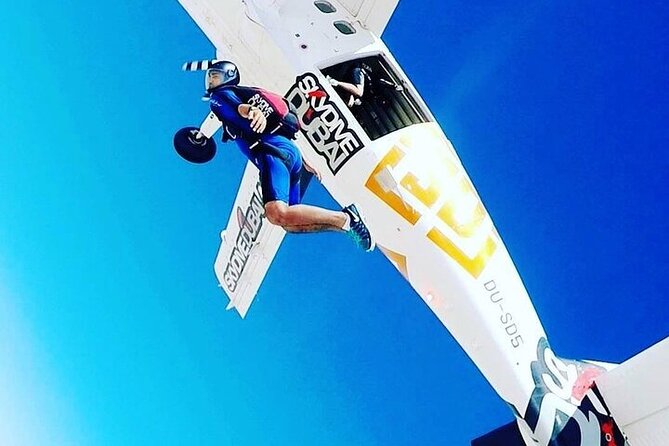
At exit altitude, you’ll exit with:
- Your instructor
- A camera flyer who captures the moment from the sky
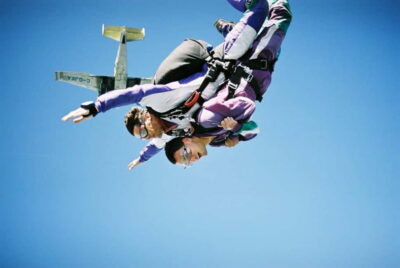
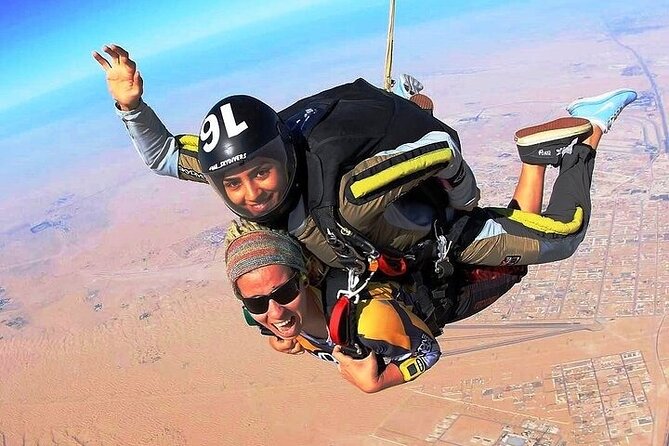
Then comes the headline: nearly 60 seconds of freefall at high speed—listed as over 120 miles per hour. That is fast enough that your brain stops measuring time in normal ways, so it really helps to remember: it feels longer in the moment, but the story ends quickly.
Before you jump, you’ll have learned the best freefall body position. In practice, it means you’re not flailing. You’re holding a form that keeps things stable while your instructor controls the safety mechanics.
Your eyes will be on the horizon and the Dubai geometry below—Palm lines, coastline curves, roads, and that desert openness depending on your drop zone.
One more thing: freefall is loud, fast, and physical. You’ll have protective eye goggles, but you’re still going to feel wind and impact on your senses. The harness is doing its job. Your instructor’s job is to keep it controlled. Your job is to breathe and follow their hand cues.
Parachute deployment around 6,000 feet: the “catch your breath” segment
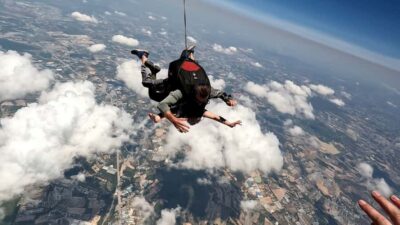
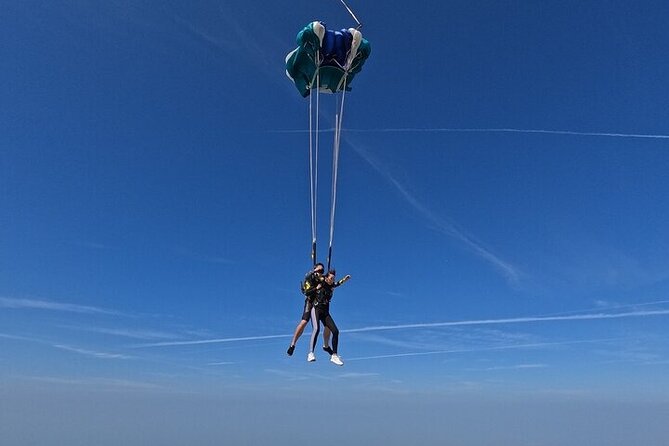
After freefall, the parachute deploys at about 6,000 feet. This is when the tempo changes. Speed drops. Sound changes. Your body gets a chance to realize you survived the wild part.
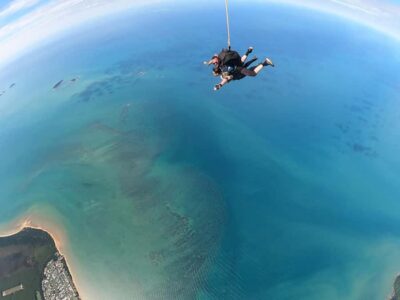
You’ll have a 4 to 5 minute parachute ride—long enough to take in the view, but short enough that you still feel the day’s momentum. This is also where the experience becomes more than adrenaline. You can actually look and process what you’re seeing: Dubai’s mix of coast and city, or the desert’s wide open emptiness.
If you’re choosing the Palm drop zone, this is when the architecture and water details become readable. If you’re choosing the desert, this is when the experience turns from “wow, I’m falling” into “I’m floating over an enormous place.”
Landing and the reaction interview: why the footage feels personal
When you land, your instructor is done with the technical part—but the experience doesn’t end there.
The camera flyer interviews you again to record your reaction. That matters because it captures the truth: your real face after the jump, not just the action shots.
Then you’re escorted off the landing area back to the main building. From there, you’ll leave with two key pieces:
- Photos
- A professionally edited video of the skydive
This is one of the best value features of the package. Lots of adrenaline activities give you something you can barely use. Here you’re getting a tangible souvenir set that’s cut to your day and your reaction.
Price and value: what $745 buys you (and what it doesn’t)
At $745 per person, this isn’t a budget activity. It’s a premium thrill built around safety gear, instructor time, aircraft costs, and professional media.
Here’s what’s included:
- Safety briefing
- Approx. 20 minutes ride up to 13,000 feet
- Nearly 60 seconds freefall
- 4 to 5 minutes parachute ride
- Photos and professionally edited video
- Medical insurance
- Private pickup from your hotel only if you choose the transfer option
What’s not included:
- Food and drinks
So where does the value come from? For most people, it’s the combination of:
1) You’re not doing this solo—you’re attached to instructors with the training and equipment
2) You get professional visuals that actually help you remember the experience
3) The operation is set up to manage the safety requirements and briefing end-to-end
If you’re staying in Dubai and want less time in transit, the pickup/transfer option (available with the Palm + transfers selection) can make the day feel smoother.
Health, rules, and comfort prep: small steps that prevent big problems
This experience has clear boundaries. Make sure you respect them early so you don’t lose time or risk cancellation.
Medical conditions
If you have (or previously had) conditions listed by the operator, you’ll need a medical form signed and stamped by your doctor. The list explicitly includes things such as:
- Epilepsy or fits
- Severe head injury, recurrent blackouts or giddiness
- High blood pressure
- Heart or lung disease
- Diabetes
- Pregnancy (skydive is not recommended/allowed if pregnant)
- And several other nervous system and mental health related conditions, plus drug or alcohol addiction
If you’re unsure whether something counts, it’s best to ask before day-of.
Substance rules
There’s a zero-tolerance alcohol and/or drugs policy, with no alcohol or drugs in your system 24 hours before. This is a non-negotiable safety item.
Scuba timing
Avoid scuba diving at least 24 hours prior. It’s a simple rule, but it matters.
Dress code and comfort
Athletic, comfortable clothes help. T-shirts with sleeves and shorts that cover the thigh area are recommended for harness fit. Also:
- Remove precious jewelry and watches before you jump; there are personal lockers
- Wear what allows the harness to sit correctly without twisting
- Goggles are provided, but bring your prescription glasses/lenses if you need them so you can see
Dubai weather and timing: how to avoid a frustrating day
This is a weather-dependent sport. Wind, rain, poor visibility, and low clouds can delay or cancel operations. The operator may put operations on standby as conditions shift.
You should also plan your schedule with flexibility because your check-in time might not match your actual jump time. The team recommends you spend 3 to 4 hours at the location so delays don’t wreck your day.
If operations are canceled due to poor weather, you should expect either rescheduling to the next available date or a refund if rescheduling isn’t possible. If you cancel yourself, the experience is described as non-refundable and non-changeable, so treat your booking date as the real commitment.
In practice, I suggest you schedule this near the middle of your Dubai trip—not your first day and not your last—so you have room if the sky says not today.
Who should book this tandem freefall over Dubai?
This is best if you:
- Want a bucket-list thrill with professional safety support
- Care about views—either Palm for iconic city energy or desert for open, dramatic space
- Are okay with rules and requirements, including the weight and BMI checks
It’s less ideal if:
- You might struggle with the BMI/weight limits on the day
- You have medical issues that require clearance and form completion
- You hate waiting around in a controlled holding pattern if weather changes
It also fits solo travelers well, as well as couples or small groups who want shared excitement. The activity is listed as private for your group, so you won’t be packed into a giant anonymous herd.
Should you book it?
If you’re chasing the fastest path to the sensation of freefall—without needing any sky skills—this tandem jump in Dubai is a strong choice. The experience is premium-priced, but you’re not just buying the jump: you’re buying safety structure, a trained instructor guiding the body mechanics, and professional photos and edited video that you’ll actually keep.
I’d book it if you meet the weight/BMI limits, you can follow the pre-jump rules (no alcohol/drugs, timing with scuba), and your schedule can handle a few hours on standby. If you want a landmark moment, pick the Palm drop zone. If you want big open views and a calmer parachute ride feel after the adrenaline, pick the desert.
FAQ
How long does the tandem jump experience take from check-in to landing?
Plan for about 3 hours 30 minutes (approx.), and the operator suggests you spend between three to four hours on site from check-in until you complete the experience.
What are the weight and BMI requirements?
Men must be 100.0 kg/220 lbs or less and BMI 30.0 or less. Women must be 90.0 kg/198.0 lbs or less and BMI 27.5 or less. Staff weigh you on the day with shoes and clothes on.
Is there a minimum weight requirement?
No minimum weight requirement is stated. There is only an upper weight and BMI limit for safety.
What happens during check-in?
You’ll go to the registration desk, fill out registration and waiver forms, and complete a safety process that includes being weighed and having BMI calculated. You’ll also be prepared for harness fitting later.
What are the freefall and parachute timings?
The aircraft ride is about 20 minutes up to around 13,000 feet. You’ll free fall for nearly 60 seconds, parachute deployment happens around 6,000 feet, and you’ll have about 4 to 5 minutes under the parachute.
Do you offer pickup from a hotel?
Yes, private pickup is offered only if you select the option that includes transfers (notably mentioned for the Palm + 2 way transfers option).
What’s included in the price and what isn’t?
Included are the safety briefing, aircraft ride, freefall and parachute ride, photos and professionally edited video, and medical insurance. Food and drinks are not included.
What should I avoid before the jump?
Avoid scuba diving at least 24 hours before. Also avoid alcohol or non-prescription drugs at least 24 hours before, and the operator has a zero-tolerance policy for alcohol and drugs.